Tag Archives: act structure

Plot Outline of “Star Wars: A New Hope”

CLICK HERE TO VIEW THE MASTER SPREADSHEET OF ALL MY MOVIE BREAK DOWNS

Scroll down to see more plot break downs of famous movies.

Beat Storylines Beat Description Action Sequences Acts
1 (Rebels )
(Empire )
(Vader )
(Leia )
Scrolling text in outer space informs the viewer that the galaxy is in civil war. Rebels won their first battle and stole secret plans for the empire’s ultimate weapon, an armored space station capable of destroying an entire planet. Leia is fleeing the battle carrying the stolen plans and is being pursued by the empire. Prologue

State Leia’s goal of delivering the Deathstar plans to the Rebels.

State the Empire’s goal of destroying planets and finding the Deathstar plans.

1
Leia is captured by Vader. C3PO and R2 escape, and Luke dreams of leaving Tatooine.
2 Liea
Stormtroopers
R2
C3PO
In space, Leia’s ship is reeled in by an empire ship’s tractor beam. Storm troopers invade the ship and shoot rebels trying to defend it. R2 and C3PO hide behind a blast door and lament being doomed. Introduce Leia, who is suffering a major setback in her goal of delivering the Deathstar plans to the Rebels.
3 Luke
(Leia )
At Luke’s moisture farm on Tatooine, Luke watches a battle in space with binoculars. Introduce Luke, who watches the fight in space longingly, which is a metaphor for his dreams and foreshadows his quest.
4 Vader
Stormtroopers
(Leia )
Vader enters Leia’s ship, and storm troopers stand aside to let him pass.

Introduce Vader.

Leia fails to escape and is captured by Vader, but not before she gives R2 and C3PO a message to Ben, the Deathstar plans and a quest to deliver the message and Deathstar plans to Ben.

Vader states his quest goal is to find the Deathstar plans. He completes step #1 of his quest by capturing Leia, but it’s a false victory since Leia no longer has the Deathstar plans.

5 Leia
R2
(Ben )
On Leia’s ship, Leia records a message on R2.
6 Vader
Rebels
Stromtroopers
(Leia )
On Leia’s ship, Vader asks a dying rebel where the Deathstar plans are. The rebel doesn’t cooperate, and Vader kills him. Vader orders his troops to find Leia.
7 Leia
Stormtroopers
On Leia’s ship, storm troopers capture Leia.
8 R2
C3PO
On Leia’s ship, R2 and C3PO escape in an escape pod.

R2 and C3PO complete step #1 of their quest to see Ben by flying an escape pod to Tatooine.

This leaves clue #1 for stormtroopers to find: knowledge of the escape pod going to Tatooine.

9 Stormtroopers
(R2 )
(C3PO )
On the star destroyer, a storm trooper says the escape pod left but there is no life onboard. So he chalks it up to a malfunction.
10 Luke
Biggs;
At a power station on Tatooine, Luke talks to his friend, Biggs, who says he’s leaving Tatooine. Introduce Biggs, who states his goal of going to space, and Luke states his goal of going to space.
11 Liea
Vader
In Leia’s cell on the star destroyer, Vader asks Leia where the Deathstar plans are, but Leia doesn’t cooperate.

Vader attempts step #2 of his plan to get the Deathstar plans by interrogating Leia, but he fails because she won’t cooperate.

An Imperial commander states the risk of harming Leia (dipolomatic setback), but Vader says the benefit outweighs the risk and uses clue #1 to deduce a new plan to find the Deathstar planes. He gives his team a new quest: Search Tatooine for R2 and C3PO.

2
Vader searches for the Deathstar plans as C3PO and R2 look for Ben, but they find Luke instead.
12 Commander
Vader
(Rebels )
(R2 )
(C3PO )
Outside Leia’s cell, a commander tells Vader it’s diplomatically dangerous to hold Leia. Vader insists she is involved with the rebels, and she is his only hope to find the secret rebel base. Vader says the Deathstar plans must be on the escape pod and orders a search team to be sent to Tatooine.
13 R2
C3PO
Jawas
In the Tatooine desert, R2 and C3PO make a plan to deliver Leia’s message to Ben. They see a sand crawler (transport vehicle) approaching and wave for help. R2 and C3PO enact step #2 of the plan to find Ben. They try asking Jawas for help, but this is a false victory since Jawas won’t help them.
14 Biggs
Luke
(Rebels )
(Empire )
At the Tatooine power station, Biggs tells Luke he’s joining the rebel alliance and states the stakes of the empire controlling the galaxy. Biggs states his goal of joining the Rebels and the stakes of failure: The Empire will control the galaxy.
15 R2
C3PO
Jawas
In the Tatooine desert, R2 and C3PO are captured by jawas and taken to their sand crawler. R2 and C3PO experience the consequence of their false victory: They’re setback on their quest by being taken prisoner, but this is a false failure, since it will take them to Luke.
16 Stormtroopers
(R2 )
(C3PO )
In the Tatooine desert, storm troopers investigate the abandoned escape pod. They see R2 and C3PO’s tracks in the desert and ascertain droids have left the escape pod. The storm troopers follow R2 and C3PO’s tracks. Stormtroopers complete step #1 of their plan to find R2 and C3PO. They investigate clue #1 (the escape pod) and find clue #2: Droid tracks. They use clue #2 to deduce step #3 of their plan: They’ll follow the tracks.
17 R2
C3PO
(Jawas )
Inside the sand crawler, R2 and C3PO debate if/what horrible death awaits them. R2 and C3PO continue experiencing the consequence of their false victory: They state the stakes of their predicament: a potentially horrible death.
18 Jawas
Owen
Luke
(R2 )
(C3PO )
Outside the sand crawler, the jawas line up a bunch of droids. Owen and Luke inspect the droids looking for one that speaks computer languages.
Owen states his goal of buying farming droids. C3PO fills the condition of Owen’s need. So he buys R2 an C3PO.
19 C3PO
Owen
R2
Jawas
Luke
C3PO tells Owen he speaks computer languages. Owen buys R2 and C3PO.
20 Luke
(Owen )
C3PO
R2
Leia
(Ben )
At Owen’s workshop, Luke cleans C3PO while stating he wants to leave Tatooine. Luke finds something jammed in R2. It activates part of Leia’s message telling Ben he’s their only hope, but then disappears. Before Luke can investigate further. Then Beru summons Luke to dinner.

Luke discovers Leia’s message and the Deathstar plans. Luke makes a plan to investigate the message, but Owen creates a complication when he refuses to allow Luke to go and orders Luke to have the droids’ memories wiped.

Luke experiences another complication when he discovers R2 has fled to continue his quest to find Ben.

Luke makes a plan to find R2 tomorrow.

21 Luke
Owen
Beru
(R2 )
(C3PO )
(Ben )
In Owen’s dining room, Luke tells Owen and Beru about R2’s message. Owen tells Luke to take R2 into town the next day and have his memory wiped. Luke says he wants to leave Tatooine, and Owen tells him it’s never going to happen.
22 Luke
C3PO
(R2 )
Luke returns to Owen’s workshop and discovers R2 has escaped and traveled into the desert. C3PO asks if they should go after him, but Luke says it’s too dangerous at night.
23 Beru
Owen
(Luke )
The next morning, in Owen’s kitchen, Beru tells Owen that Luke left early. Owen is upset.

Beru tells Owen that Luke has enacted his plan to find R2.

While enacting step #1 of Luke’s plan, he states the stakes of failure. He’ll be in trouble with Owen if he can’t find R2.

Sandpeople complicate Luke’s quest by attacking him, but this is a false victory for them and a false failure for Luke, because Ben saves Luke, R2 and C3PO.

3
Luke meets Ben, gets a mission to save the galaxy, refuses the call and then accepts when he has nothing left to lose.
24 Luke
C3PO
(R2 )
(Owen )
Luke drives his speeder across the Tatooine desert with C3PO looking for R2. Luke states the consequences of taking too long to find R2. He’ll get in a lot of trouble.
25 Sandpeople
Luke
C3PO
Sandpeople watch/hunt Luke from a distance.
26 Luke
R2
C3PO
Sandpeople
Luke finds R2 and then is attacked by sand people.
27 Ben
Sandpeople
Luke
R2
C3PO
Ben saves Luke from the sand people.
28 Ben
Luke
R2
C3PO
Sandpeople
Ben introduces himself to Luke and makes a plan to leave the desert.
Introduce Ben, who makes a plan to deliver the Deathstar plans to Alderaan and train Luke in the force. Ben gives Luke a lightsaber, but Luke refuses the call, siting the stakes of failing to get R2 and C3PO back to Owen.
29 Ben
Luke
Vader
R2
C3PO
At Ben’s house, Ben tells Luke about his father and the force and gives Luke a light saber.
30 Ben
Leia
Luke
R2
C3PO
At Ben’s house, Ben plays Leia’s message and makes a plan to go to the planet, Alderaan, with Luke and train Luke in the force. Luke refuses the call.
31 Vader
General
(Emperor )
On a star destroyer, Vader’s general discuss how the emperor has taken control of the galactic government and will rule with fear. One general restates Vader’s mission to find the Deathstar plans. Vader states his goal of controlling the galaxy with fear. One of his henchman restates the Empire’s goal of finding the Deathstar plans.
32 Luke
R2
C3PO
Jawas
(Sandpeople )
(Stormtroopers )
In the Tatooine desert, Luke drives his speeder with Ben, R2 and C3PO. They stop at a destroyed sand crawler, and Ben realizes it has been made to look like sand people attacked it. Luke leaves Ben and rushes home to check on Owen and Beru.

Luke and Ben discover clue #2. Stormtroopers have killed the Jawas and covered it up, foreshadowing they know Owen bought R2 and C3PO and is in danger.

Luke investigates clue #2 and finds Owen and Beru are dead.

33 Luke
Owen
Beru
(Stormtroopers )
Luke returns home on his speeder and finds Owen and Beru have been killed.
34 Vader
Leia
Stormtroopers
On a star destroyer, Leia is tortured for information. Vader enacts step #3 of his plan to find the Deathstar plans. He tortures Leia but fails, requiring him to escalate his next step.
35 Luke
Ben
R2
C3PO
Luke returns to Ben and accepts his invitation to go to Alderaan. With his original plans in life cut off, he decides to return to the path and accept Ben’s quest to go to Aaleran and train in the force.
36 Luke
Ben
R2
C3PO
Stormtroopers
Ben, Luke, R2 and C3PO arrive at the spaceport city of Mos Eisley. While entering, they’re stopped by storm troopers looking for R2 and C3PO. Ben uses the force to mesmerize the storm troopers into leaving them alone.
Ben enacts step #1 of his plan to get to Alderaan. They arrive at Mos Eisley, where Ben plans step #2: Hire a spaceship captain to take them to Alderaan.
4
Luke and Ben hire Han and Chewie to take them to Alderaan and fly away from Tatooine.
37 Luke
Ben
R2
C3PO
(Han )
Luke parks his speeder in front of a bar. Ben makes a plan to hire a ship to take them to Alderaan in the bar.
38 Luke
Ben
R2
C3PO
Bartender
Luke, Ben, R2 and C3PO enter the bar, but the bartender says R2 and C3PO must wait outside. Ben acquiesces.

Ben completes step #2 of his plan to get to Alderaan. He hires Han and Chewie while badguys close in.

Han agrees to the quest under two conditions: Large payment upfront and another payment once they reach Alderaan.

39 Ben
Chewie
Luke
Ben speaks with Chewie while Luke waits at the bar.
40 Bar bully
Luke
Ben
A brute harasses Luke. Ben tries to talk the brute down, but the brute gets violent. So Ben kills him with his light saber.
41 C3PO
Stormtroopers
Outside the bar, C3PO sees a creature telling storm troopers about them.
42 Ben
Luke
Han
Chewie
In the bar, Ben and Luke hire Han and Chewie to fly them to Alderaan.
43 Han
Chewie
Stormtroopers
Ben
Luke
In the bar, Han sees storm troopers approaching and warns Ben. They all flee before the storm troopers arrive.
44 Ben
Luke
In the street, Ben makes a plan to sell Luke’s speeder. Ben plans step #3 of their quest to get to Alderaan. They’ll sell Luke’s speeder to pay for Han’s first condition: a large payment upfront.
45 Han
Greedo
(Jabba )
(Ben )
(Luke )
In the bar, Han runs into Greedo, who says Jaba has put a bounty on Han’s life for dumping contraband from his ship when approaching a blockade. Greedo tries to kill Han, but Han shoots Greedo first. Han encounters a complication in his quest to get to Alderaan. A bounty hunter states Jabba’s goal of capturing Han dead or alive. Han kills the bounty hunter and escapes.
46 Vader
Officer
On the Deathstar, Vader makes a plan to blow up Alderaan. He orders an officer to fly the Deathstar to Alderaan. Vader states step #1 and #2 of his plan to find the Rebels: Fly the Deathstar to Alderaan and threaten to blow it up if Leia doesn’t tell him the location of the Rebel base.
47 R2
C3PO
Stormtroopers
In the streets of Mos Eisley, R2 and C3PO hide from more storm troopers.
Ben completes step #3 of his plan to get to Alderaan. He sells Luke’s speeder while badguys close in.
48 Luke
Ben
Vendor
In the streets of Mos Eisley, Luke and Ben sell Luke’s speeder to a vendor.
49 Jabba
Han
(Ben )
(Luke )
In a docking bay, Jabba confronts Han. Han tells Jaba he can pay him back for the lost contraband plus 20%. Jaba agrees. While completing step #1 of his plan to get to Alderaan (prep the Millenium Falcon), Han experiences a complication. Jabba confronts him demanding money, but Han neutralizes the complication by increasing his debt to Jabba.
50 Han
Chewie
Ben
Luke
R2
C3PO
In the docking bay Han and Chewie prep the Millennium Falcon for launch while Luke, Ben, R2 and C3PO board the ship.
While completeing step #4 of Ben’s plan to get to Alderaan (Leave Tatooine in the Millenium Falcon) (which is also step #2 of Han’s plan), they experience a complication when stormtroopers attack, but they neutralize the complication by flying away in a hurry and going into hyperdrive. This is a semi-false victory, because they leave clue #5: The plans to the Deathstar are in the Millenium Falcon.
51 Stormtroopers
Han
Chewie
A creature points some storm troopers to the Millennium Falcon. The storm troopers attack Han and Chewie, who return fire.
52 Stormtroopers
Han
Chewie
Ben
Luke
R2
C3PO
The Millennium Falcon takes off amid laser gun fire from the storm troopers.
53 Han
Chewie
Ben
Luke
R2
C3PO
Tie fighters
In space, the Millennium Falcon is attacked by tie fighters, but the Millennium Falcon escapes them by jumping to hyper drive.
54 Vader
Leia
(Rebels )
(Deathstar )
On the Deathstar, Vader makes Leia watch as he blows up her home planet of Alderaan. Leia tells Vader the location of the rebel base on Dantooine to prevent him from blowing up any more planets. Vader completes step #2 of his plan to find the Rebel base. He blows up Alderaan, and Leia tells him the Rebel’s location to prevent more deaths. This is a false victory for Vader though, because Leia tells him the wrong location.
5
En route to Alderaan, Ben trains Luke in the force whole Vader blows up Alderaan. After arriving at Alderaan, the Millennium Falcon is abducted by the Deathstar. On the Deathstar, Team 1 makes a plan to save Leia and escape.
55 Ben
Luke
On the Millennium Falcon, Ben makes Luke practice using the force and his light saber. Ben is distraught when he senses the disturbance in the force caused by the destruction of Alderaan.
While completing step #5 of Ben’s plan to get to Alderaan, Ben’s team gets to know each other.
56 R2
Chewie
Han
R2 and Chewie play chess. At Han’s urging, R2 lets Chewie win.
57 Officer
Vader
(Rebels )
(Leia )
On the Deathstar, an officer tells Vader that the rebel base on Dantooine is abandoned. Thus, Leia lied to Vader earlier. Vader learns of his false victory. The Rebels aren’t where Leia said.
58 Han
Chewie
Ben
Luke
R2
C3PO
The Millennium Falcon leaves hyperspace near Alderaan and discovers the planet has been destroyed.

Ben’s team completes step #5 of their plan to get to Alderaan by leaving hyperspace and arriving near Alderaan. This is a false victory though, since Alderaan was destroyed by the Deathstar.

The Empire captures the Millenium Falcon and uses clue #5 to deduce the plans to the Deathstar are onboard, which means they’ll kill the crew.

59 Han
Chewie
Ben
Luke
R2
C3PO
Tie fighters
Deathstar
The Millennium Falcon is attacked by a tie fighter. The Millennium Falcon tries to shoot it, but it is captured by the Deathstar’s tractor beam.
60 Stormtroopers
(Han )
(Chewie )
(Ben )
(Luke )
(R2 )
(C3PO )
(Deathstar )
On the Deathstar, storm troopers prepare to board the Millennium Falcon as an officer orders the Deathstar’s shields up to prevent the Millennium Falcon from escaping.
61 Officer
Vader
(Han )
(Chewie )
(Ben )
(Luke )
(R2 )
(C3PO )
On the Deathstar, an officer tells Vader the Millennium Falcon is the same ship that left Mos Eisley and it’s empty. Vader orders the ship to scanned for hiding passengers.
62 Han
Chewie
Ben
Luke
R2
C3PO
(Deathstar )
On the Millenium Falcon, hiding in a smuggling compartment, Ben makes a plan to disable the tractor beam.

Ben’s team makes a plan to escape the Deathstar and rescue Leia. Step #1 of the plan to escape the Deathstar is to find the tractor beam controls. Step #2 is for Ben to reach the tractor beam controls. Step #3 is to disable it. Step #4 is to return to the Millenium Falcon.

Han kills some Stormtroopers, and he and Luke disguise themselves as Stormtroopers.

63 Stormtroopers
Han
Chewie
Ben
Luke
R2
C3PO
Two storm troopers bring a scanner onto the Millennium Falcon and are killed by Han.
64 Han
Chewie
Stormtroopers
Han disguises himself as a storm trooper. He and Chewie kill two more storm troopers who were guarding the Millennium Falcon.
65 Han
Chewie
Ben
Luke
R2
C3PO
Deathstar
R2 hacks the Deathstar’s computer system and finds the location of the tractor beam generator. Ben says he’ll go disable it.

R2 completes step #1 of the plan to disable the tractor beam by hacking the Deathstar’s computer. Ben states he will complete the rest of the steps alone.

While completing step #1, R2 finds clue #6: Leia’s location.

Luke makes a plan to rescue Leia. Step #1 of the plan to rescue Leia is for Luke and Han is to lead Chewie to the detention cells while disguised as Stormtroopers. Step #2 is to break Leia out. Step #3 is to return to the Millenium Falcon.

66 R2
(Leia)
Luke
Chewie
Han
C3PO
R2 locates Leia in the detention block. Luke convinces Han they need to rescue her.
67 R2
(Leia)
Luke
Chewie
Han
C3PO
Luke comes up with a plan to save Leia. He and Han will dress as storm troopers and pretend to escort Chewie as a prisoner, and R2 and C3PO will stay with the Millennium Falcon.
68 Luke
Chewie
Han
Luke and Han pretend to escort Chewie to the detention block.
While enacting step #1 of the plan to rescue Leia, Han and Luke’s disguises fail, alerting the Empire. Han makes a new plan for Luke to break Leia out and return while Han holds off the incoming Stormtroopers.
6
Team 1 breaks Leia out of jail and escapes the Deathstar while Ben disables a tractor beam and gets killed by Vader.
69 Luke
Chewie
Han
Stormtroopers
Luke, Han and Chewie’s cover is blown when a security guard stops them. Luke, Han and Chewie kill the security guard and more storm troopers.
70 Luke
Chewie
Han
Stormtroopers
Han makes a plan for Luke to go get the princess while Luke holds off any incoming storm troopers.
71 Luke
Leia
Luke breaks Leia out of her cell. Luke completes step #1 and #2 of the new plan to rescue Leia. He reaches her cell and breaks her out.
72 Vader
Tarkin
(Ben)
Vader tells Tarkin that he sense Ben is on the Deathstar. Then a computer alerts Tarkin that there’s a security breach in the detention block. Tarkin sounds a general alarm, and Vader says he must face Ben alone. Vader uses the force to discover Ben. Vader states his new plan to find and kill Ben.
73 Luke
Leia
Han
Chewie
(C3PO)
Luke and Leia meet back up with Han and Chewie. They determine their escape route is blocked and need to find another way back to the Millennium Falcon. Luke calls C3PO and asks him to find another escape route.
Luke and Leia complete step #3 of the new plan to rescue Leia. They meet back up with Han. They can’t complete step #4 though, because their path is blocked. So Leia makes and enacts a new plan to take a different route. The she completes step #1 and #2 by creating a new path by blasting a hole in a vent and everybody jumping through it. This is a false victory though, because the path leads to a deadly dead end (a trash compactor).
74 Luke
Leia
Han
Chewie
Stormtroopers
Storm troopers attack Luke, Han, Chewie and Leia. Leia shoots a grate in the wall, and the team jumps through it.
75 Luke
Leia
Han
Chewie
Stormtroopers
(C3PO)
Luke, Han, Chewie and Leia slide into a trash compactor room. Luke tries to call C3PO on his radio, but there is no answer.
76 Storm troopers
R2
C3PO
Storm troopers board the Millennium Falcon and find C3PO and R2. C3PO lies and says they’re imperial droids and need to go to the maintenance department. The storm troopers let them go. Stormtroopers fulfill step #1 of Vader’s orders to search the Millenium Falcon for rebels. They find C3PO and R2, who avoid death by claiming to be Imperial droids and escape. This is a false victory though, because they can get lost and can’t help their friends by using the same comm port to hack the Deathstar.
77 Luke
Leia
Han
Chewie
C3PO
R2
The trash compactor room begins to shrink. Luke finally gets C3PO on the radio, and R2 hacks the Deathstar’s computer system and shuts off the trash compactor room and opens the door. Luke’s team suffers the consequences of their false failure. They’re stuck in a shrinking trash compactor. After several failed attempts, they succeed at contacting R2, who finds a new comm port, hacks the Deathstar and reverses the trash compactor and opens a new path for Luke’s team to complete step #4 of their new plan to rescue Leia.
78 Ben Ben arrives at the tractor beam generator and shuts it down.
Ben completes step #2 and #3 of his plan to escape the Deathstar. He reaches the tractor beam controls and disables it. Then he begins step #4: return to the Millenium Falcon.
79 Stormtroopers
Ben
Storm troopers enter the room Ben is in. He uses the force to distract them while he slips away.
80 Luke
Leia
Han
Chewie
Stormtroopers
Luke, Han, Chewie and Leia run into storm troopers and fight them. Han and Chewie chase a fleeing storm trooper, and Luke and Leia head towards the Millennium Falcon. Luke’s team ecounters a complication while completing step #4 of their plan to escape the Deathstar. They run into more Stormtroopers. Han uses his flaw and strays from the path by chasing the Stormtroopers with Chewie. Luke and Leia continue moving towards the Millenium Falcon.
81 Han
Stormtroopers
Chewie
Han runs into more storm troopers. So he turns around and runs back. He meets Chewie, and they both run away together.

Han experiences the consequence of using his flaw and straying from the path. He an Chewie meet more Stormtroopers. With no other options, he turns and runs away in the direction he came.

Meanwhile, Luke and Leia also encounter a complication: more Stormtroopers. They’re to stray from the path and run away.

Ben encounters a complication in the form of Stormtroopers, but he uses the force to evade them and continues on his quest to return to the Millenium Falcon, but this is a false victory, since Vader is closing in on Ben.

82 Luke
Leia
Stormtroopers
Luke and Leia run from storm troopers.
83 Ben
Stormtroopers
Vader
Ben evades storm troopers as Vader follows him.
84 C3PO
R2
C3PO wonders where their team is. R2 hacks the Deathstar computer system to find out. R2 and C3PO are experiencing the consequence of their false victory. They’re lost on the Deathstar. So they make and enact a plan to find their team members by using a comm port to hack the Deathstar.
85 Han
Chewie
Stormtroopers
Han and Chewie run from storm troopers. Han and Chewie’s complication continues and escalates. They’re still being chased by Stormtroopers.
86 Ben
Vader
Ben meets Vader and they prepare for a light saber fight. Vader completes step #1 of his plan to kill Ben by finding him. This adds a new condition to Ben’s quest to return to the Millenium Falcon if. Ben can’t continue until he kills Vader. So Ben prepares to fight Vader.
87 Luke
Leia
Han
Chewie
(Ben)
Luke and Leia meet back up with Han and Chewie. They plan to get back to the Millennium Falcon. Han hopes Ben disabled the tractor beam. Luke, Liea, Han and Chewie recover from their setbacks by accidentally finding each other and reuniting. They state their plan to continue step #4 of their plan to escape the Deathstar: getting back to the Millenium Falcon. Luke states the stakes of Ben failing his quest to disable the tractor beam.
88 Luke
Leia
Han
Chewie
Ben Vader
Luke, Han, Chewie and Leia see Ben fighting Vader on a walkway above them. Luke’s team’s quest and Ben’s quest meet, when Luke’s team sees Ben fighting Vader. This is a complication for Luke’s team’s quest since it’s a distraction and possible loss of a team member.
89 C3PO
R2
Stormtroopers
C3PO and R2 move through the hallways of the Deathstar evading storm troopers. C3PO and R2 enact and continue on their quest to return to the Millenium Falcon.
90 Vader
Ben
Luke
Chewie
Han
Leia
Vader kills Ben as Luke watches.

Ben fails his quest to return to the Millenium Falcon when he’s killed Vader. Luke and his team show their emotional reaction, but they’re interrupted when a new complication arises in the form of more Stormtroopers.

Ben’s death is a false failure, because Ben’s voice speaks to Luke and tells him to continue on his quest. So Ben isn’t really dead.

91 Ben
Luke
Chewie
Han
Leia
Stormtroopers
Luke shoots at storm troopers, but Ben’s voice magically tells Luke to run. Luke, Han, Chewie and Leia run towards the Millennium Falcon.
92 Luke
Chewie
Han
Leia
R2
C3PO
The team is aboard the Millennium Falcon. Han flies it away from the Deathstar. Luke’s team completes step #4 of their plan to escape the Deathstar. They board the Millenium Falcon. They complete step #5 and #6. They start the Millenium Falcon and fly it away.
93 Leia
Luke
(Ben)
Leia comforts Luke as he mourns Ben’s death.

After Luke shows his emotional reaction to Ben’s death, Luke’s team experiences a complication in their escape plan when Tie-fighters attack them. They make, enact and complete a plan to use evasive maneuvers and cannons to blow up the Tie-fighters.

The fight sequence goes as follows:
Plan/prepare
Prepare
Approach
Bad guys attack/advance
Emotional reaction/state the stakes
Good guys attack/advance X2
Emotional reaction/state the stakes
Good guys attack/big win
Victory dance
Escape/complete quest

This is a false victory though, because Tarkin put a homing beacon on the Millenium Falcon.

7
The Millennium Falcon fights Tie-fighters as it escapes the Deathstar.
94 Han
Chewie
Tie-fighters
Luke
Han sees Imperial fighters coming towards them. He tells Chewie to power up the deflector shields while he prepares the ship’s weapons. Han goes and tells Luke they have to fight.
95 Han
Chewie
Luke
Leia
Tie-fighters
Han returns to the driver’s seat while Leia and Luke prepare to fire the ship’s guns.
96 Han
Chewie
Luke
Leia
Tie-fighters
The team tracks the incoming Imperial fighters and engages them.
97 Han
Chewie
Luke
Leia
Tie-fighters
The Imperial fighters rock the Millennium Falcon with laser fire.
98 Han
Chewie
Luke
Leia
Tie-fighters
Liea tells Han they’re in trouble. Han feigns confidence.
99 Han
Chewie
Luke
Leia
Tie-fighters
Luke shoots down an Imperial fighter.
100 Han
Chewie
Luke
Leia
Tie-fighters
Luke shoots down another Imperial fighter.
101 Han
Chewie
Luke
Leia
Tie-fighters
Leia says two more Imperial fighters are approaching.
102 Han
Chewie
Luke
Leia
Tie-fighters
Luke and Han shoot down the last two Imperial fighters.
103 C3PO
R2
C3PO wiggles comically in a pile of wires and R2 beeps. Closing shot of the Millennium Falcon flying away.
104 Tarkin
Vader
Millenium Falcon
On the Deathstar, Tarkin tells Vader the Millennium Falcon is gone and there is a homing beacon on the ship.

Vader reacts calmly to his failure, because it’s a false failure. Tarkin tells Vader he put a homing beacon on the Millenium Falcon.

Meanwhile, Leia deduces their victory was false because the Empire would have put a homing beacon on their ship.

Liea states a plan to have the Deathstar’s plans analyzed. The condition is, they must take R2 to the Rebel base, the stakes of which, is the Empire will track them and kill them, resulting in the Empire completing their ultimate goal and the Rebels failing theirs.

Han uses his flaw and strays from the path by refusing the call and quitting. Leia shows her emotional reaction.

8
Team 1 and Team 2 plan and prepare to fight.
105 Leia
Han
Luke
Chewie
R2
C3PO
Rebels
The Empire
Leia deduces the Empire is tracking the Millennium Falcon. Leia says she needs to have R2’s plans of the Deathstar analyzed. Han says he won’t help the Rebels and he just wants money. Leia leaves angry.
106 Luke
Han
(Leia)
Luke and Han discuss being attracted to Leia. Luke and Han get to know each other.
107 Leia
Han
Luke
Chewie
R2
C3PO
Willard
The Empire
The Millenium Falcon lands on the planet, Massassi. The team is met by Willard. Leia tells him the Empire is tracking them, and they need R2’s plans of the Deathstar analyzed. Luke’s team completes step #1 of Leia’s plan to have R2’s data analyzed when they land at the Rebel base. They meet their POC and enact step #2: Have the Rebels use their expertise and equipment to analyze R2’s data.
108 Tarkin
Vader
(Rebels)
On the Deathstar, Tarkin tells Vader they are approaching Massassi. Tarkin states the Empire has completed step #1 of their plan to crush the Rebels by flying the Death Star near the Rebel base.
109 Dodonna
Rebels
(Empire)
Leia
Han
Luke
Chewie
In the Rebel war room, Dodonna briefs a room of Rebels including Luke, Han, Chewie and Leia. Dodonna says the Deathstar is approaching and they need to destroy it by dropping a bomb into a vent on its surface, which they’ll do by flying a squadron of X-wings which will try to bomb the vent. Dodonna states the Rebel have analyzed the Deathstar plans and found clue #7: The Deathstar has a vulnerable air vent. Then Dodonna states the Rebel’s plan to destroy the Deathstar: Fly X-wings to the Deathstar and use them to drop a bomb in the vent.
110 Tarkin
Vader
(Rebels)
On the Deathstar, Tarkin tells Vader that in 30 minutes the Deathstar will be in range to blow up Massassi and the Rebels on it. Tarkin updates Vader on the Empire’s progress on step #2 of their plan to crush the Rebels. They’re 30 minutes away.This creates a time limit for Luke to complete his quest to destroy the Deathstar.
111 Han
Luke
In the Rebel base’s spaceship hangar, Han tells Luke he’s leaving to pay his debts. Luke shames him for being selfish. Then Han hints at having a change of heart.

Han strays from the path to go complete his quest to repay Jabba.

Luke and the X-wing pilots prepare to enact their plan to destroy the Deathstar and then complete step #1 by departing to the battle field.

112 Luke
Leia
(Han)
(Ben)
In the Rebel base’s spaceship hangar, Luke tells Leia he’s sad Han and Ben left. Leia consoles him.
113 Luke
Biggs
Red leader
In the Rebel base’s spaceship hangar, Luke meets Biggs and Red Leader. Biggs says they’re going to be heroes and swap stories after the battle. Biggs says Luke is a great pilot, and Red Leader says Luke’s father was too.
114 Luke
R2
Luke boards his X-wing while a technician puts R2 into the ship.
115 Luke
(Ben)
Luke sits in his X-wing preparing for take off. He hears Ben’s voice tell him, “May the force be with you.”
116 Luke
X-wings
Arial view of X-wings taking off from the Rebel base.
117 Leia
C3PO
Rebel commander
(Deathstar)
Leia, C3PO and a Rebel commander stand in the Rebel base war room. A computer tells them the Deathstar will be within firing range in 15 minutes. A Rebel commander tells Leia that Luke and the Rebels only have 15 minutes left to complete their quest.
9
Team 1 approaches Team 2 for the final fight.
118 Luke
X-wings
Deathstar
Red leader
The squadron of X-wings fly towards the Deathstar. A couple of members check in with each other over their radios, and Red Leader orders them into attack position.
Luke and the X-wings complete step #2 of their quest to destroy the Deathstar by arriving at the battlefield.
119 Wedge
Red leader
Luke
X-wings
Deathstar
In his X-wing, Wedge marvels at the size of the Deathstar, and Red Leader tells him to cut the chatter.
120 Wedge
Red leader
Gold leader
Luke
X-wings
Deathstar
In his X-wing, Gold Leader tells Red Leader his team is going to make a run to bomb the vent. Red Leader says he’ll draw the enemy’s fire away.
121 Luke
Stormtroopers
X-wings
Deathstar
On the Deathstar, Imperial soldiers scramble to operate anti-aircraft guns. In space, lasers shoot at/past Rebel X-wings. The Empire prepares their defenses.
122 Leia
Wedge
Red leader
X-wings
Stormtroopers
Deathstar
Montage of shots Leia listening to a radio, Wedge calling in enemy fire, Red Leader issuing instructions, Imperial soldiers preparing weapons, and X-wings flying toward the Deathstar. Enemies attack/no effect
123 Luke
Deathstar
Luke attacks the Deathstar with his X-wing. He narrowly escapes death.
Luke and X-wings attack/advance
124 X-wings
Imperial officer
Vader
(Tie-fighters)
X-wings strafe the Deathstar. Inside the Deathstar stuff blows up and Imperial soldiers go flying. An Imperial officer tells Vader their large cannons can’t hit the small X-wings. Vader says to send Tie-fighters to pick off the X-wings one by one.
125 X-wings
Luke
Red leader
Deathstar
In his X-wing, Luke tells Red Leader he’s going to attempt to bomb the vent. Red Leader tells him to be careful.
Luke attacks Deathstar/advance
Enemies send reinforcements
Tie-fighters attack Biggs/advance
Biggs is chased/ Luke saves Biggs
10
Team 1 attacks Team 2.
126 Luke
Deathstar
Luke flies over the surface of the Deathstar evading lasers.
127 Stormtroopers
Biggs
Tie-fighters
Deathstar
Montage of shots Imperial soldiers run around on the Deathstar, Biggs evades laser fire, Imperial pilots board Tie-fighters in the Deathstar hangar.
128 Leia
Rebel officer
(Tie-fighters)
Deathstar
As Leia paces in the Rebel war room, a Rebel officer says they’ve picked up incoming Tie-fighters.
129 Luke
X-wings
Tie-fighters
Red leader
Deathstar
In his X-wing, Luke says he can’t see any Tie-fighters. Red Leader says to keep looking.
130 Tie-fighters
Bigs
Luke
Deathstar
A Tie-fighter chases Biggs, and Luke comes to his rescue, shooting the Tie-fighter.
131 Vader
Stormtroopers
(X-wings)
(Tie-fighters)
Deathstar
On the Deathstar, Vader tells some pilots that several X-wings have broken from the formation. Then Vader orders the pilots to come with him. Vader states his plan to join the fight and enacts step #1: Go to the hangar.
132 Leia
(Luke)
(Biggs)
(X-wings)
(Tie-fighters)
(Deathstar)
Leia paces nervously as she listens to radio transmissions of Luke and Biggs fighting Tie-fighters.
Leia shows her emotional reaction to the fight
Enemies attack Luke/Luke suffers a minor hit
R2 fixes the damage Luke suffered
Leia shows her emotional reaction to the fight
Enemies attack Luke/Wedge saves Luke
11
Vader thwarts Team 1’s attack.
133 Luke
Tie-fighters
X-wings
Deathstar
Luke’s X-wing gets hit by a Tie-fighter’s laser, but the damage isn’t bad.
134 Luke
R2
Tie-fighters
X-wings
Deathstar
R2 fixes the damage on Luke’s ship.
135 Luke
Red leader
Tie-fighters
X-wings
Deathstar
Leia paces nervously as she listens to radio transmissions of Luke telling Red Leader he can’t shake a Tie-fighter off his tail.
136 Wedge
Luke
Tie-fighters
X-wings
Deathstar
Wedge saves Luke by chasing down and blowing up the Tie-fighter chasing him.
137 Gold leader
Luke
X-wings
Tie-fighters
Deathstar
In Gold Leader’s X-wing, he says she’s going to make a bombing run on the vent. He and several other X-wings dive towards the Deathstar.
Gold leader states he’s going to enact step #3 of the plan to destroy the Deathstar. He’s starting a bombing run.
Leia shows her emotional reaction to the fight.
Countdown clock
Preparation/complication
Vader attacks Gold leader/advance X3
Vader kills Gold leader.
138 Vader
Tie-fighters
Deathstar
Vader flies an Tie-fighter, accompanied by two other Tie-fighters.
139 Gold leader
(Luke)
X-wings
Tie-fighters
Deathstar
Gold leader and his escorts skim the surface of the Deathstar avoiding flack as Vader and his escorts close in.
140 Leia
(Luke)
(Gold leader)
(Tie-fighters)
(X-wings)
(Deathstar)
(Rebels)
Leia listens to the radio chatter of Gold Leader talking about the battle. Leia’s computer says the Deathstar will be in range to blow up Massassa in 5 minutes.
141 Gold leader
Luke
X-wings
Tie-fighters
Deathstar
In Gold Leader’s X-wing, he pulls a targeting device over his eye and prepares to bomb the vent. Suddenly all the Deathstar guns stop firing at him and his escorts.
142 Vader
Tie-fighters
Gold leader
X-wings
Deathstar
Vader and his escorts drop in behind Gold Leader and his escorts.
143 Gold leader
X-wings
Tie-fighters
Deathstar
Vader blows up one of Gold Leader’s escorts.
144 Gold leader
X-wings
Tie-fighters
Deathstar
Vader blows up Gold Leader’s X-wing.
145 Gold leader
(Luke)
X-wings
Tie-fighters
Deathstar
Gold Five tells the squadron that Gold Leader and the other escort are dead. Then his X-wing blows up too.
146 Tarkin
Imperial officer
(X-wings)
(Deathstar)
On the Death Star, an Imperial officer tells Tarkin he’s figured out the Rebel’s plan and they should evacuate the Deathstar just in case. Tarkin refuses. A voice on a speaker announces the Deathstar will be in range to blow up Massassa in 3 minutes. An imperial officer deduces the Rebel’s plan and advises precautionary measures to Tarkin, who uses his flaw to ignore the warning.
Countdown clock
12
Vader thrwarts Team 1’s second attack.
147 Red leader
Luke
Wedge
Biggs
X-wings
Deathstar
Red Leader tells Luke, Wedge and Biggs to prepare for a bombing run on the vent. Red Leader says he and his escorts will try first.
Red leaders states/prepares/enacts a plan to make another bombing run while Vader closes in.
148 Red leader
Luke
Wedge
Biggs
X-wings
Deathstar
Luke, Biggs and Wedge get in formation as Red Leader and his escorts fly over the surface of the Deathstar.
149 Red leader
X-wings
(Vader)
Deathstar
Red Leader and his escorts fly over the surface of the Deathstar evading flack and trying to visually locate Vader and his escorts.
150 Red leader
X-wings
Vader
Tie-fighters
Deathstar
As Red Leader and his escorts approach the vent, Vader and his escorts drop down behind them. Vader blows up one of the escorts.
Vader attacks/advance x2
Red leader attempts final shot/fails
Vader attacks/kills Red leader
Show emotional reactions from both sides
151 Vader
X-wings
Tie-fighters
Deathstar
Vader blows up Red Leader’s other escort as Red Leader says they’re almost there.
152 Red leader
Tie-fighters
Vader
Deathstar
Red Leader attempts to bomb the vent and misses.
153 Red leader
Luke
X-wings
Tie-fighters
Vader
Deathstar
Red Leader tells Luke to begin his bombing run. Then Vader blows up Red Leader’s X-wing.
154 Luke
Tarkin
Deathstar
Rebels
Deathstar
Montage of shots Luke looks worried. Tarkin looks happy, and an intercom voice tells him the Deathstar will be in range of blowing up Massassa in one minute. Leia looks nervous.
155 Luke
Biggs
Wedge
Deathstar
Luke and Biggs plan to make their bombing run at full throttle. Biggs and Wedge will escort Luke. Wedge doubts Luke’s X-wing’s computer can calculate the trajectory of the bombing correctly.
Luke and Biggs state/plan/enact plan to try a third bombing run.
Tie-fighters attack/Luke suffers minor hit
Vader attacks Wedge/Wedge leaves battlefield
Vader attcks Biggs/Biggs dies
Show Luke’s reaction to Bigg’s death
Vader prepares to attack Luke
Countdown clock
Luke prepares for final shot
Vader attacks/disables R2
Show both side’s emotional reactions
Countdown clock
13
Luke attacks the Deathstar and blows it up.
156 Luke
Tie-fighters
R2
Deathstar
Luke’s X-wing is hit and receives minor damage. Luke tells R2 to fix it.
157 Vader
Wedge
Tie-fighters
Deathstar
Vader shoots Wedge, causing moderate damage to his ship. Wedge says he can’t continue and pulls out of the fight.
158 Vader
Biggs
Tie-fighters
Deathstar
Vader blows up Biggs’ X-wing.
159 Luke
(Biggs)
Tarkin
Deathstar
Rebels
Vader
Tie-fighters
Montage of shots Luke is shocked and saddened by Biggs’ death. Tarkin smiles as his intercom informs him the Deathstar will be in range to blow up Massassa in 30 seconds. Vader takes aim at Luke’s X-wing.
160 Luke
(Ben)
Deathstar
As Luke prepares to bomb the vent, he hears Ben’s voice tell him to use the force. Luke turns off his targeting computer.
161 Vader
R2
Tie-fighters
Deathstar
Vader shoots R2, and Luke says he lost R2.
162 Leia
(Deathstar)
Tarkin
Imperial officer
(Rebels)
Montage of shots Leia stares at a screen showing the Deathstar moving into position. Tarkin looks at a similar screen and orders an Imperial officer to fire when ready. The officer presses a button.
163 Han
Chewie
Tie-fighters
Vader
Luke
The Millennium Falcon drops behind Vader and his escorts. Han blows up one escort. The other escort panics and runs into Vader’s Tie-fighter. The panicky escort ricochets into a wall and blows up while Vader’s Tie-fighter is sent spinning into space.
Han returns to the battlefield
Han attacks/Vader is neutralized
Luke prepares/takes final shot successfully
Countdown clock
Deathstar is neutralized
Show Han’s emotional reaction to the victory.
164 Luke
Deathstar
Luke relaxes and uses the force. He drops his bomb, which falls perfectly through the vent.
165 Stormtroopers
Deathstar
(Rebels)
Montage of shots Imperial soldiers press buttons to power up the Deathstar’s main laser as the Rebel space ships fly away from the Deathstar. Then the Deathstar explodes in a supernova.
166 Han
Luke
Vader
X-wings
Montage of shots Han congratulates Luke. Luke is at ease. Vader’s ship spins off into space. The Rebel spaceships fly towards Massassa.
Luke and his team return to the Rebel base and are rewarded with fortune and glory for completing their quest to destroy the Deathstar.
14
Denouement
167 Luke
Leia
Han
Rebels
R2
Luke exits his X-wing on the flightline at the Massassa Rebel base. Leia and Han run up to him joyfully. A technician says he’ll fix R2.
168 Luke
Han
Chewie
Leia
Rebels
Luke, Han and Chewie walk to the center stage at an award ceremony. Leia gives them fancy medals.

Remove term: act structure act structureRemove term: formula plot template formula plot templateRemove term: how to write fiction how to write fictionRemove term: movie break down movie break downRemove term: movie outline template formula movie outline template formulaRemove term: plot break down plot break downRemove term: plot outline plot outlineRemove term: plot structure guide plot structure


IF YOU ENJOYED THIS POST, YOU’LL ALSO LIKE THESE:


Screenwriting for Movies
Screenwriting for TV
Short Stories
Erotica
Choose Your Own Adventure
Movie plot break downs
TV plot break downs
Free story prompts
Writing tips
Blogging
Art

How To Add Multiple Story Lines When Writing A Movie

"Subplots & Storylines"

A 90-120 minute movie about a hero who only accomplishes one goal, would require him to complete at least a dozen steps to fill all the screen time. This would be painfully slow and lack depth. The solution is to give the hero multiple needs to fill, each with their own goal, conditions and complications. There’s no right answer for how many story lines you should have, but the industry standard is three: An “A-story,” “B-story,” and “C-story.” This gives you just enough content to fill 90-120 pages without things getting too complicated, choppy or fast.

If all three story lines contain the same amount of screen time, each one would feel equally important, and it would be unclear what the driving force of the movie is. Therefore, the standard is for the A-story to take up 60-70% of the screen time. The B-story takes up 20-30%, and the C-story takes up 5-10%. This gives the hero enough time to complete the twelve-steps to accomplishing a goal, 3-4 times in the A-story, 1-3 times in the B-story and once in the C-story.

The A, B and C-storylines serve a specific purpose, which defines the need/s the hero is attempting to satisfy in each storyline:


The A-story


The A-story is the longest storyline. So it carries the story, which means the hero’s ultimate goal in the A-story is the driving force of the story. Since the story needs the hero to be active, it makes sense that the hero’s A-story goal is to achieve an external, tangible goal. It’s what he wants to do most in life. It’s the impact/change he wants to have on the external universe.

Below are some of the most common A-storyline goals:

  • Save his world, home, business or a loved one’s home or business.
  • Win a contest.
  • Stop a killer, monster, oppressor or kidnapper.
  • Find or return home.
  • Fulfill a job contract.
  • Get rich, powerful or otherwise successful.
  • Get revenge.

The B-story


The B-story could be another tangible goal, but the standard is for the B-story goal to be what the hero’s heart wants most in life. It’s what he wants to become. It’s his quest for intangible, interpersonal, metaphysical, and/or internal accomplishment. It’s the impact/change he needs/wants in his internal universe. The hero may have to do something tangible to fulfill the condition of the B-story goal, but the topic/theme of the quest is psychological, inter-personal or spiritual.

It creates the most tension when the B-storyline goal is a condition of the A-story goal. This means the hero has to achieve his B-story goal before he can achieve his external goal. This is psychologically satisfying for the audience, because the hero’s external progress depends on his internal growth, which brings the quest full circle.

Below are some of the most common B-storylines:

  • The hero wants someone to fall in love with him. This is the most common B-story.
  • The hero wants to save, protect or help a loved one (if that’s not already the A-story goal).
  • The hero wants to prove his worth/virtue and be respected or accepted by himself, his lover, boss, children, parents, teacher or social group.
  • The hero wants or needs to overcome an internal flaw. For a list of character flaws, do an internet search for lists of personality disorders, emotional disorders, behavioral disorders or character flaw tropes.

If you want to write a story that is more emotion-based and focused on interpersonal relationships, you can swap the A-story and B-story so that the longer A-story revolves around the hero’s internal goal, and the shorter B-story revolves around the hero’s external goal. The shorter action-oriented storyline can still drive the story if you want.

In “Back to the Future,” Marty spends most of his screen time unifying his parents to fulfill his dream of having a functional family, which is a condition he must fulfill before he can use his time machine to go back to the future, which he only spends about 20 minutes doing.

In “Along Came Polly,” the hero spends most of his time falling in love with a woman named Polly. He only spends about 20 minutes completing a job for his boss, in which he learns the life lesson he needs to know in order to keep Polly.


The C-story


The C-story is an optional miniature side-story. If you have a C-story, it will appear in the last beat of the movie, which hints at what the future holds for the hero. So the C-story arc would logically involve solving a problem that sets the hero up for his next adventure.


You have three options when adding your third (or more) storyline/s.


1: Each storyline represents another quest for the hero. It’s the hero’s quest to accomplish whatever the third most important goal in life is for him, based on his beliefs. It can be used tactically to provide the hero with a resource he’ll need to solve the A-story line, or it can be a fun time-filler that could be cut without affecting the main storylines. In “Back to the Future,” the hero tries to prevent his mentor from dying in the future.


2: Each storyline follows a character’s quest to fulfill their need other than the hero, such as the antagonist, love interest or sidekick. The storyline should be relevant to the hero’s ultimate goal or it will feel irrelevant and distracting. The C-story will have the most impact if it’s the character’s B-story and conflicts with the hero’s A or B-story goals.


3: Each storyline represents a quest for one of the minor characters. This option has less impact on the story and the viewer, which can be a good vehicle for comic relief or fleshing out the tone of a genre-centric story… unless you’re doing a story like “Snatch” or “Lock, Stock and Two Smoking Barrels” where there are multiple characters with conflicting goals that keep crossing paths. Either way, the minor character/s’ goals should somehow align or conflict with another main character’s ultimate goal/s, preferably the hero. Otherwise, the storyline is an unnecessary distraction. However, that can work to your advantage if you’re writing a mystery story where you want to misdirect the audience’s attention.


If you enjoyed this post, you’ll also like these:

Screenwriting for Movies
Screenwriting for TV
Short Stories
Erotica
Choose Your Own Adventure
Movie plot break downs
TV plot break downs
Free story prompts
Writing tips
Blogging
Art

A Basic Sitcom Episode Plot Template For TV Screenwriters

I created this sitcom template by analyzing popular TV shows and breaking them down into their fundamental parts and identifying the most common denominators. I found sitcom episodes tend to follow a predictable 5-Act structure. This formula assumes there is one protagonist and one plot. For help writing stories with multiple protagonists and subplots, read “Advanced Sitcom Episode Plot Templates For Writing Stories With Multiple Protagonists And Subplots.”


SUMMARY OF THE 5-ACT SITCOM STRUCTURE

WITH ONE PROTAGONIST AND ONE GOAL


1: THE INTRODUCTION (1-3 MIN)

Establish what goal the protagonist wants to accomplish in this episode.

2: THE CATALYST (3-8 MIN)

A major opportunity or obstacle appears between the protagonist and his goal.
The protagonist reacts to the antagonist/obstacle in his own signature fashion.
The protagonist comes up with a plan to neutralize the obstacle.

3: COMPLICATIONS AND ESCALATIONS (8-13 MIN)

The protagonist enacts the plan, but sub-obstacles keep getting in the way.
Each time a new obstacle appears in front of the protagonist, he comes up with a new plan to overcome the sub-obstacles and enacts the plan with varying levels of success.

4: THE SHOWDOWN (13-18 MIN)

The protagonist reaches the final obstacle between him and his goal.
The protagonist pulls out his last resort.
The protagonist wins…or loses.

5: THE SUNSET (18-21 MIN)

Show where the protagonist’s success or failure leaves him.


DETAILED BREAK DOWN OF THE 5-ACT SITCOM STRUCTURE

ACT 1

THE INTRODUCTION


The first 1-3 minutes of your sitcom is the introduction segment. Then the opening credits role. The screen time allotted for this time frame must serve a very specific purpose. It establishes what the protagonist wants (in this episode). The first 1-3 minutes don’t (usually) reveal the antagonist or any obstacles that will stand in the protagonists way. You can squeeze that in, but if you’re new to writing sitcoms, try writing a simple script first.

There was an episode of “It’s Always Sunny in Philadelphia” that began with the gang standing in a parking lot drinking beers shouting, “Reunion! Reunion! Reunion!” In those three words, they established that that episode’s plot would revolve around them going to a high school reunion. For the rest of the time until the opening credits rolled each character expressed why they wanted to go to the reunion. No obstacles were introduced. All the audience learned was where they were, who would be in the episode and what they wanted. It was a prime example of good sitcom writing, and it worked. The episode flowed logically and was enjoyable.

This short, 1-3 minute skit needs to have a beginning, middle, and end. Or you could think of it as a setup, a delivery and a reaction. It’s basically a joke. It says, “Here’s where I’m at. Here’s where I want to be…but that’s my life!”

When you’re outlining your script, don’t write this whole scene before starting on the next scene. Write one or two sentences saying (not showing) what happens in the scene to establish what the protagonist wants. After you’re finished outlining the whole sitcom then you can go back and “show, don’t tell.”


ACT 2 

THE MIDDLE: PART 1

THE CATALYST


The entire middle of the story lasts 15 minutes, and is divided into 3, 5-minute segments.

The Middle: Part 1 introduces the protagonist and the audience to the main obstacle that will stand between the protagonist and his dream of the week. In a standard movie or novel the protagonist would experience a catastrophic cataclysm that irrevocably cuts him off from the most important goal of his entire life. It’s like the pillars of the earth are ripped out from underneath him destroying the foundation of his existence, which will require him to reassess everything he’s ever taken for granted and reinvent himself to overcome this unprecedented challenge.

In sitcoms that will happen to a small degree in season finales, but in a sitcom the protagonist has to begin every episode in basically the same place he started the last one and the same place he’ll start the next one. So to tear out the foundation of his world is to rip out the foundation of the sitcom, and to reinvent the protagonist is to invent a new sitcom.

For those reasons, the protagonist of a sitcom can’t suffer an apocalyptic cataclysm that turns his whole world upside down. Instead, of having the floor fall out from under him he should just have a wall appear in front of him that prevents him from achieving the most important goal in his short-term life plan.

For example, Seinfeld’s life plan (in the series) was to become a world famous comedian. His character only ever took a few steps towards that goal through the 9 seasons it aired. Instead, each episode focused on him and his friends confronting day-to-day obstacles that stood in the way of their short-term goals such as having a good meal, having casual relationships, renting a car or helping a friend. The protagonist’s goal of the week is should be expressed in the first 1-3 minutes before the credits, and it’s established what the main obstacle between him and that goal is.

Since you have to begin a new scene after the opening credits that means you have to begin that scene (as you do every scene) with an introductory segway bit that establishes where the protagonist is now and what he’s doing.

A the writer you already know (in a general sense) where the protagonist should be and what he should be doing. He should be at the next logical place to do the next logical thing to fulfil his want. You can establish where he’s at and what he’s doing with one camera shot and a sentence. It could only take two seconds, but it has to be there. The audience needs it to keep them on track with your fast-forwarded story. Plus, it will set you up for what happens next.

As soon as you’ve established where he’s at and what he’s doing then you establish the main obstacle that will stand in between the protagonist and his goal. It’s important to pick this obstacle carefully, because the rest of the episode is about this obstacle as much as it’s about the protagonist. After all, the protagonist will spend the rest of the episode trying to neutralize this problem in order to get what he wants.

The MIddle: Part 1 has to have a beginning, middle and end. You’ve already written the introduction where you establish where the protagonist is and what he’s doing. You wrote the middle where something gets in the way of the protagonist and his goal. Now, you need to cap-off this segment of the story with a logical ending. The logical thing to do after someone has discovered a dire obstacle between them and their goal is to freak out and then recollect themself. The characters in Seinfeld and It’s Always Sunny in Philadelphia are usually screaming at this point. Then they have a huddle and figure out what they’re going to do address the problem.

The plan they come up with has to reflect the characters who came up with the plan. The characters from “Workaholics” and “It’s Always Sunny in Philadelphia” would approach the same problem from very different angles. If you’ve already mapped out your characters right down to what their personality type is then the scenes where they formulate a plan should write themselves. You shouldn’t ever ask yourself, “What should I have my characters do next?” You should always ask yourself, “What would my characters do next?”

Once your characters have stated what they’re going to do to solve the problem you can throw in a punch line and end the scene.


ACT 3

THE MIDDLE: PART 2

COMPLICATIONS AND ESCALATIONS


You begin a new scene here. It will establish where you’re protagonist is at now and what he’s doing. He should be at the next logical place to do the next logical thing to enact his plan.That’s the introductory scene to The Middle: Part 2.

Once you’ve set that up the protagonist will actively put his plan in motion. However, that plan can’t work. If it did then the episode would be over. So the protagonist must encounter another obstacle. This obstacle isn’t apocalyptic and life changing, and it’s not standing between him and his dream. It’s a minor, amusing problem that stands between him and his ability to solve the bigger problem that’s preventing him from achieving his goal of the week. So it’s a little problem within a bigger problem…like a Russian stacking doll.

It doesn’t matter if the protagonist overcomes this (or any other) obstacle throughout the story. The protagonist can lose every single battle and the war. He can just bounce around like a pin ball getting hit in the face by life until he falls into a hole in the ground and dies. What’s important is that there are progressively bigger obstacles between him and that which he’s motivated to attain, and he confronts those obstacles according to his own personal style. That’s what builds tension and puts the audience on the edge of their seats.

Another logical reason why protagonists often fail to overcome minor obstacles is because it would be extremely hard to maintain a sitcom about a protagonist who waltzes through every problem for  9 seasons. “Highlander” had this problem. You knew that the protagonist had to win in every episode, because to lose would mean getting his head cut off. This was exciting for a while, but after a few seasons there was just no point to watch the show anymore…and it was cancelled.

If your protagonist is going to fail then there needs to be a logical reason why. There are really only two reasons why a protagonist ever fails to achieve their goals. Either the obstacles in front of them are simply insurmountable or the protagonist has a major character flaw. If the only reason the protagonist ever fails at anything is because life is just that unfair then you’re going to have a very depressing sitcom. However, if the protagonist has a major character flaw that often gets in his way then his successes and failures will make more sense.  From that point of view, Archer and House from “Archer’ and “House” almost had to be drug-addicted, obstinate jerks. If the protagonist’s character flaw helps him sometimes and hinders him sometimes then you’ll keep the audience on the edge of their seats guessing what will happen next.

If you simply can’t bear to soil your protagonist with a major character flaw you can give him a problematic sidekick that screws things up for him, but this can get annoying if every episode is based on that premise. A classic example is “Inspector Gadget.” Despite the misleading title, the protagonist was Inspector Gadget’s niece, Penny. She was a nearly flawless super hero whose brilliant schemes were always complicated by her retarded alter ego, Inspector Gadget. The show had a novel premise, but it got boring watching Inspector Gadget complicate Penny’s life every single episode, and the show was cancelled.

A more interesting reinvention of “Inspector Gadget” is “Wilfred.” In “Wilfred” the protagonist (Ryan) has a goal he wants to accomplish, but his bungling sidekick, a talking man-dog named Wilfred, serves as his sidekick and a minor antagonist who places minor obstacles in Ryan’s path as he tries to overcome the primary obstacle in each episode. This works better than “Inspector Gadget” because both Ryan and Wilfred are both tragically flawed characters with their own redeeming qualities as well. Plus the jokes are funnier. It all adds up to a multi-faceted, entertaining sitcom.  However, since it does stick to the same formula every episode it does get a little tedious after a couple of episodes.

It’s worth noting that protagonists in sitcoms fail more frequently than protagonists in blockbuster movies. People watch blockbuster movies to see the protagonist win so they can feel good about themselves. People don’t watch sitcom to see if the protagonist wins or loses. They watch sitcoms to see what kind of zany situations will stand between the protagonist and his goal of the week, what kind of zany methods he’ll use to attempt to solve those problems and whether or not the writer can deliver these rote, tension building devices in a way that actually makes the audience laugh, cry or feel any emotion other than the dull, cold comfort they’ve settled into in their drab, suburban lives.

If you’re having trouble figuring out what obstacles to put in front of your protagonist, just ask yourself what a bored, suburban TV zombie would wish they could see happen in real life. Or just copy and paste the real problems that normal people face every day like Seinfeld did with its idiosyncratic insights into the little trials of life like “double dipping” and trying to spend as much time in the shower as possible. Those little problems resonate with people, and if you spice them up then they’ll really get a reaction from the audience. Or you could write a sitcom like “Heroes” that is geared towards letting suburbanites live out their fantasy of having super powers and saving the world from super villains. If you can’t think of a better obstacle to put in front of your character than say a literal road block preventing your character from getting across town to watch “Thunder Gun Express” then you can make that boring road block interesting by having the road block be there because the president’s motorcade is coming through town and the secret service has the entire area on lockdown. If you can’t make mundane problems interesting then you probably shouldn’t be writing sitcoms.

If the protagonist manages to get past the first sub-obstacle in 30 seconds then just keep putting progressively more difficult sub-obstacles between him and the main obstacle of the episode. Each new sub-obstacle will have to constitute a new scene with its own introductory shot. Then the protagonist will have to figure out a way to address the new sub-obstacle and then attempt to enact his plan. The plan will then succeed or fail as is characteristic for the protagonist. Do this until you’ve filled 5 minutes. If you’re having a hard time filling space or it doesn’t make sense to add a new sub-obstacle then just add a fluffy joke segment. A sub-character may go on a rant or the protagonist may force you to watch a Johnny Cash video for three minutes. Or you could spend that extra time pumping up how important it is to the protagonist that he accomplishes his goal or how difficult it’s going to be for him to accomplish that goal.

The sub-obstacles that present themselves to the protagonist in The MIddle: Part 2 don’t have to be logically connected together. The only connection they need to have is that they block the protagonist’s path to his dream. These obstacles can be completely random and be delivered by a deus ex machina with no foreshadowing or relevance to the story afterwards. Normally this would be a lazy way to structure a story at best or cheating at worst. However, this form of storytelling is often easier for zoned-out television viewers to follow. They don’t want to have to track the plot with a pencil and paper every week. They don’t want to watch “Primer” over and over again. They just want to see something amusing happen. So don’t get hung up on trying to tie your plot line into an elegant Celtic knot.

For example, if your protagonist wanted to get across town to watch the movie “Thunder Gun Express” at a movie theatre you could literally throw a road block in his way. After that, have him miss a train and then have him hijack a boat. None of those events technically have anything to do with each other except they’re all obstacles that stand between the protagonist and his goal, and they get progressively more intense.

Once you’ve had your protagonist jumping over and smacking into hurdles for 5 minutes throw in a punch line and end the scene.


ACT 4

THE MIDDLE: PART 3

THE FINAL SHOWDOWN


The protagonist has been working towards his goal for 13 minutes now. What started as a straightforward goal has devolved into a gauntlet of progressively more outlandish obstacles that he’s had to endure just to get to the main obstacle that knocked his day off course in the first place.

Now the stakes are as high as they’re going to get, and the antagonist has the upper hand. Time is running out, and the protagonist is getting desperate. So he pulls out his last resort and throws a Hail-Mary. Likewise, the antagonist could be getting desperate to stop the protagonist’s surprising success at passing all the minor obstacles. So the antagonist throws one more major punch. It doesn’t matter who throws the final punch, but somebody has to.

The last resort either succeeds or fails completely to neutralize the primary obstacle (regardless of whether or not any of the minor obstacles were ever successfully neutralized). By the end of this scene it is absolutely clear whether or not the protagonist was able to attain the prize he’s been chasing the entire episode. If the protagonist has to enter a boxing match to save the orphanage then the referee should be holding up one of the boxer’s hands and declaring the winner as the bell rings. This should happen between 17-18 minutes into the sitcom.


ACT 5

THE END

THE SUNSET


There are only 1-3 minutes of screen time left after the knockout punch has been delivered. This final scene shows how the outcome of the episode’s conflict will affect the protagonist’s future, which won’t be much. This final scene doesn’t have to have an ingenious turn-about or give the audience closure to the protagonist’s life. It just shows where the protagonist and what he’s doing now that the storm has passed. The protagonist can be in jail, the hospital or in another country, and you don’t have to explain how he gets back to his normal life by the next episode. You can just start the next episode like nothing ever happened if you want to.

The final 3 minutes of your sitcom should be the easiest scene to write. It should be logical how the outcome of the episode will affect the protagonist. If he won then he won. If he lost then he lost. Just show that in an amusing way. And since this scene doesn’t have to set up a following scene then it doesn’t matter how it ends. It just matters that it ends with a really amusing punch line.


If you enjoyed this post, you’ll also like these:

Screenwriting for Movies
Screenwriting for TV
Short Stories
Erotica
Choose Your Own Adventure
Movie plot break downs
TV plot break downs
Free story prompts
Writing tips
Blogging
Art

Advanced Sitcom Episode Plot Templates For Writing Stories With Multiple Protagonists and Subplots

I created this sitcom template by analyzing popular TV shows and breaking them down into their fundamental parts and identifying the most common denominators. I found sitcom episodes tend to follow a predictable 5-Act structure. This formula helps you create stories with multiple protagonists and sublplots. For a more basic version with one protagonist on one main quest, read “Basic Sitcom Episode Plot Template For TV Screenwriters”


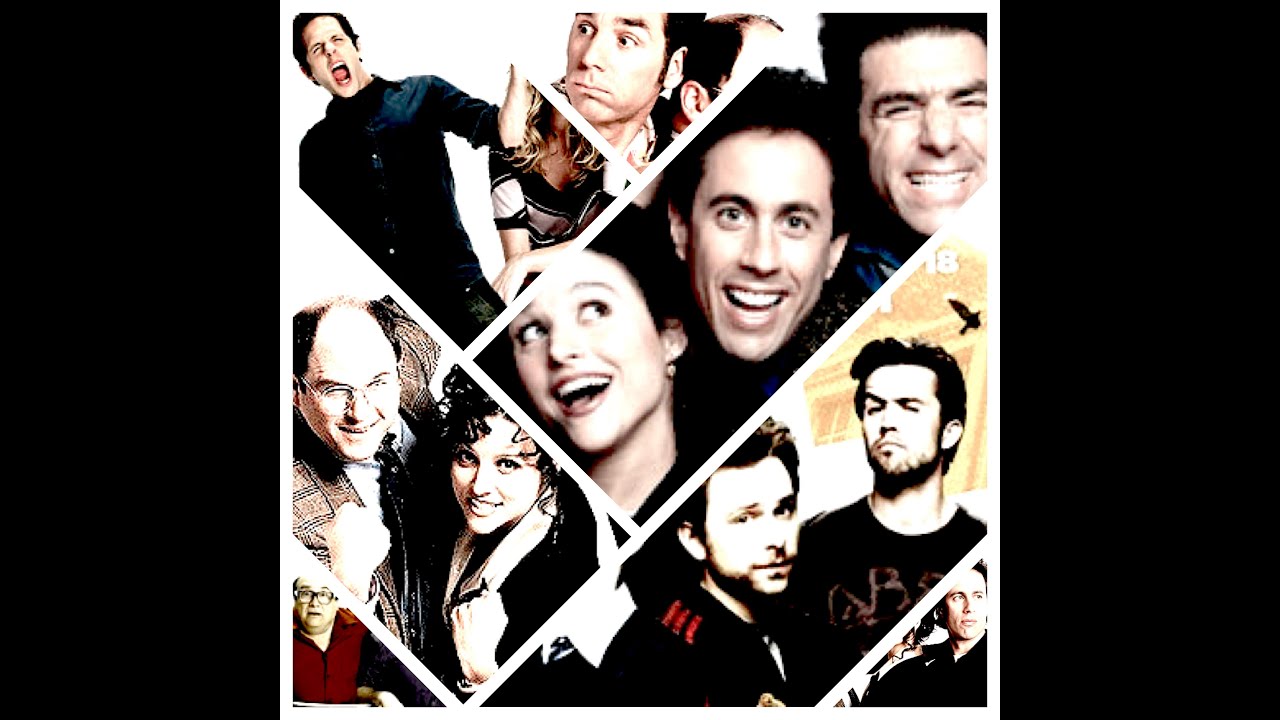
Collage of the faces of the main characters from the TV series "Seinfeld" and "It's Always Sunny in Philadelphia"


INTRODUCTION TO USING MULTIPLE PROTAGONISTS


Since it’s so hard to have a single protagonist fill an entire episode, sometimes sitcoms will use what I call “a protagonist with multiple heads.” “The Teenage Mutant Ninja Turtles” is a good example of this.  It uses a protagonist with 4 heads. Leonardo, Michelangelo, Donatello and Raphael are all the protagonists of the show. They each have their own personalities, strengths and weaknesses, but they act as a team to solve a single problem, which is almost always to defeat their nemesis, Shredder.

Shows like “Seinfeld,” “It’s Always Sunny in Philadelphia” and “Workaholics” use a slightly more complicated formula. Often times the gang will have a major problem that affects all of them and that they all need to work together as a multi-headed protagonist to solve the big problem, just like the Ninja Turtles.

However, each of the characters in “It’s Always Sunny in Philadelphia” and “Workaholics” will have their own reasons for wanting to address the problem, whereas in “Teenage Mutant Ninja Turtles” the writers never dwelt much on each of the protagonists’ motives. It was just taken for granted that they all wanted to stop Shredder to save the world, which made the show a little stale.

Other times, the characters will split up into teams. Two characters will have their own reasons to accomplish a common goal, two more will share another quest, and one character may be one their own hero’s journey. Each episode cycles different combinations.


SUMMARY OF THE 5-ACT STRUCTURE

WITH MULTIPLE PROTAGONISTS


1: THE INTRODUCTION (1-3 MIN)

In the first 1-3 minutes of the sitcom the protagonists state their respective goals for the episode. You can just have all the protagonists sitting in a diner or standing in a bar having a conversation. In that conversation they each say what they want, one after another.


2: THE CATALYST (3-8 MIN)

One thing happens that prevents all of the protagonists from achieving their goal. Then they huddle together and figure out how to overcome the obstacle. They each come up with a solution based on their motives, strengths and weaknesses that may or may not result in them working together. They state their plan and their reason for choosing that plan one after another.


3: COMPLICATIONS AND ESCALATIONS (8-13 MIN)

Each protagonist attacks the problem for a different angle depending on their personality, strengths and weaknesses.


4: THE SHOWDOWN (13-18 MIN)

Each protagonist’s successes or failures affect the team’s overall ability to solve their common problem.


5: THE SUNSET (18-21 MIN)

Show all the characters together back at their regular haunt. Show whether each character got what they wanted or not.


INTRODUCTION TO SUBPLOTS


If you only have one protagonist then you may find it hard to flesh out a complete 20 minute story. You may find that your scenes are dragging on too long or the plot is getting ridiculously complicated because you have too much time to fill. You don’t have to make your protagonist’s mission more complicated to fill air time and create the entertainment factor. Instead, you can weave in a subplot that follows a minor character.

Minor characters’ subplots should be able to stand alone as their own story. They should have a beginning, where the minor character (who is the star of the subplot) reveals what they want and how they plan to get it. They have a middle, where the minor character does something to try to get what they want, and they have an end where the minor character either achieves their goal or they don’t.

Most of your sitcom’s total screen time is going to be taken up with the protagonist’s quest, and every minute you take away from the protagonist’s main story line is less time the protagonist has to accomplish his goal. Thus the fewer complications the protagonist can confront and the less time he can spend deciding what to do much less actually doing anything proactive. This can work to your advantage if the protagonist’s quest is pretty straight forward and would be ruined by cramming in unnecessary complications, but subplots can work to your disadvantage if they drag on too long and don’t leave enough time to wrap up the protagonist’s quest. You’ll likely have that problem if you try to cram too many subplots revolving around too many minor characters into a 20 minute sitcom.  Don’t try to include more than one or two (at the most) subplots.

Don’t be intimidated by subplots. If you’re basing your sitcom on a formula plot then weaving subplots into the main plot is easy because you know where you can logically fit them in as well as what will have to be shrunk as a result.

It’s great if the minor character’s subplot ties into the protagonist’s plot, but it isn’t necessary. For example, you could have the protagonist stay at home and try to write a book while the minor character goes on holiday with old friends from high school. That would keep the two story lines almost completely separate other than the protagonist and the minor character telling each other what they’re going to do in the very beginning and then talking about what happened afterwards at the very end.

On the other hand, if your protagonist is going to a high school reunion then it might make sense for a minor character to tag along and have their own subplot about confronting an ex-lover or bully at the reunion. The minor character’s subplot doesn’t necessarily have to have any effect on whether or not the protagonist succeeds or fails. However, it looks pretty clever when the minor character finishes their story line at the 16-17 minute marks, and the results of their actions have a direct effect on what the protagonist is able to do between the 17-18 minute marks to neutralize (or be neutralized by) his main obstacle.

There was an episode of “How I Met Your Mother” entitled “The Drunk Train.” It followed 3 plot lines, and although none of them really directly affected the outcome of the others, they all analysed the topic of love from different perspectives. So they felt like they tied together, and in fact, since they tied together on a meta level the result was just as satisfying as if the events affected each other.


DIFFERENT TYPES OF SUBPLOTS


Instead of cutting to new scenes where the minor character walks through their own subplot you could have the protagonist walk through their own subplot. For example, if the protagonist’s primary goal is to go to a job interview, but his main obstacle is that he doesn’t have a car then he could spend the whole episode running around town. To make this more interesting you could have a minor character struggle with getting a date. Or you could have the protagonist running around town trying to get to a job interview while also juggling the unrelated sub-quest of trying to get a date.

You can combine these strategies by giving the protagonist a main quest and a sub quest…and also have a minor character engaged in their own subplot quest. In this case you would plot your story as if the protagonist’s subplot is a second minor character’s subplot. The protagonist’s main quest will be shorter, but it should still take up the bulk of the episode’s screen time.

Another variation on these plots is to combine a multi-headed protagonist and minor character’s subplot in the same story. In this case there will be no single character who is clearly distinguishable as the protagonist. This would be a mortal sin in a blockbuster movie or a novel, but sitcom audiences are fine with it.

The easiest way to explain how to do this is to use a two-headed protagonist and one minor character. This is a popular formula because it’s clean, and it ends up filling the right amount of time. “Black Books” is a good example. The protagonists are Bernard Black and Manny. They’ll collaborate on a single quest while the recurring minor character, Fran, works on her own quest.

“Black Books” often uses another variation on this formula. It will use one of its protagonists as the antagonist for an episode. Manny will be trying to run a successful book shop while Bernard thwarts his best attempts until Manny neutralizes Bernard…or Bernard neutralizes Manny…or fate neutralizes both of them. Meanwhile, Fran is doing her own thing.

In the “Tales From the Crypt” episode, “Collection Complete” there are two protagonists who are each other’s antagonists, and there are no other subplots. This was a straightforward episode, but its simplicity required the characters to fill most of the episode by constantly restating how the two protagonists were preventing each other from fulfilling their goal (and thus becoming each other’s antagonists), which got kind of boring.

If you’re writing a sitcom with four or five recurring protagonists like “It’s Always Sunny in Philadelphia” and you want to give screen time to all the characters then you’ll have a hard time fitting in four quests even without trying to squeeze in a minor character’s subquest. In that case you can split your four protagonists into two protagonists with two heads. In “It’s Always Sunny in Philadelphia” Mac and Dennis will often team up with each other to solve a common goal/obstacle while Charlie and Frank collaborate on a separate goal/obstacle leaving Dee to play a minor character with her own subplot. In another episode Frank, Dee and Mac might solve a common problem (though they each have their own reasons for doing so) while Charlie and Dee team up to collaborate on a separate problem. You can cut the cake anyway you want.


SUMMARY OF THE 5-ACT SITCOM STRUCTURE

WITH MULTIPLE SUBPLOTS


1: THE INTRODUCTION (1-3 MIN)
Establish what the protagonists want, one at a time or together.


2: THE CATALYST (3-8 MIN)

An obstacle appears between the protagonist and his goal.

The protagonist reacts to the antagonist/obstacle in his own signature fashion.

Cut to a new scene that establishes what the minor character wants and how he plans to get it.

Cut to a new scene where the protagonist comes up with a plan to neutralize his primary obstacle.


3: COMPLICATIONS AND ESCALATIONS (8-13 MIN)

The protagonist enacts his plan, but he’s blocked by a minor obstacle.

The protagonist comes up with a plan to neutralize the minor obstacle in his way.
Cut to a new scene that shows the minor character enacting his plan and running into his own resistance.

Cut to a new scene where the protagonist enacts his plan and succeeds or fails at overcoming the minor obstacle.


4: THE SHOWDOWN (13-18 MIN)

If the protagonist failed to overcome his sub-obstacle then he comes up with a new plan to  neutralize his main obstacle given this new limitation. If he succeed at neutralizing his minor obstacle then he confronts the main obstacle directly with the new strength/resource he gained from his success.

Cut to a new scene where the minor character confronts their primary obstacle and either succeeds or fails at neutralizing it.

Cut to a new scene where the protagonist pulls out his last resort and throws a hail-Mary to beat the antagonist.

The protagonist either wins or loses.


5: THE SUNSET (18-21 MIN)
Show where this chain of events leaves the protagonist and the minor character.


DETAILED BREAK DOWN OF THE 5-ACT SITCOM STRUCTURE

WITH SUBPLOTS

ACT 1

THE INTRODUCTION


Typically, the first 1-3 minutes of a sitcom are reserved for setting up the protagonist’s main quest. If you put the introduction to the minor character’s subplot here it hogs the spotlight from the protagonist and the audience isn’t sure which story line is the main one. If you’re going to set up or hint at the minor character’s subplot here then do it very quickly and unobtrusively. And there better be a good reason why it was illogical to wait to introduce the subplot until after the opening credits. If you’re new to sitcom writing I would suggest leaving the subplot out of the first 1-3 minutes.


ACT 2 

THE MIDDLE: PART 1

THE CATALYST


The minor character’s subplot is typically introduced between the 6-8 minute marks. At that point the story stops following the protagonist and switches focus to the minor character. This means a new scene begins which the minor character plays the main role. You introduce where he is, what he’s doing, what he wants and how he plans to get it. This whole scene must only take 1-2 minutes. Then the scene ends. Then the story switches back to the protagonist and his quest. When that happens you have to re-establish where the protagonist is and what he’s doing.

This doesn’t leave a lot of time to introduce the subplot. That’s fine. If the subplot takes too long it’ll distract and confuse the audience. The time limitation on the subplot will make it easier to write if you let it. The subplot doesn’t have time to be serious or complicated. It’s a quick scene with a quick joke. It gives the audience a chance to breathe more than it gives the audience another puzzle to figure out. Don’t make it harder than it is.

The logical time to insert the minor character’s introductory subquest scene is right after the protagonist is finished establishing what his problem is and what he’s going to do about it. Since the audience has just seen the protagonist do it they’re not thrown for a loop when they see another character go through the same thing. But if you wait until after the protagonist has been working on his problem for 10-15 minutes it’s going to feel clunky to see a minor character just begin their quest, and you’re not going to have any time to flesh out that subplot because the episode will almost be over and that time is already reserved for the final showdown between the protagonist and the main obstacle standing between him and his prize.


ACT 3

THE MIDDLE: PART 2

COMPLICATIONS AND ESCALATIONS


During the 8-13 minute marks the protagonist is dancing through a minefield trying to navigate his way to the other side where the grass is greener. The 8-9 minute mark is reserved for the protagonist’s first attempt to overcome the main obstacle. The 12-13 minute mark is reserved to show how the protagonist’s plan is working out for him. Somewhere between the 9-12 minute marks is the logical place to cut away from the protagonist’s story line for a moment and splice in the continuation of the minor character’s subplot for 1-2 minutes.

In those 1-2 minutes the minor character will have one minor obstacle between them and their primary goal. The minor character will only have enough time to take one stab at doing what they do in order to neutralize this obstacle. The situation has to be simple because there isn’t time for any more complications.

It doesn’t particularly matter if the minor character succeeds at neutralizing this minor problem. It’s usually more dramatic if they fail, and that gives them motivation to come back desperate and with a vengeance later. However, they don’t have to succeed or fail at anything in this segment. You could just spend this 1-2 minutes re-establishing how important this quest is to the minor character and what their chances of success are based on their current behaviour. That will raise the tension for the final showdown and give the audience an enjoyable break from the fast-forwarded main plot. Also, this will allow you to focus on getting to know the minor character. If the protagonist is on a practical mission then the minor character’s mission could be emotional or visa/versa, but don’t worry too much about balancing opposites or creating yin-yang situations. The audience’s primary concern is that the subplot lines are entertaining, and they’ll even forgive an uninteresting plot line if it’s delivered in an entertaining way. Keep that mind when you’re asking yourself, “What should happen next?” Something entertaining should happen next, that’s what. Everything else, rules included, are only important to the extent that they makes the final product entertaining.

At any rate, life isn’t organized. All the strings don’t tie together at the end of the day for real people like they do in well-structured novels or blockbuster movies.  Just watch an episode of Family Guy if you need proof that you don’t have to write air-tight coherent stories to be a successful sitcom writer. I’m not giving you permission to be sloppy. I’m just saying, don’t give yourself writer’s block trying to write your magnum opus every single episode. Successful sitcom writers don’t.


ACT 4

THE MIDDLE: PART 3

THE FINAL SHOWDOWN


The first minute of Part 3 (the 14-15 minute mark) is reserved to re-establish where the protagonist is and what he’s doing. The 17-18 minute mark is also reserved for the final blow between the protagonist and antagonist to decide the main victor of the episode. This leaves you a three minute window between the 15-17 minute marks to stop the protagonist’s main quest and splice in a 1-2 minute scene that shows the minor character deliver their final blow to the antagonist (or visa/versa), which will decide if the minor character is successful at achieving their goal.


ACT 5

THE END

THE SUNSET


The final 1-3 minutes of a sitcom reveals how the repercussions of the protagonist’s victory or loss. This information isn’t vital to the plot. The real story ended as soon as the victor was decided. This segment is just icing on the cake, and you can take broad liberties with it. At any point you can splice in a few seconds or a few minutes showing the repercussions of the minor character’s victory or loss. Or you could just leave out any mention of the minor character and their fate. It really depends on the situation. But since the protagonist and the minor character see each other day in and day out at the same place, it often makes sense to end a sitcom episode with the protagonist doing something with the minor character that reveals how both their quests have affected them at the same time. Often this means they’re just sitting at their favorite diner or bar talking about what happened to them and how happy or mad they are about how it’s going to affect their short-term future.


If you enjoyed this post, you’ll also like these:


Screenwriting for Movies
Screenwriting for TV
Short Stories
Erotica
Choose Your Own Adventure
Movie plot break downs
TV plot break downs
Free story prompts
Writing tips
Blogging
Art

8 Simple Formula Plot Templates


ACTION STORY TEMPLATE


ACT 1

SEGMENT 1

The story begins by introducing the protagonist in a way that reveals his defining characteristics, strengths, weaknesses, life circumstances, motives, and goals. SEGMENT 1 also establishes the setting and tone.

SEGMENT 2

Something happens to the protagonist that is out of the ordinary (for the protagonist, not for you). The event should be as apocalyptic as possible. This event throws the protagonist out of his comfort zone. The more disastrous it is for the protagonist the higher the stakes are. The higher the stakes are the more interesting the story will be.CH

SEGMENT 3

The protagonist weighs his options. He decides he can not ignore the event that has thrown his life off track. There is either too much at stake or the event has irrevocably closed the door on his previous life until he confronts the issue.

ACT 2

SEGMENT 4

The protagonist makes a plan of action to address the source of the conflict. The event that threw him off course has given him 1 clue as to where to start finding answers or he knows the first obstacle standing between him and the resolution of his conflict.for

The protagonist executes his plan and succeeds, closing the door on the antagonist’s original plan. Not only does the antagonist not achieve his goal he was hoping for, but the exact opposite of what he intended happened and the door he was trying to go through is now closed. The protagonist learns more about the antagonist, himself and the antagonist’s motives/goals. Based on this new information the protagonist makes a new plan to get closer to the antagonist.

SEGMENT 5

The protagonist, enabled by his previous success, sets in motion the second part of his plan to accomplish his goal.

SEGMENT 6

The antagonist has to adapt to the new circumstances created by the protagonist’s success and devises a new plan.

SEGMENT 7

The protagonist executes his new plan and fails. Not only does he not achieve the goal he was hoping for, but the exact opposite of what he intended happened.  The door he was trying to go through is now closed.

SEGMENT 8

Despite the protagonist’s failure he has learned something new about the antagonist. He uses that information to create a new plan to approach the conflict from a different angle.

SEGMENT 9

The protagonist executes his new plan and succeeds.

Note: You can repeat SEGMENTS 4-9 as many times as logically needed to fully develop the characters and the conflict.

Also

There’s no set rule for how early or how late you should reveal the antagonist. It just needs to be logical and provide maximum tension.

SEGMENT 10

The protagonist’s success places him in a position to confront the antagonist directly, which he does. This is the Battle of the Bulge. The protagonist has made it to/into the gates of the antagonist’s lair and must directly battle all of the antagonist’s signature strengths with his own signature strengths.

SEGMENT 11

The antagonist has the protagonist cornered. The protagonist is at his weakest point and all hope is lost. The antagonist is one step away from accomplishing all of his goals and defeating the protagonist.

SEGMENT 12

The protagonist uses his signature strength and attacks the antagonist’s signature weakness to defeat him.

ACT 3

SEGMENT 13

Having defeated the antagonist the protagonist finally takes possession of the object of his quest.

SEGMENT 14

After the protagonist takes possession of the object of his quest he must do what he planned to do with it.

SEGMENT 15

The protagonist, having accomplished all of his goals must choose what to do next or with the rest of his life.

SEGMENT 16

The denouement tells what lies in store for the protagonist, any supporting characters or the world in general.


A VERY COMMON SITCOM TEMPLATE: 

THE TRAGIC OPPORTUNITY


SEGMENT 1

A sitcom episode does not need to begin by introducing the protagonist at length since his character has already been established in previous episodes. However, the first segment of an episode should begin by revealing the protagonist’s primary motive/goal for that particular episode. In a sitcom Segments 1 and 2 can be combined often within a single sentence of dialogue.

SEGMENT 2

The protagonist finds (or is presented with) an unusual (for him, not for the audience) opportunity to attain whatever it is he values (usually money, fame, sex, love, freedom, leisure, etc.).

SEGMENT 3

The protagonist pursues the opportunity and becomes involved with it.

SEGMENT 4

The opportunity turns south. Not only does it not help the protagonist achieve his goal, but it actually prevents him from achieving it and results in him attaining the thing he was trying to avoid.

SEGMENT 5

The protagonist tries to free himself of the situation he’s gotten himself into but fails.

SEGMENT 6

The opportunity, being faulty, ends up destroying itself and spitting the protagonist either right back where he started, farther behind, or miraculously ahead in some unexpected way.

SEGMENT 7

The protagonist learns a valuable lesson.

SEGMENT 8

In the final scene it is explained how the resolution of the conflict will affect the character’s life in the future.


THE SHERLOCK HOLMES MYSTERY TEMPLATE


SEGMENT 1

Introduce the detective. Arthur Conan Doyle usually just showed Sherlock Holmes in his home office and said, “This is Sherlock Holmes. He’s a genius detective.” Just to prove the point he would sometimes have Sherlock Holmes make genius deductions about his sidekick based on his appearance.

SEGMENT 2

Introduce the harbinger. Someone walks through the door and tells the detective they have a case they need solved. Then the detective agrees to hear the case. If you want to rub in what a genius the detective is then you can have him make deductions about the harbinger based on their appearance.

SEGMENT 3

The harbinger explains the case as they understand it. They leave out the critical details necessary to solve the plot. However, they give the detective all the clues he needs to solve the case. These clues are laid out in plain sight, but they’re presented alongside superfluous details so that it’s impossible for the reader to guess which details are the true clues.

Note:

If the crime was murder then the harbinger must be someone who has a close connection with the murder victim, and the harbinger will tell the victim’s story. If the crime was theft, blackmail or manipulation then the harbinger can be the victim, and then they will tell the story of their own victimization.

The harbinger will relate their story to the detective in this general order:

1: Give a general description of all the characters involved in the crime. The harbinger explains who the characters are, where they came from, what they do, what their greatest hopes and fears are (to establish their motives). For example: “My father was a gold hunter in Australia, and he retired in England with his partner who was a bastard.”

2: The harbinger relates the significant events that happened to the victim leading up to the day of their victimization that set the stage for the crime committed against them. For example, “My father started receiving strange letters that freaked him out.”

3: Next the harbinger relates the specific details of the crime as they happened on the day of the crime. This part reads like a police report. (Studying how to actually write a real police report will help you write detective fiction.) For example, “My father was last seen by the lake arguing with his business partner’s son.”

SEGMENT 4

The detective identifies the vital clues in the harbinger’s story and asks the harbinger to elaborate on them.

SEGMENT 5

The detective leaves his office and finds the proof necessary to validate his theory.

SEGMENT 6

The detective catches the antagonist and explains how he solved the mystery.

NOTE

The key to plotting a mystery is to understand that a mystery story is really three stories: The story of how/why the antagonist committed his crime, the story of how/why the crime affected the harbinger and the story of how/why the detective solved the case. The easiest way to weave these together is to write them in this order and then splice them together in the format explained above.

So the first thing you need to do is to write a dark crime story starring the antagonist, which you do like this:

SEGMENT 1

Introduce the antagonist.

SEGMENT 2

The antagonist has an opportunity to attain or defend what he wants most in life (usually a lot of money or a lover)…at the expense of someone else.

Segment 3

The antagonist finds a way to attain/defend what he wants in a way that nobody else can trace the crime back to him.

Segment 4

The antagonist commits the crime but unknowingly leaves one or more vital clues that can trace the crime back to him.

Segment 5

The antagonist goes on about his life hiding his secret.

Once you’ve written this relatively simple, strait-forward crime story, then create a mystery out of it is just a matter of plugging the details into the detective formula.


FABLE TEMPLATE


SEGMENT 1

The story begins by introducing the protagonist in a way that reveals his defining characteristics, strengths, weaknesses, life circumstances, motives, and goals. SEGMENT 1 also reveals the setting and tone.

SEGMENT 2

The antagonist appears and poses a moral quandary to the protagonist.

SEGMENT 3

The protagonist chooses a course of action he believes is most desirable based on his values.

SEGMENT 4

Protagonist executes his decision, and the antagonist reacts accordingly.

SEGMENT 5

If the protagonist chose wisely it has positive consequences for him and negative consequences for the antagonist. If the protagonist chose unwisely it has negative consequences for him and positive consequences for the antagonist.

SEGMENT 6

The lesson to be learned from the protagonist’s decision is explained.


GROUP JOURNEY TEMPLATE 

(FOR CHILDREN’S STORIES)


SEGMENT 1

Introduce the protagonist, describe the protagonist, explain the protagonist’s backstory.

SEGMENT 2

Something terrible happens to the protagonist, and he has to embark on a journey to get something that will fix the problem.

SEGMENT 3

The protagonist sets out on his journey and runs into his travel companions who each have personalities, values and/or skills relevant to the quest. Explain each supporting characters’ backstory and their incentive to join the protagonist.

SEGMENT 4

Explain the first obstacle the characters must surmount to resolve their conflict. The characters must draw on their combined resources (mental and physical) to overcome the obstacle.

SEGMENT 5

Explain the second obstacle the characters must surmount to resolve their conflict. This one must be more difficult than the first, and the characters must overcome it or work around it.

Note: You can have as many obstacles as are logical, but they must keep getting progressively more difficult.

SEGMENT 6

After surmounting all the obstacles between the characters and their goal they (or just the protagonist) face the antagonist head on. Describe the antagonist, Explain the antagonist’s backstory. Explain the antagonist’s motivation to oppose the protagonist. The protagonist (possibly aided by his/her friends) defeat the physically superior antagonist by outwitting him/her.

SEGMENT 7

Denouement


THE SEINFELD/SNATCH TEMPLATE


This template uses 4 main characters, but the template is easily adjustable to use more or less main characters.

SEGMENT 1

Introduce all 4 characters in one location. “Seinfeld” uses a diner. “Friends” uses a cafe. “The IT Crowd” uses a work office. “The Big Bang Theory” uses communal living space. “It’s Always Sunny in Philadelphia” uses an Irish pub. You get the idea.

In the introduction segment, each character expresses some goal they want to achieve. Reverse engineer what goal each character would most likely want to accomplish based on their distinctive personality. Primetime television leans towards using petty, idiosyncratic, common, day-to-day goals like trying to get a bowl of soup from a mean chef. Or you can go the “Snatch” route and have them trying to get something extraordinary…like a gigantic diamond.

SEGMENT 2

The characters go their separate ways, and each of them either encounters a problem that prevents them from achieving their goal or an opportunity opens up that allows them the chance to attain their goal given that they complete a task relevant to the goal.

SEGMENT 3

Each character does something that commits them to accept the challenge before them. They could simply declare that they’re going to achieve their goal like making a vow to get laid on prom night or they can do something they can’t back out of like making a deal with a mobster.

SEGMENT 4

Each character steps up to the plate and takes their first swing at their problem. They go on the date. They go to the job interview. They steal the beer. They steal the diamond. Remember that they engage their challenge in a way that reflects their distinctive personalities and values.

SEGMENT 5

Up until this point, it doesn’t matter if each character’s storyline intersects or affects any other characters’ storyline. Whether or not that happens up to this point just depends on what moves your particular story along. Having reached this point though, the storylines have to start weaving together. Here’s one way to do that:

Character #1 will succeed or fail at his goal as is typical for his character. His success or failure will directly influence the situation Character #2 is in when he takes his final stab at achieving his goal. Character #2’s success or failure will then affect character #3, and character #3’s success or failure will affect character #4. This is a simple domino progression that looks simple in outline form, but when your story is fully fleshed out it’ll look genius.

The big question is how each character’s storyline affects the next character’s. You can psych yourself out by trying to preplan this, but you don’t need to. Simply get each character to the second to last step of their journey and then reverse engineer a way to connect the dots from there. Your characters may end up miles apart with no obvious way to connect them, but this just means you’re going to have to do something absurd and nonsensical to connect them. This may seem like a cheap deus ex machina trick when you look at your outline, but when your story is fully fleshed out your reader will be amazed at how creatively you managed to connect 4 seemingly unrelated events.

SEGMENT 6

After each character succeeds or fails they end up back where they first met in SEGMENT 1 and lick their wounds and/or celebrate their victory.


THE “HERO YOU WANT TO BE” TEMPLATE


Answer the following questions and you’ll have written a complete story. Your outline will “tell” what happens. Based on that outline write a story that “shows” what happens.

ACT 1

SEGMENT 1

Name your 3 favorite characters from your favorite books or movies. Note: They don’t have to be from your favorite stories. They just have to be your favorite characters. Now combine yourself and those characters into one person. That’s who your protagonist is.

Next, name your three favorite stories. Now combine the setting/environment in those 3 movies into one place.  That’s where the protagonist lives. Write a short narrative about what that protagonist’s daily routine is like. Have him engage a conflict that is typical of his life, and succeed or fail as would be typical for that character.

SEGMENT 2

What is the one thing you want most in the universe? Who/what is the most likely agent in the story setting you just created to have the power and the motive to take that away from you?  What is the most logical obstacle that would prevent you from stopping this agent of loss from taking away the most valuable thing in the universe from you? That agent takes your thing away and you fail to stop it from happening.

SEGMENT 3

What’s the first thing that would go through your mind after the traumatic loss? How do you react to the loss?

ACT 2

SEGMENT 4

What would it take to get your very important thing back? What would be the first logical thing you would do to get back your very important thing given the strengths/weaknesses of your protagonist and the specific nature of the agent that took it?

SEGMENT 5

What’s the most logical reason why that wouldn’t work? Because it didn’t work, and that’s why. So where does that leave you now?

SEGMENT 6

What would be the most logical way for you to get your very important thing back from the agent of loss now? You do that, and it almost doesn’t work, but you do it a little more and it finally works perfectly. (Or fails miserably if you want your story to be a tragedy.)

ACT 3

SEGMENT 7

What’s the first thing you would do after getting your very important thing back?

SEGMENT 8

And what would that accomplish? What’s the biggest effect that would have on your life and/or the world?

SEGMENT 9

Once that happens what does the future hold for your character and/or the characters left behind in the story environment you created?


 THE “IT’S LIKE THE AUTHOR UNDERSTANDS ME” TEMPLATE


Answer the following questions and you’ll have written a complete story. Then go back and change enough details to hide the characters’ true identities and make the story flow. Remember, critics say good art reflects life, and good artists say the key to creativity is hiding your sources. Mark Twain said, “Never let the truth get in the way of a good story.”

ACT 1

SEGMENT 1

Who are you? What is your day to day life like?

SEGMENT 2

What was the biggest personal problem or tragedy you had to overcome in your life?

ACT 2

SEGMENT 3

How did you figure out the solution you ultimately used to solve (or at least cope with) the problem?

SEGMENT 4

What steps did you take to solve/cope with the problem?

SEGMENT 5

How did the final events that brought closure to the issue play out?

ACT 3

SEGMENT 6

How did the initial recovery period after that go? What was it like adjusting to life after having gone through what you went through?

SEGMENT 7

Where are you now? What are doing with yourself these days? How is life going for you? Have the old wounds healed?

SEGMENT 8

What are your plans for the future, or are you just living for the moment right now?


If you enjoyed this post, you’ll also like these:


Screenwriting for Movies
Screenwriting for TV
Short Stories
Erotica
Choose Your Own Adventure
Movie plot break downs
TV plot break downs
Free story prompts
Writing tips
Blogging
Art