Category Archives: My life stories

My Life Stories: The Cow-poline Story

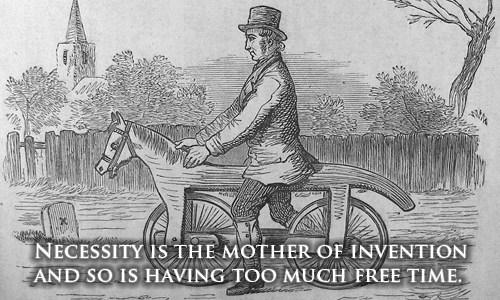
"Necessity is the mother of invention, and so is having too much free time."

When I was nine years old I lived in a trailer house at the end of a mile-long long dirt road. My closest neighbors lived a mile away, and the closest town (population 3,220) was twenty miles away. We had friends in town from school, but our dad couldn’t afford the gas to drive us to see them. So during the summer, pretty much the only faces I saw belonged to either my dad, two brothers, two dogs or two cats. We were so far away from civilization we could pee freely off the front porch of our trailer and set whatever we wanted to on fire without anyone complaining.

The solitude was liberating, but it was also oppressive. The only way to relieve the endless prison-like monotony was to create our own entertainment, which forced me and my brothers to be very creative. We played with stuffed animals and action figures, built elaborate blanket forts and staged fighting tournaments. Our das was a computer teacher, and he would give us reams of dot-matrix continuous printer paper, which we would unfold all the way down the hallway and then draw continuous scenes that looked like a level of Super Mario Brothers. Then we would pretend we were controlling a video game character and run it through the level.

When it wasn’t too hot outside we would take long hikes through the South Texas countryside with our two dogs and two cats. We navigated the wilderness by following old cow paths. The highlight of each month was when the old farmer who owned the cows would drop off a big round hay bale somewhere. If we stumbled upon it before the cows chewed it down we could play king of the hay bale, which was as fun as it was dangerous. The farmer also left salt licks that we would chip pieces off of and snack on, as well as wheat pellets that we would dip in wet cow patties and feed to our dogs.

If you think that’s vile, you’ll be more depressed to know that we also had dried cow patty Frisbee fights. On the most boring days, we would just walk around chopping prickly pear cactus patches to shreds.

Picture of a large prickly pear cactus

One of our favorite activities was to pretend we were characters from the movie, Predator, and we’d run through the brush country shooting hordes of imaginary aliens with guns made out of sticks, PVC pipe, and dreams. It was on one of these missions that we caught wind of the smell of a dead animal, which wasn’t unusual. We’d often track down animal carcasses by following the halos of buzzards circling above their next meal. Why would we track down rotting carcasses? To see what’s rotting and if it had a cool skull. If we happened to have fireworks with us, the opportunities were endless.

The source of today’s amusement wasn’t hard to locate. It was coming from behind the low hanging canopy of a huge, old oak tree. The smell of putrid, rotting death cooking in the brutal Texas summer heat pushed at us like an invisible wall before we could even see the body.

To this day, I’ve never smelled anything more profoundly repulsive. The worse the odor got, the more it fueled our curiosity. We pushed back the curtain of leaves to reveal exactly what we expected to find, a dead, bloated cow covered in blowflies. Its eye sockets, mouth, and anus pulsated with maggots. Most little girls would have vomited at the sight, but we weren’t faint-hearted little girls. We were prepubescent male trailer trash.

We lingered beneath the old oak tree for at least an hour marveling at the miracle of death and sharing our thoughts. Eventually, the eye-watering stench drove us off, but it went without saying that we’d be back every day for at least a week.

On the first day, we created a game to see who could throw a rock at the cow’s inflated stomach and have it bounce the farthest. The second day the game evolved to see who could bounce the largest rock the farthest. On the third day, we tried to see how big of a log we could all three heave at our big, morbid leather stink balloon. The next day we got to talking, and we reasoned that since leather is almost impossible to break with brute force, then theoretically, a small child could bounce on a leather trampoline and not fall through. And since dead cows are made of leather, there’s no reason a small child couldn’t safely use a ripe, bloated cow as a trampoline.

So we played rock-paper-scissors to determine who got to be first to test the cow-poline. I don’t remember who the honor went to, but as soon after they took a few cursory hops and confirmed what we already know,  we all scrambled up the meat mountain and started leaping like cheerleaders and being propelled up towards the sky by the force of the compressed fermented gasses bubbling in the cow’s decaying guts. For the first few minutes, every time we landed on the stomach, poop, and maggots would spurt out the cow’s fly-coated butt hole.

Photo of a cow with a shocked look on his face

As much fun as that was, we knew we couldn’t keep our cow-poline forever. Sooner rather than later the smell would draw packs of wild coyotes who might decide to eat a living cow next. So that night we told our dad about it, and he called the farmer, who said he’d be out to bury it in a few days. In the meantime, my brothers and I returned every day to jump on our red neck bouncy castle. We even managed to get two or three balanced bounces on top of the cow, on a pogo stick.

Eventually, we heard the old farmer’s tractor ratting up our dirt road/driveway We met him on our front porch where he shook our dad’s hand, and then walked to the death site as he drove behind us. When we arrived, he didn’t even flinch at the smell. Silently and stoically, he wrapped a long, heavy chain around the cow’s head and horns and attached the other end to his tractor.

Since he never told us we couldn’t, we followed as he dragged the 1,500 pound rotting meat bag as far to the edge of his property, as far away from the rest of his heard as he could get it. Then he used a bulldozer attachment on the tractor to dig a trench the size of a small swimming pool and push the corpse into it.

Watching him bury our cow-poline was emotional. It was like losing a new friend… and the equivalent of a toy that would have cost several hundred to buy at Wal-Mart, which to poor white trailer trash like us, may as well have been a million dollars.

It took the farmer about twenty minutes to fill the trench with dirt. Each time he would turn his tractor around to fetch another mound, we’d use the window of opportunity to run at the trench, jump onto the cow, and catapult ourselves across to the other side and back as many times as we could before the tractor came too dangerously close with its next payload.

The whole time, the farmer never said anything to us. I didn’t even see him shake his head in condescending disbelief. I’m sure he was laughing at us inside. Maybe he was having too much fun watching us to make us stop. Maybe he figured if we were so starved for fun that we would risk getting buried alive for the chance to jump on a rotting corpse, then he should just let us have that. Or perhaps he was just so dumbfounded he didn’t have words.

Gif of Neil Degrasse Tyson shrugging apathetically

I’ve told his story to friends and acquaintances before, and of all the crazy tales I’ve told, this one always elicits the most guttural reactions. Until I had a few girls shriek at me in horror, it never occurred to me that most people wouldn’t use a dead cow as a trampoline.

It’s funny, everyone tells you to think outside the box until you do. Then the gasp and shout, “That’s messed up! You’re freaking crazy! What the hell is wrong with you!?” Maybe I’m crazy, but maybe sometimes “crazy” is just being creative outside your comfort zone. My brothers and I weren’t trying to be creative though. We were just bored and incidentally proved the old adage, “Necessity is the mother of invention.”

If you have any stories of depraved, desperate creativity that you’re willing to admit, feel free to leave your story in a comment below.

If you enjoyed this post, you’ll also like these:

My Goals

My Life Stories (in chronological order)

My Art


My Life Stories: The Eggnog Story

Picture of a carton of eggnog

In 1987 I was seven years old. I had just moved from Pleasanton, Texas (population 8,000) to Paris, Texas (population 25,000) and was starting the first grade. Like any child, I was anxious about making friends and succeeding at my first year of school and life in general.

I didn’t have a very complicated personality at that age. I was so shy that my parents had to send me to speech therapy at an earlier age because I never spoke. It’s not that I couldn’t. I just let my identical twin brother do all the talking for me. He understood me. So he translated for the adults until they caught on to what we were doing and put a stop to it.

I was also trusting to a fault and vividly insecure. Despite my anxieties, I didn’t have a hard time integrating into my new environment because children enjoy meeting new children. So it wasn’t long before I was on a first name basis with a third of the kids on the playground, and I even had my own best friend, a swell kid named Robert who lived within walking distance of my house.

I’d been in first grade for almost a semester, and Christmas break was coming up. One day Robert and I were walking aimlessly around the perimeter of the playground at school after lunch talking about all things Christmas. At some point in the conversation I said one of the things I liked best about Christmas was that stores sold eggnog, and I love eggnog. Robert looked at me like he was a Ku Klux Klan member, and I just told him I was a gay black atheist.

Wide-eyed and with a tone of voice full of accusation, he shouted, “EGGNOG!” I flinched, and he shouted again, “EGGNOG!!” He kept shouting it over and over, and soon other kids standing nearby joined in. In no time there was a crowd of 5-10 children shouting angrily at me, “EGGNOG! EGGNOG! EGGNOG!”

I was just a poor country boy who moved up to the big city and was trying to fit in. I didn’t understand what social faux pas I had broken, but apparently, it was pretty major. I was terrified. So I ran. It didn’t take long before all 40-60 children on the playground saw what was happening and joined in. They chased me through jungle gyms and across basketball courts. I ran as hard as I could, but it was only a matter of time before they caught me and pinned me to ground. I can still remember the crowd surging above me screaming with such sincere disgust, “EGGNOG! EGGNOG!”

Picture of a group of children chasing a lone child.

I don’t remember how long I laid on the ground in a fetal position while my peers pelted me with accusations of eggnog. I remember going home feeling more confused about life than ever. I wanted to be a good person. I wanted to fit in. I wanted to make adults proud of me. But I couldn’t even get the eggnog thing right. I’d gone and fucked up by liking eggnog, and I didn’t even know why that was a bad thing.

These thoughts and question racked my mind all night and the next day until the end of lunch break when my classmates and I were released onto the playground again. I walked outside that day feeling vulnerable. So I hung back by the edge of the building to survey the scene. I made eye contact with a few kids, and nothing happened. My paranoia began to dissipate until I heard a shout from behind me, “EGGNOG!” As soon as that happened, every child on the playground immediately joined in. Again, I was chased around the playground by a mob of angry anti-egg-noggers until they pinned me.

I know there were teachers watching this whole fiasco unfold, and to my memory, they didn’t put a stop to it. I imagine they were just leaning against the wall of the school smoking cigarettes laughing at us.

Gif of Ron Swanson from "Parks and Recreations" looking concerned, then shrugging like he doesn't care.

I don’t know if they ever said anything to any of the other children, but nobody ever said anything about eggnog to me again after that day. It’s like it never happened. At times I’ve wondered if did since my memory is the only validation I have that this scenario ever occurred. Whether or not it was real, the experience shook me deeply for a long time. I didn’t admit to anyone else that I liked eggnog until high school. Even then I did so timidly.

As much damage as this event did to my self-esteem, it taught me a few things:

1: Question everything.

2: People tend to do whatever the people around them are doing, even if it’s being mean to someone else.

3: You don’t have to be ashamed of your choices if other people don’t agree with them. They may get on top of you sometimes, but in the end, they’re not going to spend their lives with you. You can do what you want when they’re not around.

4: Young people do stupid things that don’t make sense. That’s because we’re all born crazy, and life is a life-long struggle to figure out what sanity is. None of us will ever truly know what that is. So we all deserve a little leeway for doing stupid things like shouting “EGGNOG!” at their best friend and causing a riot that scars him emotionally for years of his formative life.

If you enjoyed this post, you’ll also like these:

My Life Stories (in chronological order)
My Goals
My Art

What’s It Like To Be A Twin?

Baby photo of me and my twin holding white teddy bears and wearing stripped sailor outfits. Thanks, mom.

The difference between identical and fraternal twins is that identical twins are created when a fertilized egg in a mother’s womb splits in two, and both halves grow into babies with the same DNA, whereas fraternal twins are created when two separate eggs are fertilized by two separate sperms simultaneously and grow into two different babies with different DNA.

It’s illogical to ask identical twins which twin is older. It’s like taking an apple, cutting it in half and saying that the first half you picked up is older than the other half. For legal purposes, you can say that the first baby to come out is older, but that’s just an arbitrary bureaucratic formality. In reality, both individuals have existed in the universe for the same amount of time.

Most twins are born prematurely because there isn’t enough room in the womb to carry two babies full term. This often results in health problems and even death for one or both of the babies. In my case, my brother and I were born two months early. I came out a blue baby because my heart wasn’t done developing, but my brother was fine. Due to my health problems in infancy, I’m half an inch shorter than him, and I wear one size smaller shoes than him. I’ve been asked many times, but I can’t comment on our penis sizes.

Identical twins are of great interest to psychologists because they have the same DNA. This means you can study the behavior of twins to determine what behaviors are the result of nature and nurture. Many twins (myself included) get to experience being tested like lab rats at some point in their life. Psychologists have done countless studies to determine if the order in which siblings are born has any impact on their personality, and they’ve only found one positive correlation: one identical twin tends to be an introvert, and the other will be an extrovert. For the record, I’m the introvert in my twin unit.

Doctors and the general public treat twins like they’re rare, mythical creatures. If you tell a child that they’re different enough times, eventually they’ll start to believe it. This has different ramifications on different people’s psychological development.

Schools in some countries, including the United States of America, have a strict policy of not letting twins be in the same classes during elementary school, because they don’t want twins to base their identity too strongly as a member of a pair, like Thing One and Thing Two. This can be traumatic for twins at first, but this and other twin experiences can serve as motivation to define their identity.

Everyone in the world has to ask themselves, “Who am I?” You have to spend the rest of your life answering that. That question is complicated when you grow up with a clone of yourself. What does that mean? Do you have half a soul? Are you half a person? Are you twice the person that non-twins are? Will you and your twin’s soul reunite when you both die? Will one of you haunt the other after one of you dies? Did fate play a role in you being born a twin? Is killing your twin ethically equivalent to killing yourself? Life is already an existential riddle, but being a twin takes it to another level.

Being a twin is surreal, but it’s not magical. Twins don’t feel pain when the other is hurt, and they don’t have telepathic powers. They may seem to know what the other is thinking, but that’s because they shared the same experiences growing up.  If you spend enough time with anyone you’re going to develop inside references and jokes that only you two understand. Twins just have a head start. Since they learn how to speak together, they tend to develop their own inside language.

This is the most majestic aspect of being a twin. Single children enter this world alone and have to face it by themselves. Twins are born with a best friend to take on the world with… and not just any best friend, a copy of yourself. They’re born into a stable and meaningful relationship comparable to marriage. That’s phenomenally useful and personally rewarding… as long as it lasts.

For these reasons and more, having a twin is fun. It’s like having a superpower. Random strangers will freak out gleefully when they see me and my twin together. It’s like being a celebrity. Sometimes people will want to sleep with you just because you’re a twin, especially if you hint that there’s a possibility of having a threesome, which is gross and I would never actually do.

If you’re inclined to use your power for evil, you can trick people. My brother and I never did that much. We didn’t switch classes in school because that would just mean we’d fall behind in our actual classes that we missed. We never swapped girlfriends, though I know twins who have. The most we ever did was use each other’s ID cards interchangeably.

The only time one of us used our power for evil was in middle school. One day at school I tried to leave my lunch tray on my table instead of taking it back to the kitchen, and my football coach caught me and yelled at me. Once he left I just put my tray on my chair and pushed it under the table and headed to my locker. My coach found out what I had done and ran down the hall screaming. I turned my back and let him pass. He found my brother and pinned him against his locker and screamed at him thinking he was me. Then he gave my brother lunch detention for six months. My brother had no idea why that happened until we were telling twin stories at a party seven years later.

Image of Urkel from the TV series "Family Matters," saying, "Did I do that?"

Having a twin isn’t all fun and games though. For the first 10 years of your life, adults will make you stand next to each other and ooooh and awwww at you nauseatingly. Your parents will dress you up in embarrassing matching outfits. You can’t tell who’s who in childhood photographs. On your birthday and Christmas, you get redundant identical presents. People will constantly confuse you with your sibling. We got so used to being called by the wrong name in school that we often wouldn’t even bother correcting the person talking to us. We’d just pretend to be the other twin and pass the message along if it was important. Half the time the other person wouldn’t even care who they were talking to. They’d just call us by our last name. In elementary school, we had one teacher who could only tell us apart by the mole in my right ear. So when she would see us she would grab our ears and fold them inside-out. The kids on the playground just memorized which shoes we wore.

Then, of course, you’re cursed with the lifelong knowledge that one day one of you will die first. Then one of you will have to spend the rest of your life without your other half. But hey, at least if one of us needs an organ transplant we know where to find a perfect donor match!

If you enjoyed this post, you’ll also like these:

My Life Stories (in chronological order)
My Goals
My Art

My Quest To Find The Meaning Of Life

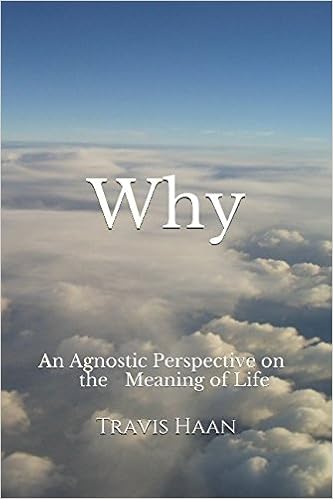
The cover of my book, "Why: An Agnostic Perspective on the Meaning of Life"

Over the course of 10 years, I wrote a book on the meaning of life titled “Why: An Agnostic Perspective on the Meaning of Life.” I didn’t do it to get rich quick, or because God told me to or because I’m the smartest person alive. My motives came from somewhere much more down to Earth. To understand why I wrote this book, you need to know the whole story.

I’ve always been an introvert, predisposed to working alone on long projects, and I’ve always loved puzzles. At the age of seventeen, I made a conscious decision to make a hobby out of solving difficult logic puzzles for the fun and challenge of it. Originally, this consisted of completing puzzle books, which I did with varying levels of success. That got boring quickly though because I was just rearranging words, letters, and numbers, which felt tantamount to mental masturbation. I wanted to solve real problems that had useful implications for myself and hopefully the rest of society.

The first big challenge I picked was creating a perpetual motion machine. Although I failed to build a working perpetual motion machine, I don’t count the quest as a failure, because it provided me hundreds of hours of entertainment and valuable problem-solving practice. When that thought-experiment had run its course I started looking for a new one. It wasn’t long before the question of the meaning of life caught my attention.

The challenge started out as a game, but the more I thought about it, the more seriously I took the question. I considered myself a responsible person who followed all the rules and lived a successful life by modern society’s standards, but could I say for certain I knew the meaning of life? No. So could I honestly be sure I was fulfilling it? No. I was just expecting I’d nail it by chance; I was leaving it up to chance whether or not I validated my existence or wasted it in vain. For the first time, it struck me that the meaning of life might not be a novelty riddle after all. It might be a matter of life and death. In fact, it might even be a matter of eternal life and death… and that wasn’t even the worst part.

What shook me even more profoundly was the realization that if I didn’t know the meaning of life then I couldn’t teach my future children what it is or how to fulfill it. I was leaving their fate up to chance as well. How could I do that in good conscience?

To my surprise, I found I wasn’t playing a game any longer. I was waffling at a crossroad in life. Should I go down that rabbit hole or find a way to write these thoughts off and get back to my routine, comfortable life? I didn’t have to second guess myself for very long. Regardless of anything else, the bottom line was I was planning on becoming a parent, and I had a responsibility to my unborn children. A father’s job is to teach his children how to make the most out of life, and since I didn’t know the meaning of life I didn’t have an end goal to teach my children how to accomplish. I was going to have to find some kind of answer to the meaning of life so I could teach my descendants everything needed to know to have the best chance at validating their existence and making the most out of life.

Being a child myself at the time, I had no idea where to begin answering such an enigmatic question, but I knew history was full of people much smarter than me. I assumed/hoped one of them had already figured it out. So I started making trips to the library and bookstores hunting for the book the master wrote his/her revelation down in.

Some of the things I read had promise, but without exception, they were all flawed in one way or another. Most of the self-help books were oversimplified and based on emotion more than logic. You could sum up most of them in the phrases, “The meaning of life is a good cup of coffee.” Or “Love everybody.” Nice sentiments but vague to the point of being useless.

The books written by self-proclaimed spiritual gurus tended to ramble incoherently and not be based on any kind of evidence whatsoever. The authors just said, “This is the answer,” and expected the reader to accept their mystical conclusions without asking for any logical or empirical proof.

As for Western philosophy… I know I could get crucified for saying this, but I would describe most of what I read as nine parts academic masturbation and one part insight. For all the amazing and useless things I read, I never found a systematic, logical, empirically valid explanation of the meaning of life.

And then there are the world’s religious books. The first problem they pose is that most of them claimed to be the final truth on life and state it is foolish, arrogant, or outright immoral to question them let alone believe in any other belief system. So even if I quit searching for the meaning of life and bet my soul on any religion, I would still be committing blasphemy according to multiple other self-proclaimed holy books. This concerned me deeply because I don’t want to go to Hell. If blasphemy is immoral, then I don’t want to commit it, but we’re all in a no-win situation. In the end, I figured if you’re damned if you do and damned if you don’t, you may as well do your best.

All things being blasphemy, the way I chose to commit it was to put all the religious books I could find to the test of empirical and logical truth. Without exception, they all contained historical and scientific errors, textual problems, absurdities, contradictions, and incoherent moral codes. Hundreds of thousands of books have been written about each religion, attempting to explain their mysteries. But Occam’s Razor can explain all of them in one sentence: All the religions humans have created are mythologies.

If that’s true, it creates as many questions as it answers. How was the universe created? What defines ethics? Is life meaningless, or is the purpose of life simply beyond the grasp of human intelligence?

The last question bothered me the most. If it really was true that we can never know the meaning of life then that would mean we have one, but can never sure if we’re succeeding at it. Does that mean we were never meant to fulfill it? Would that mean, for all practical purposes, life has no meaning? Are our lives nothing more than pieces in a cosmic game of Periwinkles? Are we not important?

My inability to answer any of these questions drove me to existential depression. I tried to act like nothing was wrong and continued going to work and socialize with friends but found it hard to be enthusiastic about anything since it seemed nothing we did mattered in the long run.

Walking through my tiny corner of the universe, I couldn’t shake my suspicions that it would be absurd for life to exist without a purpose. Surely there had to be a reason why such a complex universe full of complex living beings existed. So as I went through the motions of life I continued to think about and observe the world around me hoping to find the clues I’d missed.

On my way to work in the mornings I passed by a large oak tree, and I’d often stop to stare at it and ask myself, “What are you doing there Mr. Tree?” One day I was studying Mr. Tree when I found the clue I was looking for. The tree contained patterns. The branches weren’t geometrically organized, but there was a pattern to how trees in general look. Then I looked down at myself and found patterns in my body. We can recognize humans from other animals because our structure follows the same pattern. Skeletons follow patterns. Heredity follows patterns. Biology is all about patterns. For that matter, so is the rest of nature: gravitational pull, chemical reactions, and mathematical equations. These all behave according to patterns which reflect phenomenally elegant order in the universe.

It would be illogical to assume that everything in the universe behaves according to predictable patterns, but life (and all the patterns it contains) came into existence on accident. It’s no more an accident for life to exist than it is for water to freeze. The universe was meticulously designed to produce living beings. The immeasurable level of detail in the design of the universe isn’t an accident.

Atoms, molecules, solar systems, and DNA are so ingeniously designed that I can’t discount the possibility an intelligent God created them. If that’s true, then why does God let bad things happen? Does/should God answer prayers? How do you learn about an absentee God of science? Do you even need to know God, or were we put here to do something else?

I wanted to explore these questions, but a voice in the back of my head kept asking, what if I’m wrong about religion, and there really is an angry, jealous God?  If I ever claimed to figure out life for myself, would I be punished? Would I go to hell? Were humans not meant to think for themselves? Why would God create children who aren’t supposed to think for themselves?

With or without God, is it still impossible (or at least too difficult) for humans to figure out? If the question can be answered, who’s smart enough to do it? Could I do it or should I leave it to the professionals? But who are the professionals? What would make someone qualified/disqualified to find the meaning of life anyway? Do you need a doctorate degree, a Nobel Prize, membership in a high IQ club, or at least published book under your belt before you’re certified to… ask questions?

I lost sleep asking myself these questions. I knew if nobody else had life figured out, then I’d have to do it on my own, but I didn’t think I could or should for all the reasons stated above. But then again, not trying was as good as suicide…and in the case of my potential offspring I was responsible for, manslaughter. This infuriated me. I kept telling myself, “This is insanity. It doesn’t make any sense.” Then, after a long night of tossing and turning in bed, I finally let myself admit the simple and obvious truth of the matter. It was insanity. It didn’t make any sense because it was illogical.

There may or may not be a God. We’re all just stranded in this big, elegant universe. We’re so lost we don’t even know how lost we are. If God’s out there, we’re left on our own to sink or swim. We don’t know the difference between right and wrong or if there is one. There is no instruction book. All we can do is figure out life for ourselves.

Whether we know or will admit it, everyone does this. We look at everything around us and come to our own conclusions. So I said, “To Hell with taboos,” and made a decision to consciously do what I’d already been doing all along. I’d figure out my own systematic, logical explanation of the meaning of life. The point wasn’t to create a book to publish. It was to create my own personal guidebook to life.

Having decided that, I turned my attention to the enormous task of figuring out where the hell to begin. Ask yourself, “What is the first thing you need to do to answer the question, ‘What is the meaning of life?’” That’s a riddle within an impossible riddle. When I posed it to myself, I felt completely dumbfounded, but in that boggled, fuzzy state of mind I had a moment of horse-sense clarity. I realized if you want to answer any question, you need a step-by-step guide to answering questions.

So I went back to the library and the bookstores and read a stack of books on logic and problem-solving. I learned a lot of useful things from those books, but I didn’t find the streamlined guide to answering questions I was looking for. So I looked back over everything I had learned about thinking and boiled it down to a neat list.

  1. Ask a question.
  2. Gather data
  3. Identify the variables you have.
  4. Identify the variables you don’t have.
  5. Sort the data.
  6. Apply formulas.
  7. Ask sub-questions.
  8. Question your answer.
  9. Apply the solution.

I spent years applying these steps to the question of the meaning of life and piecing my conclusions together in this book. I included a detailed breakdown of my method of problem-solving in Chapter 14 since everything you’ll ever do in life will be the product of questions you’ve asked yourself. No matter what the meaning of life is, it involves problem-solving since everything does.

If you read “Why” you’ll see how I applied these steps to the question of the meaning of life. If you just want to know the final conclusion I came to, read the next paragraph for the spoiler:

Regardless of whether or not God or an afterlife exists, or even if there’s no meaning to life at all, the most logical thing a living being can do with their brief time here is fulfill their potential. If that sounds anticlimactic, it’s because the most interesting part of the question, “What is the meaning of life?” isn’t “what,” it’s “why.”

This book isn’t the final answer on life. God didn’t reveal it to me. It’s just the conclusions I’ve come to that I base my life around. If you read my book and find even a single sentence lacking I hope you don’t dismiss all my observations and conclusions. Takes what you find to be true, and leave what you don’t. If you have a better answer, the world needs it. I need it. The way I’ll measure the success of my book isn’t by how many people believe me but by how many I inspire to ask questions.

If you enjoyed this post, you’ll also like these:

The Meaning of Life
My Goals
My Life Stories (in chronological order)

My Quest To Find Enlightenment

Drawing of a gear with an Om in the center

Everyone has heard of enlightenment, but most people don’t care enough about the topic to study or practice it and probably couldn’t even give you a coherent definition of the word. I’m not a genius or a spiritual guru. I’m a poor white trash kid from Texas, but I spent thousands of hours studying and thinking about enlightenment, and I came to some novel conclusions. In order to fully appreciate their meaning, you need to understand why and how I tried to teach myself enlightenment in the first place.

I have an identical twin brother, and we were born two months premature. My twin was born healthy, but my heart was underdeveloped. So I spent most of the first year of my life in and out of the hospital surviving a series of near-death experiences. These factors forced me to be lucidly conscious of my mortality and the surrealness of existence for long as I can remember.

I believe the sensory deprivation I experienced in the hospital during the formative weeks of my development wired my brain to adapt to solitude, stillness, and quiet. This may be where my INTP personality type comes from. Either way, I’ve always been an introvert who enjoys spending time alone thinking, writing and working on long, tedious projects. So my temperament and life situation predisposed me to ponder philosophical questions.

I wasn’t raised rich, with every education opportunity money could buy, but the small Texas towns I lived in had old-fashioned, strict, rigorous schools. So I received a solid understanding of science, history, English and critical thinking skills. I was also put in “gifted and talented” classes from the third grade where I was encouraged to think outside the box. These two education styles shaped how I approach philosophical questions.

Growing up in the Bible Belt, I took Christianity for granted, but I didn’t really practice it until high school when I made a conscious decision to accept Jesus as my savior and devote my life to being a Christian. Then I applied all my skill sets to prove the Bible to be the true word of God, but within a year I found so much evidence that the Bible is mythology, I wrote a book on it.

After losing my faith I plunged into existential despair and read as many religion/philosophy/self-help books as I could, searching for new insights into the riddle of life. I found the ancient Eastern religions and philosophies like Daoism, Confucianism, and Buddhism the most interesting.

The concept of enlightenment, in particular, appealed to me. I already knew enlightenment existed, but my deconversion gave me new motivation to take it seriously. I’d lost the need for faith or salvation, but I still needed a purpose to strive for, and enlightenment made the perfect substitute. It offered a way to become more than I am without having to surrender my life to a mythological deity invented by a primitive tribe to justify their culture.

When I was a Christian, I reasoned that if connecting with God was the best thing we could do, then we should do it. Now I reasoned that if a man has the potential to reach a higher state of mind, then he should, not because God commanded us to, but because it offers the most benefit to the individual. The cost/benefit analysis simply adds up.

I wanted to make the most of my life on a personal level, and I wanted to justify my existence on a philosophical level. To be completely honest, I also thought achieving enlightenment might give me some kind of superpowers. So I approached the study of enlightenment with childlike enthusiasm. To my surprise, my zeal dissipated into disillusionment as I found at least five holes in traditional theories of enlightenment:

1. There’s no agreed upon definition of what enlightenment is.

Hindus, Buddhists, Zen Buddhists, New Age gurus and thousands of other groups have different definitions of enlightenment and instructions to achieve it. There’s no test you can use to prove which definition or methodology is the true one. Ultimately, it’s all one big pile of stuff people made up. Some schools of thought claim enlightenment can’t be labeled or bottled, because that’s the point. It’s beyond words. That idea is vague to the point of being useless. If it does mean something, skeptics can’t disprove whatever it means, but proponents still can’t prove it’s true or disprove anyone else’s theories either.

2. You can’t prove a higher state of mind exists at all

10,000 years of religion and 200 years of psychology have proven if you commit your mind to connecting with Yahweh, Jesus, Allah, Vishnu, a higher level of consciousness, a parallel universe or Elvis, eventually you’ll find something that feels real to you.

There’s no scientific evidence that a spiritual-level higher state of consciousness exists at all, and the burden of proof doesn’t lay on the skeptic to disprove its existence. The burden of proof lies on the self-proclaimed gurus of the world to prove their “higher” state of mind isn’t just a subjective experience that satisfies their subconscious desires, but it’s impossible for them to do that. So their personal testimonies are hearsay.

3. Every self-proclaimed authoritative source contains evidence of lack of authority

Any Hindu Yogi will agree that you can’t put Om in a test tube, but when you look at Hinduism on a whole you’ll find text-book signs of mythology such as an oppressive caste system, astrology, scientifically unsupported statements about the nature of the universe and animistic deities. New Age books on enlightenment are just as baseless. When a belief system contains inconsistencies, absurdities, and culturally relative idiosyncrasies, it casts doubt on its authority on any subject.

The authority of a book doesn’t come from who wrote it, how long it has been around, or how many people believe it. Its authority comes from how rigorously its conclusions have been vetted. If you want to learn about the human mind, then study psychology, not mythology.

4. It’s unlikely that our design is flawed

Some theories of enlightenment claim your average state of mind is inherently flawed, and enlightenment is achieved by eliminating or escaping your base state. Advocates of this school of thought point to stress and crime as evidence that we need to eliminate some part of ourselves. Being a self-loathing Christian, I latched onto this idea quickly and held onto it for a while, but studying astronomy and anatomy led me to the conclusion that it takes less faith to assume our minds work correctly than it does to assume our minds are cosmically/spiritually flawed.

I don’t know if there’s an intelligent creator, or if the universe came into existence by random chance. I don’t know why or how humans came into existence, but I do know that the universe is designed to behave very specifically and elegantly. Subatomic particles, atoms, molecules and solar systems are ingeniously structured to snap together in powerful and predictable ways.

It can be no more of an accident that humans exist in this universe than it is for stars or planets. The amount of forward-thinking it would take to design a universe that can rearrange itself from nothing, into to an expanding gas cloud, that condensed itself into rotating galaxies full of planets that sprouted sentient beings is staggering.

The complexity of the human body is magnitudes greater than the complexity of the planet that germinated us. Our bones and muscles are a series of levers, counter-levers, and pulleys that are positioned to anticipate the need to use opposing forces to create a system of tensegrity that can hold a body upright and perform acrobatics. Humans beings are still years away from designing a robot that can move as nimbly as a human. We’re even farther away from creating a computer anywhere near as powerful as the human brain. We don’t fully understand how the human brain works, but so far we haven’t found anything arbitrary about its design or functions.

If water is supposed to freeze at 32 degrees Celsius and light is supposed to travel at 186,000 miles per second, then the human brain is probably supposed to do exactly what it has been meticulously designed to do by a force infinitely more “intelligent” than a hermit who probably can’t even tell you what the pancreas does.

5. I can’t make a categorical imperative out of devoting one’s life to meditation

If everyone who has ever existed, spent their entire lives meditating in monasteries, we would never have discovered the Periodic Table of Elements. We’d be fighting wolves with clubs and entertaining ourselves around the campfire by making up fantastic, mythological theories to explain what lightning, wind, and the sun are. That’s not the perfection of the human experience. That’s a wasted opportunity.

My conclusion

I can’t tell you what enlightenment is, or if it even exists. I have a theory that I try to apply to my life. It could be wrong in all or part. Take what you can from it. Leave the rest.

Enlightenment is like love. It’s a feeling, a state of mind, and an action at all once. You can be in love and actively love someone. You can’t put your finger on it, but everyone’s lives have been revolving around this intangible force for as long as humans have existed. There’s no definitive book on love, but millions of books have been written about it.

Love is a feeling of attraction between people. Enlightenment is the feeling of existing. It’s how it feels to be awake and conscious of your own individuality. The experience of being you is mind-fuckingly fluid. You slip in and out of states of consciousness constantly. In a single day, you can experience sleeping, waking up, rushing, resting, fearing, loving, fighting, reminiscing, meditating, obsessing, planning, daydreaming, problem-solving, memorizing, fantasizing, hating, hurting, regretting, celebrating, hungering, and giving up.

Each of these states of mind exists because our brains evolved to use them to solve real-world problems. Devoting your life to holding onto or letting go of any one of these is throwing the baby out with the bathwater and sabotaging your opportunity to fulfill your all-around potential. The key to experiencing the most ideal reality is to master every facet of your mind and become the best You that you can be. Through fulfilling your potential, you’ll achieve as much clarity as humans are designed to achieve. You won’t become a higher form of life. You’ll just be more mature, which is profound enough.

You are your reality. Everything you experience is defined by what’s in your head. In order to live in the best mind-space, you need to do at least 7 things:

1. Learn science.

The universe is a big, scary place, but we can study nature and figure out why things happen. Having a basic understanding of science will give you more peace of mind than turning your brain off and ignoring the mysteries of the universe.

Science also gives us the power to create reliable shelters, warm clothing, mass-produced food, medicine, and spaceships. These luxuries empower people to live more comfortable, meaningful lives than sitting on a mountain training your mind to ignore the cold.

With understanding comes peace and empowerment. Ignorance confuses and disempowers us. So if you want to maximize your mind, the first thing you need to do is learn science.

2. Learn problem-solving skills.

Everything you ever do will require you to solve problems. The better you are at solving problems, the better you’ll be at navigating life. The weaker your problem-solving skills are, the less control you’ll have over your life. The more you master the art of problem-solving, the more effortlessly you can stride past the obstacles that stand between you and your goals. This is a far more effective way of achieving peace of mind than clearing your mind and convincing yourself that your problems don’t exist.

3. Learn psychology.

You are your mind. If you ever hope to cope with your existence, let alone maximize the experience of being you, then you need to understand how your mind works. Studying psychology will teach you why you have so many different states of mind and how to control them. Mastering your mind will bring you more peace and fulfillment than denying it.

4. Define and refine yourself.

The universe doesn’t need us. We don’t serve any practical purpose outside of ourselves. Nothing would be lost if we disappeared. Yet the universe went through almost 14 billion years of trouble rearranging itself to create the conditions necessary to create us. If we were supposed to be nothing, then the universe would have made us nothing. I believe throwing away your identity defeats the purpose of existing in the first place. I believe you’re here to be you.

Studying science, problem solving and psychology give you the toolsets to accomplish whatever goals you have. The morality of an action is determined by how much it helps/hinders life achieve the most important goal, and the most important goal is to become the best you that you can be. To do that, you need to define who you are, who you want to be, and then create/execute a plan to improve yourself.

5. Meditate and smell the roses.

Psychology classes can prepare you to be yourself, but the world off-campus is a brutal place full of idiots and sociopaths with agendas. You’ll be pulled in every direction, and every aspect of your mind will be put to the test. If you never spend any time in solitude, focusing your mind inward, exploring and feeling what it is to be you, then the world will force its definition of you onto your mind.

You don’t always have to sit in a quiet room and clear your mind to feel at one with the universe. You can find moments during the daily grind to stop and smell the roses or to take a deep breath and just be. Schedule time in the evening to stop and marvel at the stars.

If the drama of life is too overwhelming, then turn your mind off for 15 minutes to experience the peace that comes from quietly being one with the universe. Once you’ve centered yourself, pick yourself back up and resume your quest with renewed focus.

6.  Do what you love.

Existence isn’t just something you passively experience. It’s something you do. Being a unique individual isn’t only accomplished solely by sitting in a room exploring the space behind your eyes. It’s something you do. The way you actively “be” yourself, is by doing what you love.

Doing what you love will bring you more peace and fulfillment than suppressing your passions. Those passions aren’t unnatural. Nature put them there. Nature gave you the freedom to express, enjoy and validate yourself through doing the things you love. If you’re not doing them, then you’re just letting life pass you by.

7. Love.

Solitude is an important tool in the quest to refine yourself, but if you were meant to be alone, then you would have been the only person to ever exist. If you want a transcendental experience that is more real and powerful than words can describe, then host a dinner party at your house and invite all the most important people in your life. The joy you’ll experience while communing with your loved ones will bring you closer to “God” than cutting yourself off from the world.

If you enjoyed this post, you’ll also like these:

My Goals
My Life Stories (in chronological order)
How to Think Like a Genius

My Quest To Build A Perpetual Motion Machine

“A perpetual motion machine is a hypothetical machine that can do work indefinitely without an energy source. This kind of machine is impossible, as it would violate the first or second law of thermodynamics.”

Despite the fact that it’s impossible to build a perpetual motion machine, many have tried, and all have failed, including me. This is the story of how and why I attempted the impossible.

Two events happened when I was seventeen years old that led to my decision, but in order to understand why those events mattered, you should know a little bit about me. The Myers Briggs Personality Type Indicator says I have an INTP personality, and while that test isn’t perfect, it gives a pretty accurate description of me:

“INTPs are marked by a quiet, stoic, modest, and aloof exterior that masks strong creativity and enthusiasm for novel possibilities. Their weaknesses include poor organization, insensitivity to social niceties, and a tendency to get lost in abstractions. “

I’ve been that way my entire life, and like many other INTPs, I’ve also always had an affinity for puzzles. Growing up I was fascinated by riddles, chess, crossword puzzles, magicians, and Celtic knots.  So when I walked into my high school Economics class one day and noticed some student had left a print out of a chain-mail E-mail on the chalkboard tray that contained a logic problem the E-mail claimed only 5% of the population was smart enough to answer, I greedily stole the paper and took it home with me. It took me five hours to solve the problem, and to be honest, I got a little conceited over my victory until I realized I was naive enough to believe statistics in a chain mail.

The puzzle was hard, but it wasn’t that hard. This made me want to know what my limits really were. So I bought a bunch of puzzle books and worked my way through them with varying levels of success, but after a while they all got boring. I was just rearranging words, shapes, and numbers.  My actions felt tantamount to mental masturbation. I wanted to solve a really hard puzzle just for the fun of it and to test myself, but I wanted to do something that mattered.

This is the state of mind I was in when the second event occurred. I was sitting on the living room floor drawing while my father flipped through the television stations. He stopped it on PBS, which was playing the first episode of Stephen Hawking’s Universe. I watched in awe as Professor Hawking’s sci-fi voice took me on a tour of the evolution of scientific innovation. He amazed me with tales of scientific geniuses who had the ambition and audacity to solve the fundamental riddles of the universe. I’d heard of Galileo and Isaac Newton before, but until then I hadn’t put them on my list of personal heroes.

I watched the rest of the series as PBS slowly aired them. Then I went to the mall and bought the series on VHS with money I’d earned working as a projectionist at a small town, three-screen movie theater.  Every time I watched the tapes I understood a little bit more, but that just made me realize how little I really knew. I wanted to solve unsolved mysteries, but I knew I was never going to solve the problems cosmologists are working on today. Even if I could, I hate math. I wished I could have been born in Copernicus’s time. Back then a clever fellow could make historic discoveries with a few lenses and mirrors without using much math. By the time I was born all the easiest scientific questions had already been answered.

Feeling discouraged, I did some Google searches for unsolved scientific problems and stumbled across an article on perpetual motion. It hooked me immediately. Here was a real-world logic problem that could have a profound potential impact on humanity as well as my self-worth.

I bookmarked every site on the internet that even mentioned perpetual motion, and almost every one of them stated, with varying degrees of belligerency, that anyone who attempts to build a perpetual motion machine is stupid. I understood the reasoning behind the warnings, but they’re a little short-sighted.

Would these same critics ridicule anyone who attempted to solve the world’s hardest crossword puzzle? Time enjoyed is never time wasted. There’s no reason to judge people who want to try to solve theoretical logic puzzles, even when that entails building a useless machine. There are far worse hobbies a person could have, like trolling aspiring inventors on the internet. I knew from the beginning there was at least a 99.99% chance I’d fail, but the worst possible outcome is all my efforts would only amount to me having fun and practicing my thinking skills. If anyone laughed at me for that, then that’s their problem.

After ignoring the Internet’s warnings, I set a goal to design a machine that isn’t a true perpetual motion machine; it would break down eventually, but it would generate enough electricity in its lifetime to make the cost/benefit analysis of building it add up.  The problem with this goal is that it means the machine would have to generate more energy than it uses, which is even more impossible than building a machine that can run without losing energy.

These facts didn’t intimidate me because I learned the secret to solving impossible problems from Captain James T. Kirk on Star Trek: Cheat.

If I couldn’t beat the rules, I would just work around them. Instead of building a machine that runs on its own power indefinitely, I would power it with a relatively inexhaustible energy source like gravity, buoyancy or magnetism. I hoped I could direct them in a novel way that tricks them into behaving counter-intuitively yet technically sound. These are my designs:

Design for a perpetual motion machine that pulls a metal ball up a ramp with a magnet and drops the ball in a hole that returns it to its starting point

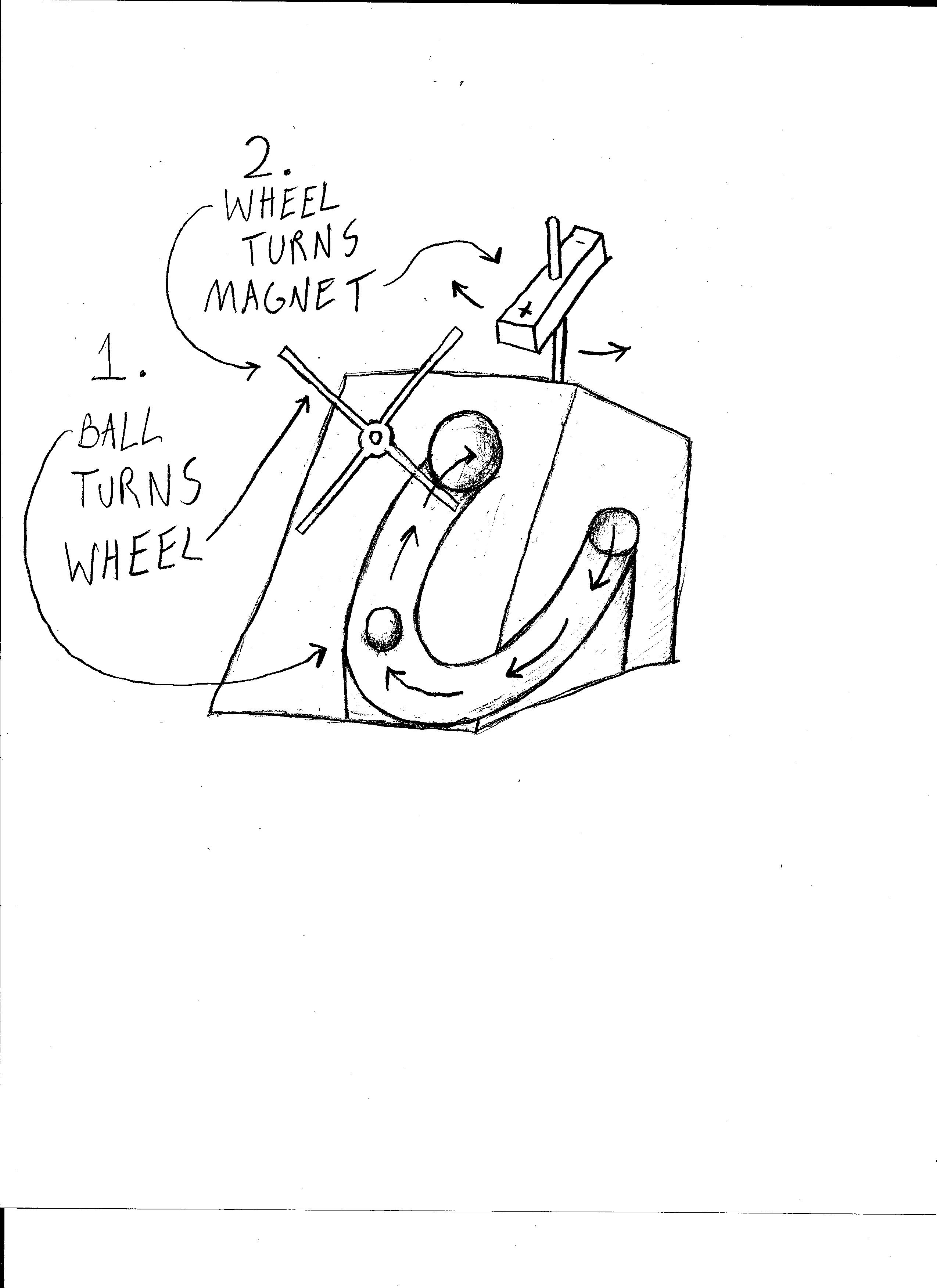
My first idea used magnetism and gravity to pull a metal ball up a ramp. Just before reaching the magnet it would fall down a hole, and roll down a ramp back to its starting point and repeat the process. This idea probably wouldn’t work, because the magnet would just pull the ball over the hole.

Design for a modified ball/ramp/magnet perpetual motion machine in which the ball hits a lever, which pushes the magnet away, breaking the pull.

I thought you might be able to solve that problem by attaching a mechanism that uses the force of the ball to push a lever that either moves the head of the magnet away or pushes the ball away from the magnet, allowing the ball to fall down the hole.

Design for a perpetual motion machine with a piston that is pulled up by a magnet. The piston has a dongle that pushes the magnet away when the piston gets close, causing it to fall to its starting point.

If that concept worked, you could replace the ramp with a vertical shaft and replace the ball with a piston.

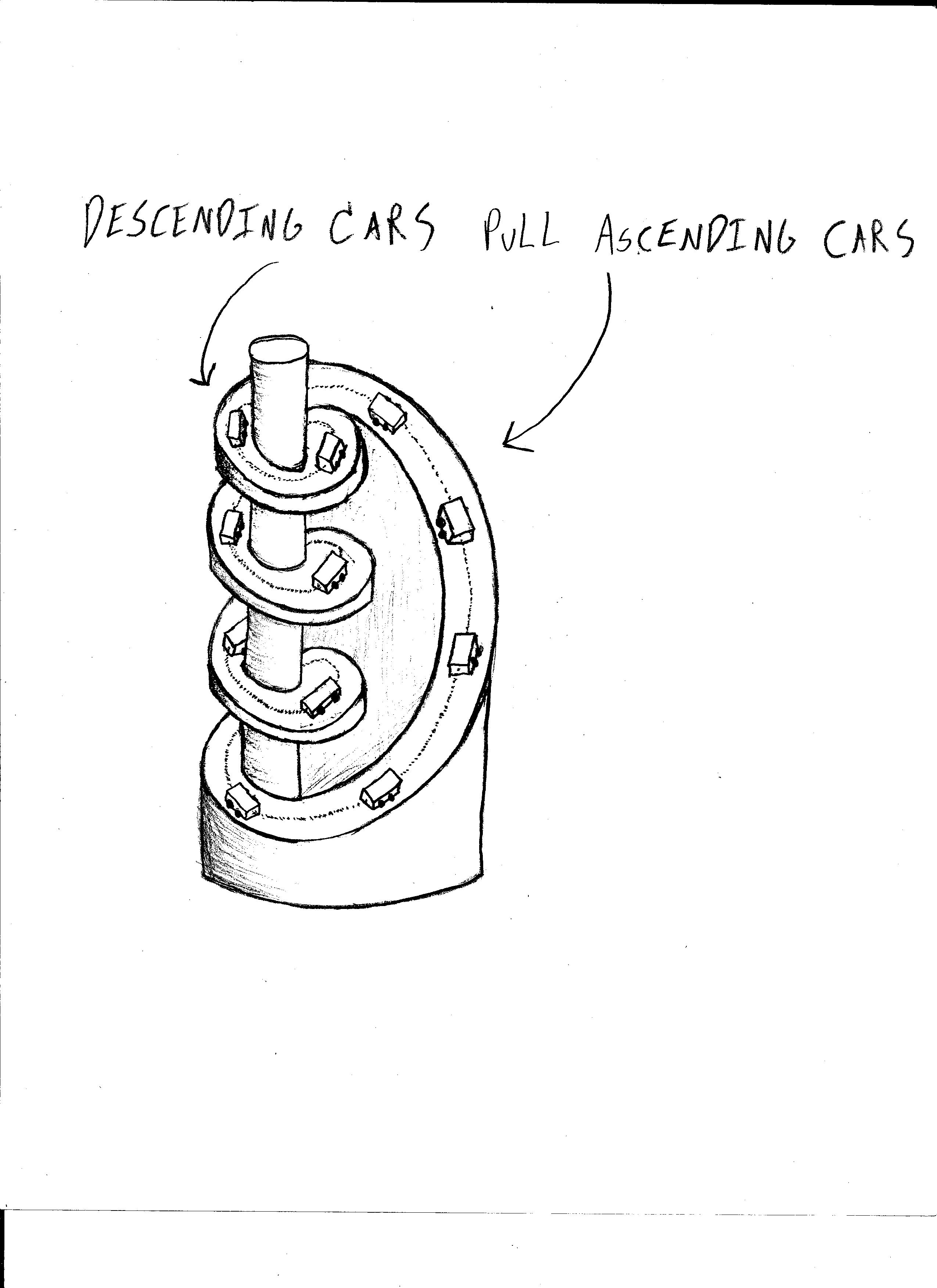
Design for a perpetual motion machine that has a train of rolling down a long, winding spiral, pulling its tail behind it.

Magnets wear out eventually though. So I came up with a design that only uses gravity as the power source: Attach wheels to ten identical rolling weights that basically look like trolley cars. Connect each trolley with identical length strings so they’re all connected in a circle. Put the trolley chain on a long, winding ramp that they roll down. At the bottom of the ramp is a steep vertical slope that leads back to the top of the ramp. The idea is that as long as more trolley cars are rolling downhill, pulling the car behind them, than there are trolley cars being lifted from the end back to the beginning, then the descending cars should lift the ascending cars.

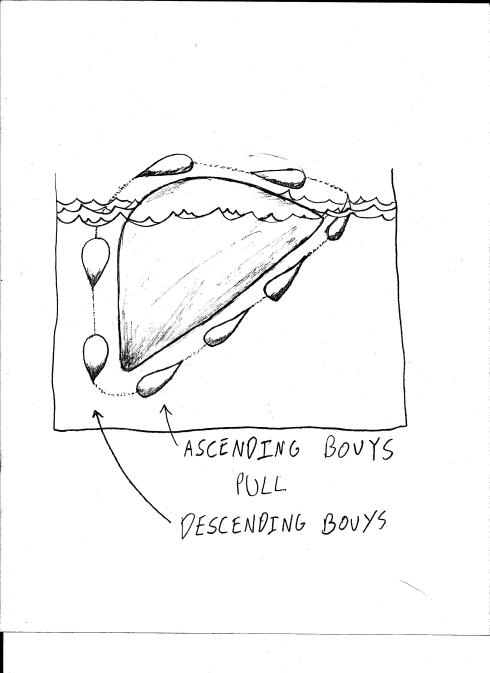
Design for a perpetual motion machine using a train of underwater buoys pulling themselves up a long, triangular shaped ramp to be pulled back down a shorter path.

One problem with the trolley car idea is that it creates a lot of friction. I hypothesized I could improve the idea by turning it upside down and submerging it in water. Instead of using weighted trolleys, connect a ring of hollow buoys following a long, winding path up to a steep decline, where they would be pulled down to their point of origin by the higher number of rising buoys.

Design for a perpetual motion machine using a wheel of magnets pushing away from each other.

I wanted to come up with a design that involved a spinning wheel since that would make it easier to generate electricity. So I drew plans for a wheel with angled magnets that repel off other magnets anchored outside the wheel. I bought a hamster wheel and $100 worth of magnets and proved that this idea doesn’t work. The force from the external magnet that pushes one internal magnet away will prevent the next incoming internal magnet from passing the field of the external magnet.

The wheel could spin if you could turn the magnets off until they’re in position to repel. You could create this effect easily using electromagnets, but that would use more electricity than it produces. The wheel might spin if you could block the magnetic field until the magnets are in the position to repel, but I don’t know of any material that blocks magnetic fields.  The wheel might also spin if the magnetic fields could be redirected with ferromagnetic metal or you used a mechanism to push the external magnet away until the internal magnet is in place to be repelled.

Design for a perpetual motion machine involving a wheel with two ramps that guide balls in the spokes so that more are pushing down/counterclockwise than clockwise.

Even if those plans did work, they still used magnets. It would be better to have a wheel that’s powered just by gravity. In order for weights in a wheel to spin the wheel indefinitely, there would have to be more weights pushing counterclockwise than clockwise. I hoped that could be achieved through the use of two ramps.

At the age of nineteen, I tried building this wheel using paper and straws. It didn’t work. So I took the spokes out of a bicycle and replaced them with cardboard rectangles and golf balls. The balls kept getting stuck and bouncing away until the cardboard bent. So I bought two Erector Sets and made a more stable wheel. I never could get the weights to stay on track.

Having spent hundreds of dollars and hours, I finally decided I didn’t have the engineering skills to build anything. To this day, I still can’t put Ikea furniture together without it being wobbly and crooked. So I gave up trying to build a perpetual motion machine and got on with my life. I’ve thought about paying someone to construct my designs, and I would, but I’m not convinced any of these designs would actually work. Someday when I’m old and have more disposable income, I may pay someone to build all of them so I can decorate my foyer with them.

Even if they don’t work, they would make interesting steampunk decorations. They’d be good conversation starters. You’re welcome to use and profit from my perpetual motion machine designs in any way you want, free of charge.  They’re free domain.

P.S.

My quest for meaningful puzzles didn’t end when I quit working on my perpetual motion machine. In fact, part of why I lost interest is because I had moved on to the next puzzle: the meaning of life.

If you enjoyed this post, you’ll also like these:

My Goals
My Life Stories (in chronological order)
My Art

My Vision for A Secular, Intellectual Monastery

On my “About” page I state that my long-term goal is to build an intellectual monastery. I’ve written a few blogs and comics explaining why I believe we can cure a lot of major world problems by using the monastic community model on a large scale.  You may be wondering why someone would spend so much time thinking about monasteries. This is the story of how and why I did.

I was born an introvert, which predisposes me to want to be left alone in a quiet place, and I’ve come to believe that the events of the first few months of my life predisposed me to the solitary life even more. I spent that time in an incubator in a hospital preparing for, receiving and recovering from heart surgery resulting from the premature birth of me and my identical twin brother. During that time, pretty much the only human contact I received was from a sweet, elderly nurse hovering above me. So my brain adapted to isolation and minimal sensory stimulation.

I showed up to life late and didn’t want to come out of my shell. So I let my identical twin brother speak for me until our parents caught on and made me go to speech therapy. I knew how to speak. The twin studies my brother and I went through showed we had above-average language comprehension. I just didn’t want to get involved with the drama of life. On the first day of kindergarten, I froze in the doorway to my classroom while all the other students stared at me.

As an adult, I’m a completely well-adjusted, functioning member of society. I spend as much time in crowds as anybody else. I can be the life of the party if I need to. I’ve competed in public speaking competitions and managed a computer help desk in a war zone. I’m good at being social. I just need to get away from the crowds and be alone to recharge my batteries more than the average introvert, and I still can’t watch Imax movies or go to theme parks, because all the commotion and sensory overload gives me a splitting headache and wears me out.

People are born all over the introversion/extroversion scale, and there’s no wrong place to be. That diversity is one of humanity’s greatest strengths. We need to understand our personal nature so we can adapt to it. I enjoy being introverted, and I take advantage of the perks it gives me, like the patience to write books and draw intricate pictures.

Back in elementary school, before I was old enough to articulate all of that, I’d daydream about escaping the daily commotion and living in a tree house in the woods. I wanted an orchard of different trees, and I’d build walkways between them and just never leave the canopy.

When I learned about monasteries in middle school history class, I was hooked immediately. I filled notebooks with floor sketches of monasteries and castles, plotted on grid paper.

But living in a castle wasn’t an option in South Texas. I was stuck in suburbia, which is a never-ending cycle of duties, rules, and drama. In high school, I romanticized about living in an insane asylum. As long as I wasn’t forced to take pills that turned me into a zombie, I could walk around in my pajamas, work on my hobbies and have three hot meals a day. It would be the perfect life.

Unfortunately, I’m too mentally healthy to qualify for a free meal. So in my early twenties, I enlisted in the U.S. Air Force and spent four years stationed in Europe… to my surprise. While I was there I did as much traveling as I could afford and got to see a lot of ancient communal living quarters, which inspired me to study up on the places I couldn’t go.

The history of Europe’s monasteries is set to the backdrop of the history of Europe itself, which is an almost never-ending saga of wars, famines, diseases and economic oppression. Monasteries weren’t immune to these forces, but they were insulated from the worst of it because they were self-sufficient. The monks had everything they needed and barely had to work part-time. Meanwhile, the peasants outside the walls were being used as slave labor and not earning enough to survive. Everyone should be as lucky as the monks, and if everybody had lived like the monks to begin with, most of Europe’s bloodshed and misery never would have happened.

I left Europe and the Air Force in my mid-twenties convinced that a monastery would be the best place in the world for me. So I scoured the internet to see what was available and was unsurprised to find they were almost all religious. This is a deal breaker for me because I believe religions are mythologies, and I don’t want to spend my life dancing around a mythology.

Even if I could play nice, most religious monasteries don’t accept heretics. The ones that do still tend to have schedules and rituals that are an unacceptable waste of time to me. The ones that give you the most freedom cost the most money. There are still a few that will let you stay for free, but you can’t stay long term.

As the internet grew I found more monasteries, but never one that was feasible for me. So I got on with my normal life, commuting back and forth between a house I didn’t own and a job I didn’t like. The longer I lived and worked in suburbia, the more fed up I got with the rat race, and the more time I spent escaping to my ideal monastery in my imagination.

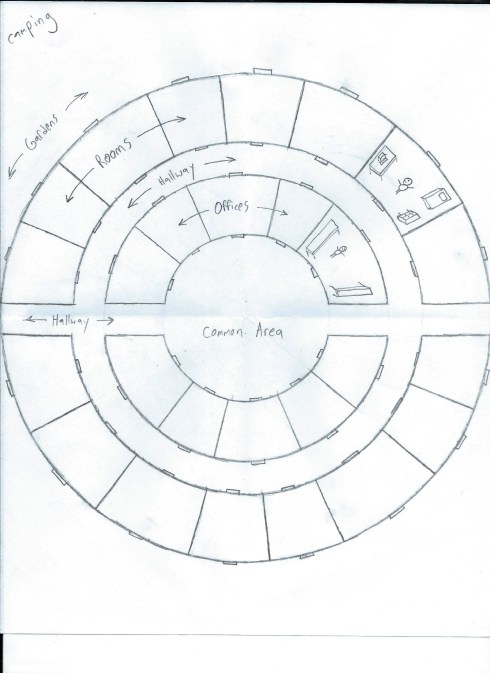
After years of fretting, one day I got fed up and decided that if I could create a monastery in my head, then I could create it in the world. After all, I have opposable thumbs, bipedal legs, and a brain. There’s nothing I can’t do if I work on it long enough. So I threw down the gauntlet and said to myself, “That’s where I want to be. If nobody else has built it yet, then I’ll just build it myself.”So I researched how much it would cost to build a monastery, and I found that it would be at least $500,000 if I hired contractors to do it using standard construction methods. Since I didn’t have any money at all, I researched alternative building materials and floor plans to lower costs. I filled notebooks with sketches and notes until I settled on a circular design using sandbag walls.

Design for modular, pyramid shaped monastery rooms that minimize building materials needed Design for an underground monastery consisting of camper trailers with connected rooms Design for a crescent shaped monastery with a ring of underground camper trailersDrawing of a glass greenhouse shaped like a cathedral Drawing of an Airstream trailer in a hollow, man-made hobbit hill

Circular monastery design

Using the circular floor plan, I only need to build half for it to be functional. I could build that for $250,000 and finish the rest later.

That’s the plan. Now I just need the money. There are a lot of ways I could earn $250,000, and I’ve considered them all. In the end, I chose to meet my goal by writing. Some people would say that’s risky, but it’s what I enjoy doing, and it’s what I’d be doing if I lived in a monastery. This way, if I never get my dream home, at least I’ll have done the other thing I wanted to do.

While I’m writing towards my goal, I’m always thinking about new designs and business plans. Monasteries can be easily modified to suit different purposes, and with enough money, I would build multiple versions, but my ideal monastery, the one I’m going to build first, would operate like a long-stay working hostel for the gifted.

Tenants stay for three months to a year. They work part-time for the monastery, and that covers 100% of their room and board. There are no other schedules or rules, but each tenant has to be actively working on a creative project that has significant value to humanity. The monastery will also host retreats and workshops, and there will be a pay-by-donation campground at the edge of the property to generate passive income.

That’s what I’m working towards and why you can always expect new content on The Wise Sloth. If you want to see some random guy on the internet build an intellectual monastery, here’s how you can help.

  • If you’re an eccentric millionaire who can afford to give an eccentric pauper $250,000 just to see what happens, click the Donate button below.
  • If you know an eccentric millionaire who would give a guy like me $250,000 just to see what happens, then send them the link to this blog.
  • If you want to donate a few thousand dollars, I would invest that money in editing my E-books and putting them into print so I can earn $250,000.

Click to donate via PayPal

I’m not going to nickel and dime my way to building this. I’m very grateful to anyone who wants to throw me tip money to show your support, but I would encourage you to give that to The Khan Academy instead. I may never get my monastery, but they’re providing free online education to the world. The world won’t change until it’s educated.  Every nickel and dime they get makes the world less stupid, and that can’t come quick enough.

Khan Academy logo (Click to donate to the Khan Academy)

In lieu of a donation, you can tell your friends about the Wise Sloth and share your favorite Wise Sloth blog on social media. If you’ve read this far, thank you for spending your time with me. You can look forward to seeing more thought-provoking posts on The Wise Sloth, and eventually, you’ll get to watch me build my monastery.

If you enjoyed this post, you’ll also like these:

My Goals
My Life Stories (in chronological order)
My Art

Why Do I Write The Wise Sloth Blog?

Note: This explanation goes into the major life events that led to the creation of The Wise Sloth. If you want the short answer, scroll down and read the last four paragraphs.

The motivation for me to write The Wise Sloth probably started in the first year of my life. I was born prematurely because I have an identical twin brother. He was healthy, but my heart wasn’t done developing. So I had to spend the first few months of my life in an incubator until I was strong enough to survive heart surgery. Over the course of the ordeal, I flat-lined seven times. After the surgery, I was still in and out of the hospital for the next year with pneumonia.

San Marcos, Texas 1984

By the age of six, I had been told a million times how lucky I was to be alive, and since I was raised in the deeply religious state of Texas, I was also told God must have a very special plan for me. Being 6 years old, I believed what I adults told me and often wondered what important mission God must have gone through so much trouble to keep me alive to accomplish. Eventually, I stopped believing God had a plan for me, but I still always carried a sense of responsibility to do something valuable with my life.

My parents divorced when I was six-years-old, and my two brothers and I spent the rest of our childhoods bouncing back and forth between houses, which were on opposite sides of Texas. Our parents were always working and always stressed. So I had very little supervision, and what discipline I got consisted mostly of screaming and spankings. By the age of eight, I started becoming aware nobody was going to teach me how to become a mature, responsible, self-actualized adult. The only way it was ever going to happen was if I taught myself.

I did well in school, but I wasn’t top of my class. I made my first “C” on my report card in middle school when I stopped hanging out with nerds and started hanging out with the bad kids who smoked cigarettes and shoplifted. I made my first “F” my freshman year in high school when I started hanging out with kids who smoked marijuana and stole whatever wasn’t bolted down. I took a lot of drugs in those days and lost my mind a little bit. I couldn’t remember what normal was supposed to feel like, and I would constantly ask myself what reality is.

I started carrying a notebook with me to draw and collect quotes in. Pretty quickly, I started writing my own quips and then essays. The more notebooks I filled up, the less they included pictures and quotes, and the more they included questions and essays. I still carry a notebook with me everywhere I go and write down ideas and sketch out blogs in them. I call them my “ideation notebooks.”

Trippy drawing of myself that I did on the margin of my class notes in high school.

Paris, Texas 2015

At the age of seventeen, I took a larger dose of hallucinogens than I was used to and spent the night talking to God. The next day I threw away my cigarettes and started reading the Bible. Later that year I was baptized in a Southern Baptist church, and my notebooks began to fill up with religious questions and observations. I was particularly obsessed with the question of the meaning of life. I felt paranoid that I would die without being able to say for sure that I made the most out of life, and I wanted to know for sure that I gave my future children the best life advice possible.

So I made a conscious decision to actively and systematically try to figure out life, meaning, maturity, responsibility, and self-actualization to the best of my ability. To streamline the process I created a systematic method of problem-solving based on basic math principles and the scientific method.

After graduating high school I attended a Baptist university where I studied the Bible and social sciences. I hoped to apply my systematic method of problem-solving to the Bible and create the perfect argument for Christianity. However, I barely had to scratch the surface of Genesis before it became undeniably obvious that the Bible is a simple and blatant work of primitive mythology.

By the end of my first year in university, I lost my faith, left school and started drinking and using drugs again. After taking a year out of life to do backbreaking manual labor with felons and immigrants, I joined the Air Force as a computer technician. Working with computers helped me hone my problem-solving skills, and being in the military allowed me to see the world and find new questions and answers that I would never have been exposed to living in small-town Texas. It also gave me time to consolidate my philosophies into a treatise on the meaning of life.

I had only been at my first duty station for a few months before September 11th happened. I watched the planes hit the Twin Towers on the television in my First Sergeant’s office while he handed me disciplinary paperwork for failing my room inspection. I wrote a rebuttal, but it fell on deaf ears. Over the next six years, I watched the American military tear the Middle East apart. I asked everyone in any position of authority I could why we invaded Iraq, and I never got a straight answer. So I started looking for one on my own. The more I analyzed the situation the more I lost faith in our mission. The only explanation that made any sense was that destabilizing the Middle East wasn’t an accident. It was the point.

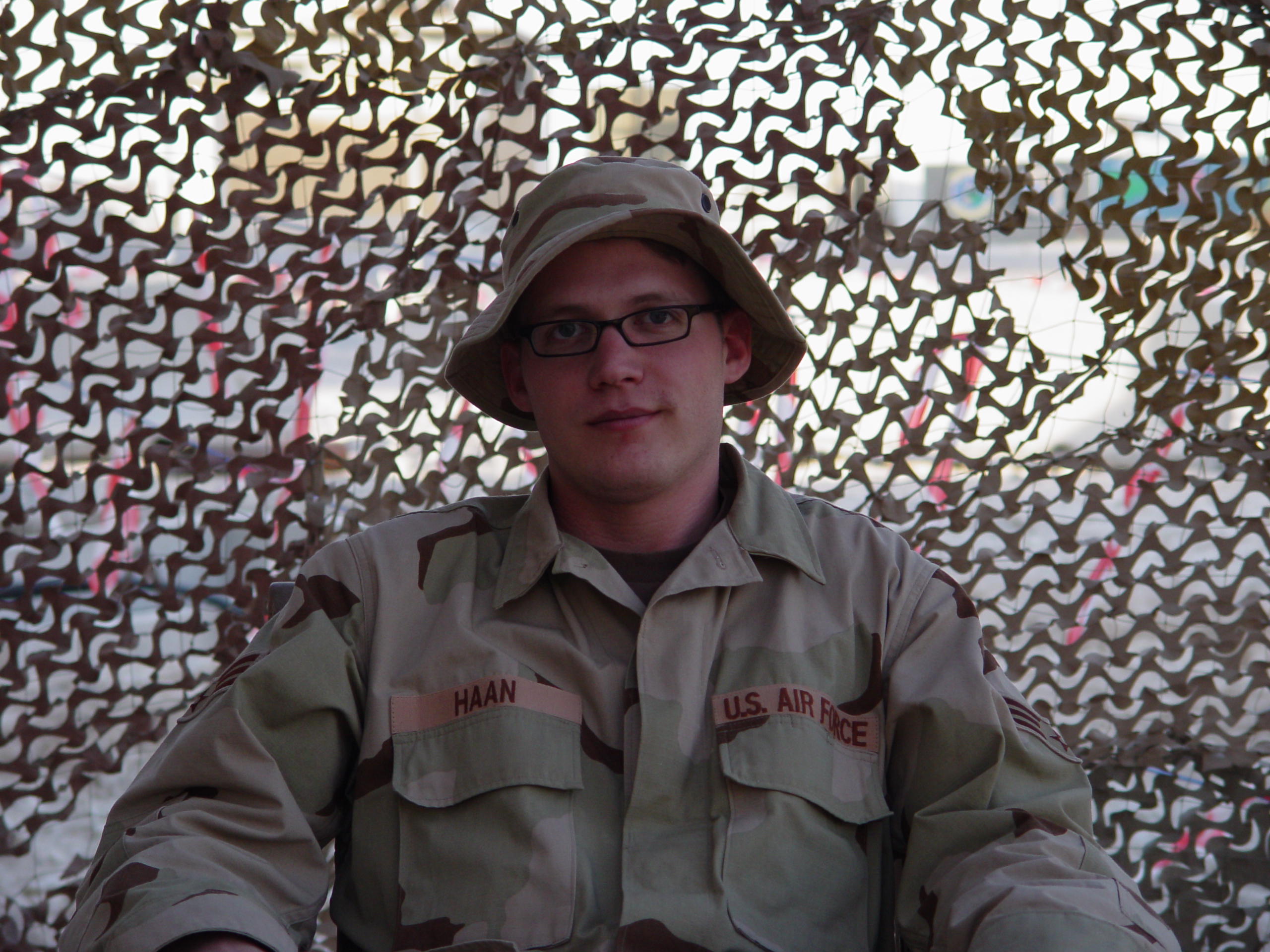
Photo of me in my Air Force uniform taken at Ali Al Salem Air Base in 2004. I'm pale as a ghost.

Ali Al Salem Air Base, Kuwait 2004

The last few years I was in the military I took night classes studying psychology, which led me to the conclusion that the military is a cult. I left the military full of guilt and shame at a time when it was viciously taboo in American culture to criticize the military or the preeminence of America.

Around the time I left the military one of my brothers was building a huge following blogging on MySpace under the screen name, “The Mad Goat.” He looked like he was having fun, and people were listening to the things he had to say, even it was just belligerent, drunken stories with dubious moral lessons at the end. So I started vomiting my drunken, belligerent viewpoints on MySpace as well. I copied the formula for my brother’s screen name, “The” + “adjective” + “animal”  and chose “The Wise Sloth” because I aspire to be wise, and I make an art form out of laziness.

The quality of my writing was awful. I had no business writing or expecting anyone to pay attention to my drivel, but a few people did, and that fueled my desire to keep going. Around 2008, MySpace basically died as everyone migrated to Facebook. At that point, my brother stopped blogging and got on with his real life. I started a WordPress blog and copied over the few decent posts I’d written. Unfortunately, I lost 99% of my readership and had to build a new audience without the advantage of having a social networking platform built right into my blogging platform.

I decided to keep blogging for several reasons. First, my blog is an extension of my journals, where I catalog my own observations about life as I struggle to get it all figured out for myself. The fact that The Wise Sloth is public is an added bonus. I know there are a lot of people asking the same questions as me. If I can help them find answers quicker, I may be able to help make the world a better place for both of us.

Sometimes I choose my blog topics based on what I think my readers would benefit from or what would increase traffic to my site. My essays on sexual positions and techniques accomplish both of those goals.  Blogging also gives me a pulpit to speak about subjects that don’t get enough attention, like the fact that the U.S. Military is a cult, Christianity is mythology, capitalism is the root of most of the world’s problems, and locally sustainable communities are the solution to most of those problems.

As I write enough posts on a subject, I’m compiling them into books. I’ve made a few hundred dollars off The Wise Sloth from book sales and donations, which is a horrible return on investment considering that I’ve put thousands of hours of work into it, but that doesn’t bother me. I would still do it if I won the lottery and never had to worry about money again, and I’d still be writing if I knew for a fact that I’d never make any money off of it.

Having said that, I do want to make money from blogging, but I’m consciously playing the long game here. As long as I never stop blogging, it’s only a matter of time before I write enough books or create enough viral content to raise serious money. When that happens I’ll be able to fulfill my ultimate goal of building a secular, intellectual monastery. In the meantime, I’ll be playing my little humble part in raising awareness of important issues. Whenever I die, I’ll leave something behind that will hopefully in some way justify my existence. Then all the work my doctors (and possibly God) put into keeping me alive when I was a baby won’t have been in vain. Or maybe all of my irreverent, vulgar words will be nothing but a huge disappointment, but at least I’ll have had fun writing them.

Photo of me taken in Colorado in 2015 holding a 40 ounce coffee mug

Denver, Colorado 2014

If you enjoyed this post, you’ll also like these:

Blogging
My Goals
My Life Stories (in chronological order)
My Art

Piancavollos’ Traveling Snail

Sign of the "Piancovollo" city limit sign in the Dolomite mountains of North East Italy.

From 2000-2001, I was stationed at Aviano Air Base in North-Eastern Italy, at the base of the Dolomite Mountains. One day I hiked to the top of a nearby mountain named Piancavollo. From the top, you can see miles and miles of farmland, small towns, and the long runway of Aviano Air Base. They say on a good day you can see Venice, an hour’s drive away. From Piancavollo all of civilization is spread out before you in a panorama. It makes you wonder how many people are milling around down there going on about their lives? How many dramas, how many love affairs, how many tragedies, how many criminals? But then again, you know all about what’s going on down there. You live there, somewhere, and you’ll be back before you know it. But from up here it seems so far away as to be surreal, just like how the top of the mountain does from down there.

Arial photo of the city of Piancavollo, looking down from the mountain of the same name

When I first arrived in Italy and saw that mountaintop commanding the horizon I told myself that I had to climb it to be able to say I did it and chalk up one more experience in the story of my life. When I finally got to the top and started looking down at so many places that I hadn’t been yet I started thinking about all the other places around the world that was craving to visit before I die. I didn’t want to look back on my life and say that I didn’t live a vibrant life because I never went to Hawaii, or Moscow, or London, or Key West, or Alaska.

I’m terrified of living a mundane life. Never mind the fact that in the short 22 years of my life I’ve been to Athens, Jerusalem, Cairo, Paris, Rome, Florence, Pisa, Vienna, New York, LA, and Cancun to name a few. But that’s not good enough. I’ve gotta keep moving,

Anyway. So I was standing on this mountain, eye level with the clouds, adding up all the places I needed to visit when my concentration was broken by the thought that I really had to pee. So I scurried over behind some tall rocks and whip it out to do my business when I realized that there was a large snail lying right where I was aiming. So I took a step to the side, and while I was standing there waiting to finish relieving myself occupied my attention by staring at that black and yellow snail.

Look at this little snail. Its life was a total contradiction to my quest for variety. In its entire life, it would never travel more than 20 feet (or something like that). It may never even see another human. It might not even see me right now. It certainly will never notice the vast panorama that’s embracing a hundred miles of varied landscape behind it or understand what’s going on in any of those towns. But do I have the right to say the snail’s life is a tragedy because it won’t see the Eiffel Tower or touch the Wailing Wall?

I won’t ever get to see what a blade of grass four times my height looks like. Surely that snail is getting to see some pretty amazing things down there. But there’s something more important implied by this snail than appreciating the view from a quarter inch above the ground. How many amazing places do you have to go and how many amazing situations do you have to get yourself into before you can say that you lived an amazing life. What if there were more than 7 wonders of the ancient world ever built? What if there was a structure built in every single city on Earth that was worthy of being called a “wonder of the world”? You couldn’t see all of them in one lifetime. So how many do you have to see before you officially lived a vibrant life? How few can you get away with seeing and still say you didn’t live a mundane life?

Taking this idea one step further let’s ask if you really need to see any of these “wonders” at all. Maybe I’m wasting my time and money traveling, and all these adventures that I’m so proud of having have really been distracting me from focusing on something more important. Maybe visiting amazing places is less important than having an amazing personality. Maybe the quality of your environment is determined by the extent that you appreciate it regardless of what or where it is. Maybe it doesn’t matter how many mountains, rivers, or antique buildings you get to see, especially when there’s an entire universe of complex uniqueness in the mind of everyone you pass on your way to see these inanimate buildings and rocks.

Maybe. Maybe. Maybe. Whatever the answers I at least figured I could lighten up a little about not getting to visit more famous places. By the time I finished thinking about all this, I had been done peeing for about a minute now and had just been standing there on that mountain exposing myself to a snail and staring into oblivion. So I collected myself mentally (and physically) and started off down the mountain back to my busy, little town where I had plans to do nothing for the rest of the day.

If you enjoyed this post, you’ll also like these:

My Goals
My Life Stories (in chronological order)
My Art