Concrete Modular Floating Islands Could Solve Poverty, Pollution, and Refugee Crises

There are currently about 100 million people who are living homeless because they had to flee a war zone, and there are just as many homeless people living in “peaceful” countries. A billion people live on less than $2.50 per day, and two more billion people live below the poverty line because they don’t have access to resources or opportunities.

Despite the world spending over $100 billion dollars on humanitarian aid and trillions more on public infrastructure, poverty is only getting worse, because traditional cities separate people from sources of jobs, food, water, utilities, entertainment, and education. The current housing system is designed to make real-estate more expensive, the more conveniently located it is, which means the poorer you are, the more expensive, dangerous, discouraging, unhealthy and opportunity-less your life will be.

If every country pitched in to pool together $50 trillion, they could solve extreme poverty and refugee crises by building a self-sustainable apartment complex/office building in the shape of a ring, 100 miles in diameter, where every resident will have immediate access to food, water, shelter, jobs, and transportation. As long as predatory capitalists don’t take over the city and raise prices and lower wages to extortion levels, every resident would be able to live fear-free for life.

A project of this size would face many hurdles. One of the biggest would be, where to build it? One solution to that problem is to build it on water. This approach would be more expensive, but the benefits might outweigh the cost.

It wouldn’t take much engineering to build a floating city. Instead of building a huge, floating base and then putting a city on top of it, build hollow modules that connect together. Then, a big wave wouldn’t knock any houses or businesses over, because everyone would be living and working “underground.” The surface area could be used to grow food and raise animals.

All you need to make a floating house is a boat hull. You could cast them out of concrete. Engineers have been building hollow concrete boats and caissons for years.

The technology could be easily adapted to mass producing floating houses. Or you could make the hulls out of fiberglass or steel. It might be more expensive, but it would cost less to build a modular fiberglass bobber house than to build a shack in Honolulu or New York City.

Even the sturdiest buoy city would be capsized by a mega wave on the open ocean eventually, but instead of building a monolithic island in international waters, you could connect a line of modular floating homes along the coast of a relatively protected body of water, like the Caspian Sea or the Great Lakes.

If this mega structure were built in the Mediterranean Ocean, you could create a walkable path from Africa to Europe. Refugees wouldn’t use it to invade Europe because they would already have ocean-front property and everything they need to raise a family. You could use that path as a new trade route, and the new most popular tourist destination in the world.

We wouldn’t need to fight over one location for the project. The governments of the world could build one hundred module factories around the world and gradually build a chain around every protected body of water. Life might be so idyllic, the majority of humans will flee the mainland and leave it to Mother Nature.

I believe the environmental benefit of a floating civilization would outweigh the risks. Since all the food, water and utilities would be created in-house, less packaging and transportation would be needed to get the necessities of life from their point of creation to consumption. The modules could be equipped with traps that filter pollution out of the water, and the hulls of the boats would provide new artificial reefs for fish to eat from.

This idea is crazy for being outside the norm, but not because it’s unfeasible. The richest 1,200 people in the world have over $50 trillion sitting in their bank accounts not doing anything. That’s more than enough money to house every refugee and homeless person in the world off-land. Even if governments footed the entire bill themselves, the money they’d save in humanitarian aid and social services would pay for itself quickly. Plus, it would create jobs, lower unemployment, food scarcity and real estate costs.

Sadly, that’s why the governments of the world would never conspire to build this. If governments cared about their people, they wouldn’t have invested their tax dollars on building unsustainable habitats to begin with. The rich need the poor to live in constant fear and danger because that gives them the leverage to exploit the helpless. Our cities are designed to create scarcity because it lowers workers’ and consumers’ bargaining power, which allows businesses to raise prices and lower wages. Extreme poverty and refugee crises exist because the global economy is designed to oppress and exploit the poor.

It’s almost impossible to get rich without gouging your customers and/or employees. So most rich people would be acting contrary to their past behavior if they donated their fortune to building a self-sustainable floating refugee camp, but there are a lot of philanthropists out there with more money than they know what to do with. Hopefully, some of them find the motive to give back to the world they’ve taken so much from.

If compassion and foresight won’t compel the rich to mass-produce floating city modules, greed should. The first person to streamline the process will become the Donald Trump of the seas. After Trump runs America into the ground, building a new nation at sea might be his only hope of redemption. Granted, being the greedy sociopathic narcissist that he is, his city would probably be full of slaves serving masters. However, if he can establish and improve floating island technology, it would be worth it as proof of concept. Then better people can copy his architecture and build the humanitarian communities we’ve been waiting for.

As a compromise, an island-loving billionaire like Mark Zuckerberg, could build a modular island factory, produce a string of islands, and after all the agriculture jobs are filled, train new residents as computer programmers, give them jobs that generate a profit, and keep a portion until the cost of construction is repaid, then give the employee ownership of their module.

If you enjoyed this post, you’ll also like these:

Talk About Saving the World
Be Better People
 Build a Better World
Buy a Better World

Sustainable Monasteries Could Solve Poverty, Pollution, And Refugee Crises

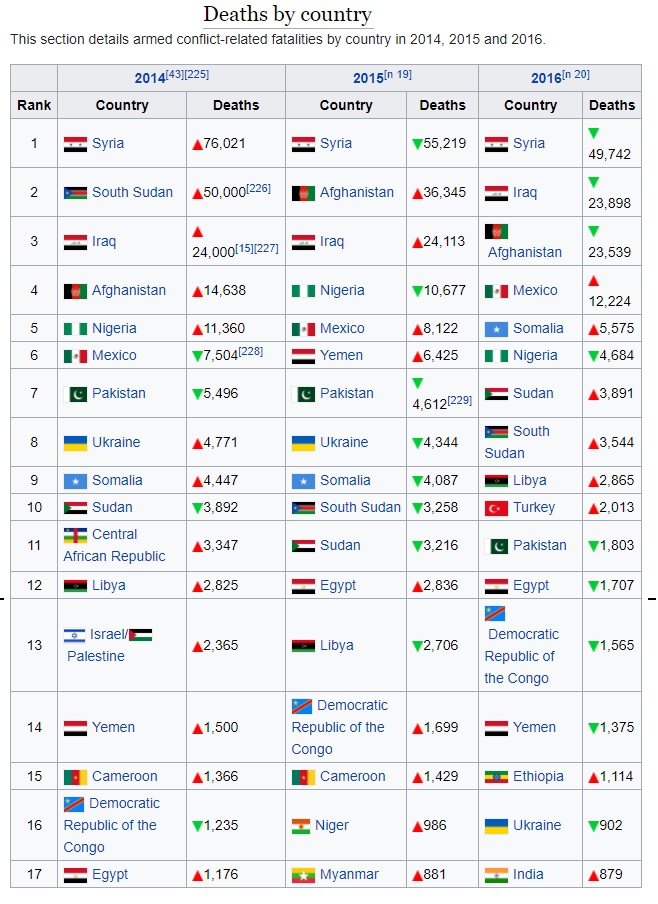
The most popular Youtube vlogger is Pewdiepie, a Swedish man-child who posts videos about playing video games and acting silly in his computer room. Pewdiepie currently posts about one blog each weak, which means, in the time between each of his posts, at least 1,900 civilians died horrible war-related deaths somewhere in the world, and that’s a very conservative estimate.

List of war-related deaths by country. At the top are Syria, South Sudan, Iraq, Afghanistan and Nigeria

The civilians who survive these conflicts are only technically lucky. Over 22 million people are living in foreign countries right now because they’ve had to flee the apocalyptic death, destruction and destitution in their birth-land. That’s not counting the 65 million people who have fled their homes but haven’t left their country. This means there are about 100 million people who are homeless because they would die if they went home.

There are 65 million forcibly displace people worldwide including refugees, homeless, and stateless people

That number doesn’t count the 100 million people in the world who are just old-fashioned homeless, or the 1.3 billion people who have homes and jobs but are working themselves to death while starving in a shit-covered tin hut with no water, electricity or sanitation.

In conflict zones, it’s hard to get real numbers how many people are suffering, but we know that over 3 billion people live on under $2.50 per day. These statistics don’t highlight a few isolated travesties. Almost half the population of the world lives in extreme poverty, and there are still several billion more who make more than $2.50 per day and live below the poverty level.

Basically, if you have running water, air conditioning, heat, a bed, pornography and an education, you’re one of the most privileged people in the entire world. Drop to your knees and thank God if the worst problem in your life is that nobody loves you.

If you factor in all the money countries and nongovernment agencies spend on humanitarian aid each year, the cost easily eclipses $100 billion dollars each year. The world could afford to spend more money to fight poverty, but it spends over $2 trillion on the militaries which are displacing people. So taxpayers are spending more money on creating humanitarian crises than solving them.

We already spend trillions of dollars every year on infrastructure that is supposed to help people live functionally, but it hasn’t solved the problem because it addresses the problem in a roundabout way that creates more problems than it solves. All the roads, plumbing, and power lines haven’t saved the poor in Detroit or any other major city in the world.

This makes the problem seem unsolvable, but the solution is really very simple. All people need to be happy and healthy are food, clothing, shelter, water, electricity, jobs, transportation and access to markets. If you built a ring-shaped apartment complex with 100 million condos and offices, then dug a man-made river encircling the entire building and used that to water gardens and orchards, you could give the people living there agriculture jobs and a never-ending supply of food and water.

With those problems solved, some workers could specialize in other jobs, which they could reach by walking across the hallway in their apartment complex. Every business would be connected by one road that would never get congested. The bigger you make the diameter of the circular building, the more external markets it would have access to.

Basically, the complex would operate like a secular monastery the size of a major city. You could also think of it as a permanent, self-sustaining refugee camp. As long as the residents don’t have to pay rent, receive an equitable percentage of the profits their work produces, and aren’t overcharged for the goods and services the monastery sells, then everyone will always have everything they need, and nobody would live in destitution or fear thereof.

How would you pay for such a mega project, and who would build it?  It costs about $120 per square foot to build a traditional house, but if you built the refugee camp/monastery using earthbags, you could bring the construction cost down as low as $10 per square foot. Since all that dirt will need to be dug up anyway, you can use the dirt from digging the reservoir/water channel/moat around the complex.

It would take thousands, if not millions of people to build a structure the length of a small country, but earthbag construction is relatively simple. You could simply have the 100 million refugees do the work and then move into the home they built when they’re done. Then they would have a sense of ownership, pride and shared identity with their fellow coworkers/neighbors.

The richest 1,400 people in the world have $5.4 trillion dollars just sitting in their bank accounts, not doing anything. If each apartment unit in the earthbag megastructure is 500 square feet and costs $10 per square foot, you could build 1 billion, eighty-five million units with $5.4 trillion. This figure doesn’t take all the building costs into account, but to put this in perspective, it costs $1 billion per mile to dig an underground tunnel to reduce traffic congestion. You could build a mile of earthbag apartments with a road, gardens, utilities and an aqueduct for far less than $1 billion per mile, especially if you built it in the middle of Africa, Russia or China where property values are low.

We have the money to end extreme poverty in less than five years. We just need to stop spending it on constructing and repairing inefficient cities full of economic dead zones, and build a mega-home that fills all its residents’ basic needs.

The picture below has the aquifer in the center of the building instead of a moat around it, but it still illustrates my proposal.

1. Buy a field. 2. Build a circular sandbag monastery. 3. Build greenhouses. 4. Work and expand. 5. Replace suburbs and refugee camps with sustainable eco-ring monasteries

If you enjoyed this post, you’ll also like these:

Talk About Saving the World
Be Better People
 Build a Better World
Buy a Better World

Why And When You Should Have A Problem With Authority

Modern Western culture is obsessed with leadership and authority. It’s shoved in your face from the time you’re born. Parents have godlike legal powers over their children, and schools have almost as much control over the movements and behavior of students as prisons have over prisoners. Going through school the brightest students are sent to leadership clubs, courses, and conventions. Businesses force employees to sign contracts that bind them to submit to the authority of their employer as if their employer were their king. Inside and outside of your home, school, and workplace your government forces you to obey laws written at the whim of politicians and enforced by police and military personnel. Every government’s public relations departments encourage its citizens to have faith in their political leaders and to believe that questioning your leaders is a sign of lack of respect for everything your country stands for.

If you don’t fall in line and obey your leaders you’ll be told that you “have a problem with authority” as if that were a sign of weakness and immaturity on your part. That point of view overlooks the fact that, from a cosmic perspective, all people were created equal. You’re not equal once you reach 18, get married, get a degree, get commissioned or elected. Everyone is always completely equal. There’s no way to earn the right to demand unquestioning obedience and reverence from other people with less age, or social, economic or political credentials than you. You can demand unquestioning obedience from other human beings, but that doesn’t mean you have the right to. That just means you’ve chosen to treat other people like a second class citizen to you. You can come up with all sorts of reasons to justify your actions that sound good on paper, but in the end, you’re justifying the unethical subjugation of your equals.

Granted, parents have a responsibility to raise their children to their full potential, and this requires discipline. School teachers have to maintain good order in classrooms in order to facilitate learning. Police have to maintain order on the streets, and politicians have to set boundaries for everyone within their jurisdiction. Life has to have rules because good rules are nothing more than good advice for how to fulfill your potential, and when an entire population follows those best practices, then society as a whole is able to accomplish greater things.

The thing about rules is that they were created by humans to help humans. Humans were not created by a dogmatic authority figure to follow rules. When a rule is illogical and counterproductive it negates its purpose for existing. Also, rules don’t draw their validity from the authority figure who wrote them. When a king, elected politician, police officer, teacher or parent tell another human being that they have to obey and respect their authority simply because they’ve been imbued with the right to control another human being they’re really just forcing you into submission to serve their own purposes. When an authority figure’s rules or orders are illogical, then the source of their authority is negated.

When an entire population mindlessly kneels before their self-proclaimed leaders they create a culture of servitude which undermines their own ability and responsibility to fulfill their individual potential. Plus, the next generation of humans who will grow up in this culture will assume that willful subservience is the norm. So they’ll mimic their elders’ beliefs and behaviors and pass them onto the next generation. In the process, they’ll also spoil their leaders into thinking that their ability to control others equates to their right to. This arrogance will inevitably blind them and cause them to behave irrationally, and since they’re steering society they’ll steer society in a counterproductive direction.

Celebrating and revering other human beings’ authority over you is equivalent to celebrating your own subjugation, and celebrating your own subjugation is immature and irresponsible because it limits your (and society’s) ability to fulfill your potential. It would be illogical and counterproductive to will that everyone should obey their self-proclaimed masters.You simply can’t make a categorical imperative out of this behavior

On the flip side, if nobody follows any rules then society will devolve into chaos, but that doesn’t mean that you have to choose between being a mindless slave or a marauding bandit. Just rules are based on just reason. The most utopian individuals are the most reasonable individuals, and the most utopian societies are based on reason. You have an obligation to think and behave reasonably regardless of what anyone else insists is reasonable. History has taught us that authority figures aren’t perfect. Despite their credentials, and because of the arrogance they tend to draw from their credentials, they can act as irrationally as anyone else.  Mindlessly obeying them is like giving a monkey a gun. Every tyrannical dictator who ever has and ever will set the world back was and will be held aloft by legions of faithful supporters who equate obedience with maturity. Tyranny cannot exist unless good men follow orders. So if you don’t have a problem with authority then you are the problem.

If you enjoyed this post, you’ll also like these:

Growing up and Becoming You
Happiness and Peace
Self-Esteem
Health
Drugs and Addiction
Achieving a Healthy Work/Life Balance
Leadership and Authority
My Tweets About Self-Help

My Philosophy On Leadership

Picture of a boss sitting on a box labeled "business," which is being pulled by three workers.... and a picture of a leader pulling the box labeled "business" with his workers.

You don’t become a good leader by memorizing a list of management rules. All the lists of advice on leadership ultimately add up to one simple concept: respect people. If you don’t understand that, no amount of advice will help you.

I’ve met a lot of people who worked in leadership roles and thought of themselves as leaders, but in their minds, they were a higher form of life than the people “beneath” them. It doesn’t matter if you’re older, more experienced, educated or hold more credentials than another person. You’re not better than anyone else. Even if you were better than someone else on some level, you’re still equal from the cosmic perspective.

Leaders don’t manage peons. Dictators do that. Leaders should see themselves as being responsible for cultivating the rarest, most valuable entities in the universe. When you look at your role like this, you can’t help but treat your workers with respect. You can’t belittle, harass or threaten people you value so strongly. Instead, you’ll find yourself looking at life from their perspective and treating them with the dignity you expect to be treated with.

When you treat others with kindness and dignity, you’ll find that they’ll value you in return. When they value you for who you are and how you treat them, you won’t need to belittle, harass or threaten them to do what you want. They’ll want to go above and beyond the limit for you, and they’ll be more loyal to you.

Regardless of how nice you are to them, they won’t respect your authority if they see you sitting around all day and taking long breaks. As a leader, your work ethic sets the bar for your organization. This means you have to work harder than everyone else. When they see you working hard and picking up their slack, they won’t have any room to complain when you tell them to do something.

In addition to taking responsibility for your organization’s workload, you also have to take responsibility for being the brain of the operation. As powerful as the supercomputer inside every human being’s head is, people tend to think only as much as their role demands. They could answer the hard questions that need to be answered to make an organization function properly themselves, but that’s not their job. Their job is to do what they’re told. So they’ll rely on you to think for them. This isn’t laziness. This is instinctual. You need to be able to rise to this challenge and make wise decisions quickly. When people realize that they can rely on you to answer all their questions and make wise decisions, they’ll come to rely on you. When they’re able to rely on you, they’ll respect you because you make them feel safe and secure.

Even if you do all of these things correctly, you’ll still find some people will still do the bare minimum that’s expected of them. Part of being responsible for other people is setting limits and being firm. As long as you aren’t abusive about it, people will respect the fact that you won’t let them get away with anything. In fact, when a human being obeys another person, it reinforces in their mind that they should obey that person.

This is why militaries force enlisted troops to salute officers. They tell the troops they’re saluting out of respect, but they’re really saluting to keep them in the habit of obeying without question. Forcing one human being to salute another human being in order to manipulate them into maintaining a servile mindset is unethical (especially if you punish them with a dishonorable discharge for failing to subjugate themselves to their equals), but that doesn’t mean requiring people to follow rules is unethical. Structure makes people feel safe, and they respect anyone with the strength of character to lay down rules and stick to them.

At any rate, everyone knows they’re supposed to follow rules even when they try to break them. You don’t have to get philosophical about how to discipline people. You don’t have to yell or give big speeches. All you have to do is tell rule breakers what they did wrong, how you expect them to correct the problem, and in worst-case scenarios, what will happen if they continue to neglect their responsibilities. Ninety-nine times out of a hundred they’ll correct the problem simply because they know they’re supposed to. If they don’t, then you give them a few warnings and eventually let them go. You don’t have to raise your voice or tear them down to do that. You can do it as calmly as Buddha. When other people see you discipline others firmly and with dignity, they’ll respect your authority not out of fear but because you’ve demonstrated that you deserve to be respected.

There’s more to leadership than just this, but ultimately the only way to learn the little details of how to be a good leader is by being a leader. Every minute of leadership experience you get under your belt improves your skills. Like learning any other skill, it’s good to start off small and work your way up. Doing something like managing an amateur sports team or teaching an informal night class is a good way to build your leadership skills before managing a large number of people who do big important things that have severe consequences.

If you enjoyed this post, you’ll also like these:

Growing up and Becoming You
Happiness and Peace
Self-Esteem
Health
Drugs and Addiction
Achieving a Healthy Work/Life Balance
Leadership and Authority
My Tweets About Self-Help

My Short Theory On Responsibility

To be responsible is to take care of yourself. And you can’t take care of yourself without thinking about yourself. Think about it. Ultimately, being responsible for yourself means being selfish. Now, all teenagers are selfish, but their selfishness is short-sighted. Responsibility requires the kind of selfishness that takes into account the future and the rest of the world. Responsibility is being selfish in a way that returns the most amount of good possible. Looking at reality in that light it’s easy to see that getting an education, holding down a job, and saving money are far more selfishly gratifying than getting stoned and playing video games all decade.

If you enjoyed this post, you’ll also like these:

Growing up and Becoming You
Happiness and Peace
Self-Esteem
Health
Drugs and Addiction
Achieving a Healthy Work/Life Balance
Leadership and Authority
My Tweets About Self-Help

The Value Of Knowledge

This essay is an excerpt from my book, “Why: An Agnostic Perspective on the Meaning of Life.


KNOWLEDGE IS IMPORTANT FOR INTERNAL GROWTH


Look at your body in a mirror. It looks like one single object, but it can be broken down into organ systems, organs, tissue, cells, organelles, protein, DNA, atoms, protons, neutrons, electrons, hadrons, quarks, fermions, leptons, gluons, etc. Your body is a complex system that can be divided into ever smaller and more fundamental parts.

Your mind is the same way. Everything that makes up your mind: personality, thoughts, ideas, opinions, dreams, fears, desires, memories, skills, vocabulary, etc. are all made from different levels of progressively smaller building blocks. The most fundamental of these building blocks is knowledge. The more knowledge you have the more articulate and complete your personality, thoughts, ideas, opinions, dreams, fears, desires, memories, skills, vocabulary, etc. will be. The more mass your body has the bigger a person you’ll be, and the more knowledge you have the bigger your mind will be. Thus, the bigger of a person you’ll be.

This means that in order to grow up you need to learn. You can’t just get old and all of a sudden claim you’re grown up. If you stop systematically learning after graduation then it doesn’t matter how many years you age, you all but stopped growing after you quit going to school. Therefore, you never grew up.

Imagine the personality of a baby. Aside from emotions and instinct, a baby doesn’t have a personality or identity. All those cute/sad faces are the product of instinct, not personality.

Now imagine a ten-year-old. The child has a personality but pretty much everything about his personality is still naïve. He has naïve thoughts, questions, beliefs, opinions, dreams, fears, etc. Honestly, you can’t possibly spend a day with a ten-year-old without rolling your eyes at least once because of something naive he said or did.

Now imagine a regular grown man. He’s a blue-collar worker, has 2.5 children, practices religion but is no theologian, and manages his money responsibly enough that he doesn’t starve. This man doesn’t suffer too much mental distress and is capable of functioning in society. However, he’s never systematically tried to achieve self-actualization, and he doesn’t go out of his way to learn new things every day.

He’s really just on par with what a human is capable of becoming. His philosophy on life is basically to keep your head down, pay your taxes, celebrate holidays, watch television, and hopefully someday retire relatively comfortably.

This man will never truly understand the world around him. He’ll believe what he was taught in school, and after he graduates, he’ll only learn what knowledge he stumbles upon, which will be mainly limited to what’s on cable television. His thoughts will be limited to mainstream thoughts. His hopes and fears will be the same as his neighbor’s. He might not buy celebrity gossip magazines, but it won’t be entirely uncommon for him to take part in conversations about it.

The life of the average man doesn’t sound too horrible, but compare it to what his life could have been like.

Imagine anyone who has earned the title of one of the greatest minds in history. These people understood life deeper, made their own perceptive observations without waiting for other people to make sense of the world for them. They were empowered. They weren’t slaves to mainstream thoughts. They had logical thoughts, rational fears, brilliant hopes, articulate opinions/beliefs and personalities you could lose yourself in. Their minds were veritable galaxies. They experienced life more deeply than the average man even has the capacity to imagine.

Whatever factors can be used to explain the differences between an infant, ten-year-old, adult, and genius there’s one common denominator that’s always present: knowledge.

Imagine if everybody’s minds could be visually represented by the house they live in. A baby would be lying on a concrete slab. A child would live in a small slapdash shack. Your average person would live in a drab suburban cookie-cutter home. A genius would live in an elaborately customized mansion.

That’s an easy enough analogy to understand, but it’s easy to miss the depth of the message in it: that there are real internal rewards to gaining knowledge, and there are real internal consequences to being ignorant. This is who you’re going to be for the rest of your life. This is how you’re going to experience the rest of your life. By not learning you’re condemning yourself to a dull and confusing mental prison. You’re missing out on experiencing the fullness of life by not experiencing the fullness of yourself.


KNOWLEDGE IS IMPORTANT FOR EXTERNAL ACTIONS


Every interaction you have with the external world: driving, raising a child, working at your job, making friends, managing your finances, cooking, voting, self-defense, teaching, putting furniture together, managing employees, finding a mate, living with your mate, etc. Everything you do is the result of thoughts in your brain, and those thoughts are made of bits of knowledge strung together. The more knowledge you possess the more articulate and complete your thoughts can be. The more complete your thoughts are the better you can do anything. The quality of everything you do, from the most insignificant to the most life-changing action, is determined by how much knowledge you have.

Here’s a real-world example of this concept in action. The more you know about cars the better you can fix them. That’s obvious enough, but there are a few things implied in that simple statement that a lot of people don’t seem to understand.

The most basic implication of that statement is that you can learn about a car. It’s possible just as it’s possible to learn about anything. Is there anything you want to do but can’t? If so, it’s not because there’s something inherently wrong with you that will always prevent you from doing that thing. You just need to learn it.

Think about this. Everyone wishes they had superpowers. Why do we want superpowers? Because we want to be capable of doing more in life, and we feel limited by our feeble bodies. But it’s not really our bodies that limit us. Compare yourself to a plant, and you’ll see why this is true. A plant truly is stuck with the same abilities forever. Most plants can’t even move except to grow towards light. From a plant’s perspective not only can we move freely, but we have the ability to choose whatever kinds of roots, stems, leaves, flowers, etc. we want. We can choose our defense mechanisms (martial arts, marksmanship), root system (investment strategy, job skills), flowers (art, music, fashion), etc. Compared to a plant you already have superpowers, but more importantly, you can choose whatever other superpowers you want. So if you feel stuck in life and wish you had superpowers then go learn something.

Think about how the car analogy applies to ignorance. If you can’t fix your car you don’t stand around wondering why. You know why. You can’t fix it because you don’t know how, but with a broken car you don’t just sit around complaining about it. You accept the fact that it’s broken and take steps to learn how to fix it or hire somebody who can.

The same concept is true with anything you do. Think about any problem you’ve ever had in your life. Think about any failure you’ve experienced, any dream unfulfilled, any mistake you regret. Think about any tear you’ve shed. Any time you’ve shaken in frustration or anger. Have you ever sat around with your hands in your head wondering, “Why is this happening to me?” The next time that happens imagine yourself sitting behind the wheel of your car with your hands on your head feeling helpless and bewildered wondering, “Why doesn’t my car work?” Because that’s ultimately what you’re doing.

Would you get upset and defensive if someone told you your car is broken or running poorly because you don’t know how to fix it? Probably not, but everyday people refuse to take responsibility for their lives. They make excuses for the bad things happening to them by saying it’s not their fault. They try to find anything to blame their problems on except their own ignorance.

On the most fundamental level, ignorance is the root of all problems, and knowledge is the solution. If there’s a problem in your life there’s knowledge you can possess that will allow you to fix it or there’s someone with the knowledge who can help you if you’d only try to find them. If you don’t have that knowledge and aren’t trying to find it then it’s your fault there are problems in your life regardless of their original source.

Ignorance is even the root of all external problems too. If you were hurt by someone else it’s because they were ignorant. Even what insurance companies call “acts of God” can be prevented with appropriate applications of knowledge. Houses can be built above floodplains. Trailer houses can be made tornado proof. We can erect tsunami barriers along coastland. Buildings can be made earthquake-proof, etc. So if you’re ever looking for someone or something to blame you would always be correct to blame ignorance. And if your life sucks then go learn something. And remember, if there’s always more you can learn about cars then there’s always more you can learn about anything. Life can always be easier.

The last thing that thing that needs to be said about fixing cars is that there are only three ways you can learn how to do it:

1: It’s forced upon you.

2: You stumble upon it.

3: You seek out.

The same is true with all knowledge. People are forced to learn in school, but after graduating nobody forces them to learn anymore. That doesn’t mean they’ll never learn anything else though. They’ll stumble on a little more information here and there through the rest of their life but it’s not going to amount to anything truly empowering. And what’s the opposite of empowerment? Enslavement.

Most people only seek out the knowledge they need in the immediate present (like how to program their new electronic device). People generally don’t say to themselves, “There’s knowledge out there that will make my life better, but I don’t know what it is. So I’m just going to go learn as much as I can about everything until I find that knowledge that will make my life better.” People don’t do that. They just sit around and watch TV and assume they’ll learn everything they need to know in life from sitcoms, cartoons, and commercials. But that’s not going to happen, and nobody’s going to cram the knowledge you need down your throat your entire life. And why should they? That’s your job.

The fact is you won’t stumble upon enough knowledge to empower you above the status quo if you don’t seek it out on your own. So this is your warning or your wake up call. Seek out knowledge. Seek out as much as you can, but ask yourself what the most important knowledge you can learn is and seek that out most of all lest you waste your life acquiring relatively useless knowledge. And never stop seeking knowledge. Everything in your life (internal and external) depends on it.


If you enjoyed this post, you’ll also like these:


The Meaning of Life
How to Think Like a Genius
Knowledge and Learning
Biker Philosophy
My Tweets About Philosophy 

An Agnostic Take On Pascal’s Wager

Pascal’s Wager argues that although you can neither prove nor disprove the existence of God, specifically Yahweh from the Bible, there’s always the chance you could go to Hell for not believing in Him. So you might as well believe in Yahweh just in case.

The gigantic, glaring hole in Pascal’s logic is that he’s taken one mythological deity out of the thousands of mythological deities humans have invented and assumed his is the one true God. Pascal was raised around Catholics in France, but if he were raised around Muslims in Saudi Arabia he would have said the same thing about Allah. If he were raised around Hindus in India he would have said the same thing about Shiva. In fact, if he had been raised by Jews in Israel he would have said the same thing about Yahweh except without the added modifier of Jesus Christ.


Picture of various dieties and prophets, with the caption, "HEDGING MY BET WITH PASCAL'S WAGER! Who knows which God is the right God? Best to believe in all of them to ensure your future life in paradise!"

However, he does raise an interesting point. It’s true that we don’t know what happens after we die, and there is prudence in assuming a worst case scenario, but how do we hedge our bet if we’re not going to just pick a mythological deity at random and base our lives on the commandments ghost-written in that God’s name?

Pascal’s call to action was to believe in an invisible man, attend weekly religious ceremonies and tithe 10% of your income to the Ministry of Funny Hats. That’s actually not very hard to do, and if you break any of the arbitrary moral rules laid out by the sexually repressed chauvinists who wrote the Bible, you can always ask for forgiveness. You never need to think for yourself. In fact, you’re commanded not to. You just wind down your existential clock going through the motions of life as absentmindedly as Catholics reciting their Sunday invocations. This is an easy way out. It’s so easy as to be a coward’s way out. Religious fanatics would argue that it’s not easy to be religious. To that, I would reply, compared to what?

If you wager that you have but one brief life to live and no supernatural agent to carry the burden of eternity for you, then it’s solely up to you to live a life worth living. To make matters even more severe, you don’t get a religious cheat sheet. In fact, if God doesn’t speak through men and everyone is truly equally lost then you can’t rely on the authority of any man living or dead. So not only do you have to live your life for yourself, but you also have to figure out life for yourself. That’s terrifying. That’s the greatest responsibility any living creature could possibly bear.

Religious fanatics tend to minimize the courage it takes to accept the challenge of living alone by pointing out that without the belief in a sadistic, mythological deity there’s nothing stopping you from just living a completely selfish, hedonistic lifestyle with no concern for the future or anyone else. And while that’s technically true, very few people actually analyze the grandeur of life, the universe, and existence and then weigh all their options and decide to take that path. You don’t need God to tell you there’s more to life than getting drunk before noon and raping your neighbor. If you can’t see that then it’s no wonder you would settle for a life of meaningless rituals and self-deprecating rules to fill the void between birth and death.

But what else is there? Well, I’ll give you my two cents, but remember that I’m no more an authority on the subject than anyone else. As long as you agree to take this with a grain of salt I’ll hazard to point out the obvious, which is to tell you that by asking that question you’ve already answered it. Consider this. Do the technicians who design sports cars (or computers or video games or fine art pieces) see themselves as failures until they’ve built a complete sports car? Their passion, their success doesn’t lie in looking at a completed car. Their passion, their success lies in the pursuit of designing the perfect car. In fact, once they finish designing a car they get right back to designing another one. Do you want to know what to do with your life? Your brain was designed to solve problems. You were designed to solve problems. Your life begins the day you start thinking about it. I would wager my life on it. In fact, I am.

If there is an answer to the question of the meaning of life, the only way you’re going to figure it out is by thinking about life, the universe, and your existence. If there isn’t an answer or its true nature is as elusive as God, then the only way to figure what the next best thing to do with your short, irreplaceable life is to think about it. If there is a God watching us to see how we make the most of our lives in an absurd, existential universe, what could possibly please that being more than doing the very thing He/She/It must have done to design this sports car of a universe we’re joyriding our bodies around?

You’re a sentient being. Think about everything,  and have fun doing it.


If you enjoyed this post, you’ll also like these:


Agnosticism 
Atheism
Secular Living
Islam
The Bible is mythology
Christianity is Harmful to Society
Preaching, witnessing and arguing with Christians
Christian Culture
My Tweets About Religion


What’s The Difference Between Cheap Wine and Expensive Wine?

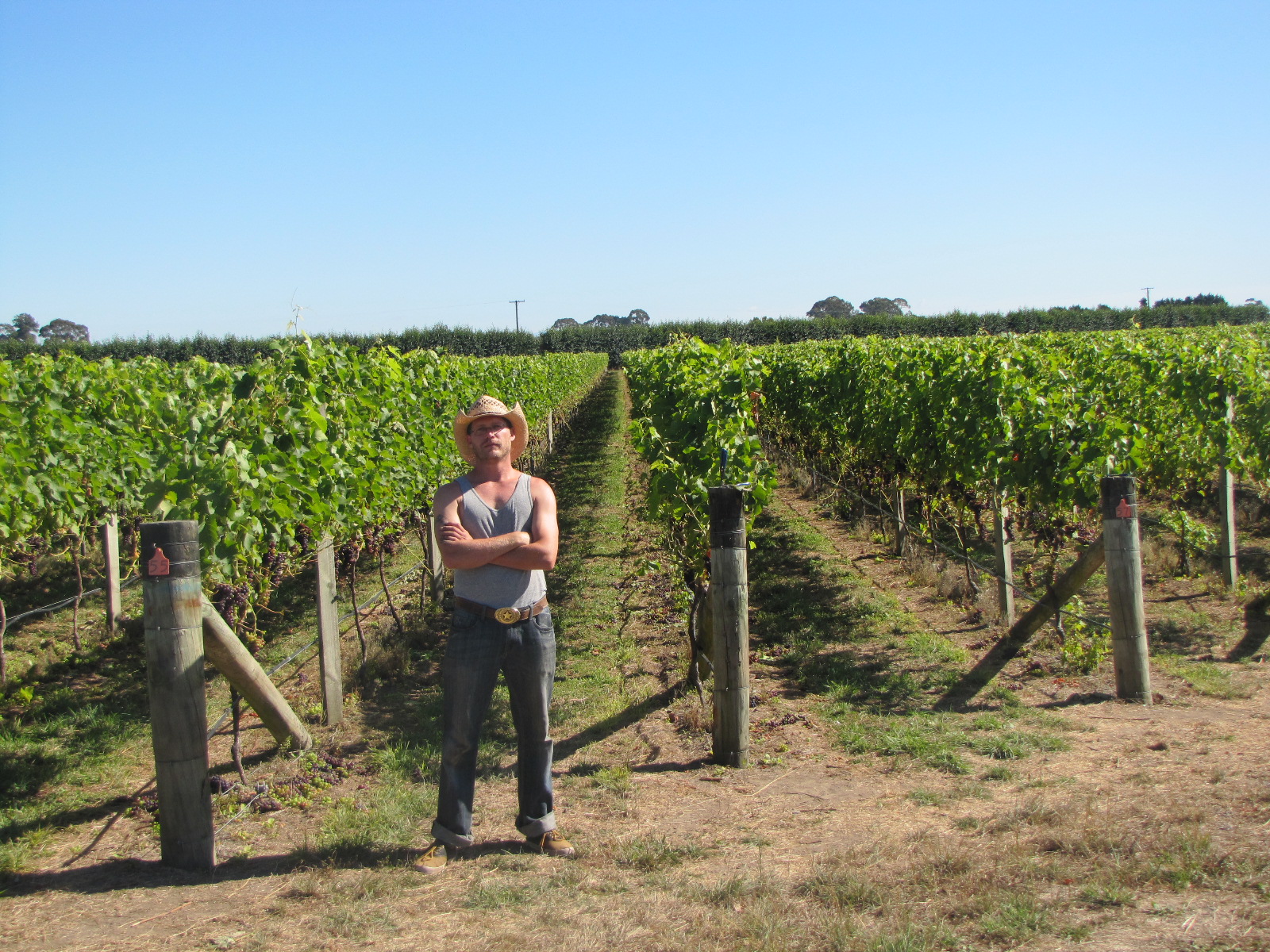
I wrote this blog after spending three months working at various vineyards in New Zealand and asking all my bosses about the process of winemaking.

Photo of me in a Vineyard somewhere near Hastings, New Zealand

The biggest difference between good wine and bad wine isn’t age. There’s wine that sells for $100 as soon as it comes off the assembly line, and it’s grown from the same grapes that the same vineyard sells for $9 a bottle. Expensive wines aren’t made from some rare, super grape, and cheap wines aren’t made from inferior grapes.The big difference in quality comes from how those grapes were treated during the growing process.

At the beginning of the growing process, every vine is treated the same. They’re planted in long, straight rows. A wooden post as tall as a grown man sticks out of the ground between every four or five plants. Three or four metal wires run perpendicularly between/along the posts. The reason those posts and wires are there is because grape vines aren’t trees. They’re vines, obviously. So, left on their own, they’ll just fall to the ground and grow in the dirt, but that would ruin the grapes. So workers have to come through the rows of plants and tie them to the bottom wire when the grape plants are tall enough to reach. Then, as the vines get taller and bushier, they’ll naturally grab onto the higher wires if their shoots happen to touch them, but a lot of the shoots just fall back down to the ground. So at some point, human beings have to walk down every row in the vineyard and pick up all the low hanging vines and tuck them up through the wires.

This doesn’t just keep the vines out of the dirt. It also gives the leaves maximum exposure to sunlight, and since grapes tend to grow towards the bottom of vines and not the top, that means when the vines are stretched upwards then most of the grape clusters will grow conveniently along the bottom wire where they can be picked without having to dig through tangled vines. There’s still work to be done before the grapes are picked though, and how that work is done will determine whether the grapes will yield premium or cheap wine.

The leaves on the grape plants need sunlight to nourish the grapes. The grapes themselves also need direct exposure to sunlight to ripen properly, but the leaves cover the grapes.  So the leaves around the grapes need to be removed from the vines, but you need to take off as few leaves as possible or else the whole plant won’t get enough light to nourish its fruit. You also need to remove those leaves without damaging the grapes. There are at least three ways to do this:

Some vineyards use sheep. If you put sheep in a vineyard when the grapes are young and sour the sheep will avoid eating them, but they’ll eat all the leaves around the grapes, and since the rest of the vines and leaves are too high for the sheep to reach they pick off just about the right amount of leaves. Inevitably though, the sheep will end up damaging a few grapes and possibly eating too many leaves.

If 100 rows of vines in a vineyard are reserved for making cheap wine then a farmer can just drive a tall, skinny tractor up and down the rows that suck or blows all the leaves off. It’s a cheap and quick method, but it damages the grapes.

The only tool in the universe capable of performing the precision task of delicately removing just the right amount of leaves is a human being. So they’re sent into the vineyards to spend all day, every day in green, roofless hallways shuffling sideways analyzing the bottoms of these walls looking for leaves that cover up the grapes and pulling them off while being careful not to bruise the grapes or remove too many leaves.

It doesn’t sound difficult to spend 9 hours walking sideways pulling leaves off of vines, and it’s true that there are more difficult jobs in the world, but leaf plucking is a unique form of torture, as every job on a vineyard is in its own way. The leaves grow just low enough that an average sized person has to bend over slightly to grab them. This doesn’t hurt if you do it once, but if you do it for 50 hours a week you’ll be in agony. That’s a fact. Once your back starts hurting from bending forward you can switch to bending your knees so it looks like you’re doing the limbo dance, except instead of going under the wall you go sideways…forever. Eventually, that’s going to hurt too. When that happens you can just fall down on your knees and pick out the leaves at chest height. If you’ve lost the will to get back up you can waddle sideways on your knees and/or crawl down a whole row that way, but you don’t have knee pads. So your knees get beat up on the rocks and twigs. And the ground is covered in a thousand doses of weed killer. So you don’t want what’s down there to get into the cuts, scrapes, and blisters in your hands and knees.

After the leaves are plucked and all the grapes are exposed along the bottom of the rows you can walk along them and see where bunches of grapes are growing at odd angles and smashing into each other. Those need to be separated and pruned. You’ll also find other bunches are growing on tiny, leafless branches that won’t be able to nourish the grapes to ripeness. Those need to be removed so the plant can nourish the grapes that are left. Sometimes there’s just too many grapes. If you remove all these extra grapes then the remaining ones will grow plump and sweet. If you don’t remove these extra grapes you’ll still get some good bunches, but you’ll also get a lot of small, under-ripe sour bunches. If simply drive a tractor down the row and harvest all the small, vinegary grapes along with the ripe, sugary ones together you’ll end up with bottom shelf hobo wine.

If your customer expects wine so pure that it doesn’t give them a headache then millions of people all over the world need to pour into their local vineyards and sacrifice the days of their youth (and/or their “golden years”) in purgatory staring at bunches of grapes, studying them, counting them, thinking about how and why to remove them so that all that’s left at harvest time are big, juicy, sugary grapes.

Once the plucking and snipping are done, then all those ripe, juicy grapes will look like a free gourmet buffet to birds. If you’ve already invested months of wages into having your grape vines groomed then you can’t afford to give your crop away to the birds. If you’re making cheap wine you might be able to afford to lose a few grapes, but if you’re making premium wine you need total security. One way you can keep birds away is by buying an airgun that’s hooked up to a tank and makes a loud blast that sounds like a gunshot every minute or so. But that doesn’t keep all the birds away all the time. Since it’s not cost effective to build a glass roof over a thousand acre vineyard, the next best thing you can do is send workers back into the wailing walls and cover the plants with nets.

Until someone invents an efficient way to put nets over plants workers will have to spend the best days of their irreplaceable lives rolling gigantic spools of nets down rows 50+ yards long in the premium section of most vineyards. Each row will have two nets, one on either side. Then two people, one on either side, will take their net and lift it over the plant where they’ll take a little plastic clip (like the ones that hold bread bags closed) and clip the two nets together. They’ll also need to bend over and reach underneath the green wall to grab the net hanging on the other side so they can pin them together underneath so birds can’t fly up through the bottom of the net. A lot of care needs to be taken to make sure the vines are wrapped up so tight that a bird the size of a cell phone can’t get in, and you can be sure they’ll try. So the workers need to end up putting five to nine clips above and below every plant. They’ll have to use more clips to patch up the holes that have inevitably been ripped in net. In nine hours they’ll go through thousands of clips. So they have to carry a big pouch full of them. It takes a lot of thought and attention to detail to clip the nets together properly. It also takes a strong back, but if you’ve been working in a vineyard for very long you’ve already got a pretty strong back.

Even with a strong back, you’re still going to go home with sore muscles every day, especially if you’re getting paid by how fast you work. As a general rule vineyard workers get paid as little as possible and get as few benefits or breaks as the law will allow in whatever country a vineyard happens to be in, and some places are worse than others. Sometimes, instead of getting minimum wage, farmers will have the workers play their own version of the Hunger Games. In this version, the contestants get paid a few cents for every plant they pluck, trim and/or cover with nets. Whoever pushes themselves the farthest past the brink of human endurance and takes the least amount of breaks and cuts the most corners will be rewarded with slightly more than minimum wage. Everybody else will get less than minimum wage, and I guess that’s the point. The only two groups of people who really win these Hunger Games are the vineyard owners (who win a new mansion) and the rich people who drink pretentiously expensive wine (who win a sweet taste in their mouth for a few minutes). You could say the vineyard workers win a job, but it’s the job of a disposable slave. You would have to be completely morally bankrupt to call the work vineyard laborers do for they pay they receive a good opportunity. It’s not an opportunity. It’s a trap. It’s a waste of life.

This raises an interesting question. Who would willingly agree to this trap? Who would take seasonal work that pays as little as possible leaving you jobless halfway through the year with as little money as possible? There are all types, and most of them are more or less homeless. That’s why they can move with the season, and that’s why they’re desperate enough to put up with being treated like an animal.

You could say, “Yeah, but at least they’re getting paid.” The thing about that is, vineyards are making enough money for the owners to buy mansions and sports cars. If there’s that much money left over after operating costs then there’s enough money to pay the workers enough to see the dentist. If vineyards truly aren’t profitable enough to pay its workers more than slave wages then that means premium means wine can only ever exist in a society where income inequality is so bad that the poor are desperate enough to accept being treated and paid like disposable slaves.

Either way, the main ingredient that goes into making premium wine (and which is largely missing in cheap wine) is the tears of the poor. The two main ingredients that go into making cheap wine (and which is largely missing in premium wine) are vinegar and pollution.

If you enjoyed this post, you’ll also like these:

My Goals
My Life Stories (in chronological order)
The Life of the Poor

The Housing Market Is A Crime Against Humanity


The legal process of buying a house has been made so complicated that you have to hire a licensed professional who has taken a course on real estate laws to help you buy your home. During the process of buying a house your real estate agent will introduce you to a long line of fees that you won’t understand, don’t agree with, and in many cases, are completely unnecessary. You’ll be forced to lock in an interest rate that changes daily for no other reason than it can. By the time you close the deal on your house you’ll have signed so many papers your hand will hurt.

The justification for all of this is to protect you, but after all the charges have been tallied up, your 30 year mortgage will cost you twice the price your house was advertised at, but you won’t know that until after your charismatic real estate agent has made your head spin with 300 pages of legal jargon and schmoozed you into signing your future away so they can get their cut of the closing costs.

The justification for charging you twice what your house is worth is because the bank takes a risk. That excuse is overdramatized to the point of being a lie. In fact, the more your bank overcharges you and the less upfront it is about those charges the more likely you are to default on your loan. Your lending institution will also deflect the blame by saying a lot of the cost is taxes, which only proves the government is complicit in overcharging you for your house. The government doesn’t have to tax you to death on your home. It doesn’t have to make it hard for your family to own your own house. They just do it because that’s the way it’s always been done, and the reason it’s always been done like that it because there’s money to be made in it.

The immediate consequences of this system are obvious: home buyers get screwed out of their money and are set up to default on their loans, but the problem is worse than that. Since there’s so much money to be made selling overpriced houses to suckers, the rich (who can build houses cheaply or buy existing ones with cash so they don’t get screwed on a 30 year mortgage) have a lot of incentive to buy up as much land as they can and build houses as cheaply as possible. This results in cities full of dilapidated houses that require constant repairs being sold at astronomical prices.

If it weren’t so easy to screw over the little guy, property values wouldn’t be so inflated. If property values weren’t so inflated people could afford to pay off their houses and wouldn’t default on their loans. Then lending institutions would not go bankrupt, and governments wouldn’t have to “bail out” lending institutions.

But the system is designed to screw over the little guy, and that causes housing bubbles, which result in millions of people losing their homes and even more never being able to buy one in the first place. And even after the American taxpayers bailed out the lending institutions that screwed them in the first place…the process of buying a house is still exactly the same as it was before. The little guy is still getting systematically ripped off in the exact same ways, and the consequences will continue to remain the same until the fundamentals of the housing market are changed.

If the government was the sole lending institution through which all property purchases were financed it could set low, stable interest rates and eliminate all the predatory fees banks throw into the process just because they can. If the government collected the interest on housing loans it wouldn’t need to impose such oppressive property taxes on homeowners. Those taxes could be slashed or eliminated, increasing the working class’s ability to pay off their mortgages. Real estate agents could still assist home buyers, but they should have a fixed wage set, say $1000 per house. Period. This is a generous sum of money for what’s often less than a week’s worth of work, and it doesn’t incentivize overpricing houses to pump up the realtor’s commission. Building codes should have higher standards. This won’t lower the cost to buy a house, but it will lower the cost to maintain a house, which will increase the likelihood that a home buyer will be able to pay off their mortgage in the long run.

Finally, how much land does one person need? Why does one person need to own 10,000 acres? The more land one person owns the less land there is for everyone else. You can argue that everyone has a right to own as much land as they want, but when there’s no land left for the poor, the effect is the same as denying the poor the right to own land. If a law were put in place limiting the amount of land someone can own or the frequency with which they could flip their property it would prevent housing bubbles. This would kill the big business surrounding the housing market, but that business needs to be killed. It doesn’t benefit society in any way. It’s a drain on society, and when you consider that every dollar a home buyer spends on their mortgage is equal to time spent at work, you ultimately pay for your house with your life. As it stands, the exploitative nature of the housing market steals people’s short, irreplaceable lives. I won’t hesitate to say that it’s a crime against humanity. If all of this money weren’t tied up in the fake fees business it could be released into the economy to stimulate actual businesses that have a real-world benefit to humanity.

But your dearly beloved politicians aren’t talking about that, and they’re not going to, and you should be asking why.


If you enjoyed this post, you’ll also like these:

Predatory Capitalism Creates Poverty
Socialism and Communism
The Life of the Rich
The Life of the Poor
Oppression in the Workplace
Success and Retirement
The Housing Market
Healthcare in America
The Stock Market
Banks
Taxes
Cryptocurrency
Fixing the Economy
My Tweets About Economics

Why We’ve Never Raised An Entire Generation Of Adults Ever

Once people become parents or are given power over younger people in their job, most people assume they deserve that power. They assume they’re mature, grown-up adults. But consider the parents, teachers, and bosses who lived 2000 years ago. Compared to people today they weren’t mature. Relatively speaking, they were idiots. Of course, from their frame of reference, they were the best thing to date. So they thought that made them the best thing in fact. In hindsight, it’s obvious to us now that they were ignorant children masquerading in adult bodies.

Now reconsider the parents, teachers, and bosses who are alive today who don’t have the benefit of hindsight to recognize their own maturity level. Look at how our leaders squabble and pick on weaker people like 5-year-old bullies. Look at how your average parent shouts at their children like a 5-year-old throwing a temper tantrum. Look at how the talking heads on television shout illogical, inane babble like 5-year-olds. Look at the television shows that get the best ratings: they’re all about sex, violence, and fame. These themes appeal to our base desires- the primal desires of unrefined children. If you’ve ever had the misfortune of working in the customer service industry you have to deal with adults throwing tantrums and bullying you all day every day.


The evidence points to a frightening and shameful conclusion. It’s not just that a few old people never grew up. It’s not even that a handful of old people never grew up. The evidence point to the conclusion that humanity has never raised a generation of full grown, mature, self-actualized adults. Ever.

Each generation only produces between 1-100 full grown, self-actualized adults, and I fear the number is closer to 1 than 100. Abraham Maslow would agree with me on that figure. The entire world is run by delusional and/or lying children. On the rare occasion anyone even starts to grow up, they get ostracized and even killed for being different and offending the beliefs and pride of the childish masses.

The lesson to be learned from this isn’t that we should hate ourselves for being so stupid. It’s not our fault we never grew up. The world got this way because we’ve never known how to raise a full grown, mature, self-actualized adults. We’ve never been able to create a textbook for life. Seriously. Try to find one book (or set of books) that systematically explains from beginning to parents how to effectively raise a child. You might be able to piece-meal the knowledge together for a wide array of separate sources, but you won’t find one coherent, systematic, logical instruction manual to raising children or growing up. There is no textbook for life. So the call to action here isn’t to berate ourselves. The call to action is to create two textbooks for life: One for how to raise children and one for how to raise yourself.

Once we’ve created these books we need to redesign our school system so that, in addition to learning rote knowledge, every year of school curriculum includes psychology classes that teach children about the stage of mental development they’re currently going through. The classes should go on to teach children what they need to know to overcome the psychological hurdles they’ll face during that time of their lives. In addition to helping them solve their personal problems, it should also provide a coherent, unified direction (or end goal) in their psychological growth.

To augment children’s psychological development, schools should also teach children how to ask the important questions in life and how to answer those questions systematically, objectively and logically. This will help children understand their place in the universe, the meaning of their lives, the value of other people’s lives and how to develop a systematic, coherent, unified, logical, objective ethical framework.

Despite the fact that enough knowledge exists in academia to accomplish this, we aren’t implementing it. Why? One reason is that knowledge is profitable. As long as money can be made by manipulating the intellectual market and creating a false shortage of knowledge, the adults who control intellectual resources can profit from them.

Another reason is it would cost an extraordinary amount of money to redesign our education system to the point where every child not only gets a solid education in the rote knowledge a human being needs to understand to succeed in our economy but also the systematic, holistic knowledge of psychological development a human being needs to master in order to become a mature adult. The ruling aristocracy would rather see our taxes spent on subjugating third world countries to exploit their natural and human resources than to raise our children to be full grown adults.

Another reason is parents aren’t willing to allow their children to think freely. Parents assume what they believe is true and right. Unfortunately, 99.9% of parents are children themselves, and their beliefs are immature, haphazard, illogical, and subjective. Parent tends to oppose any system of thought that challenges their preconceived beliefs.

Average citizens might be able to change the system, but today’s children will have graduated before the system could be improved, and another generation will be wasted. Even if we were able to change the system it would likely be so bogged down by bureaucracy, red tape, and compromises that it would lose much of its effectiveness.

However, the option still exists to create a personal growth-oriented education system outside of the standard public school system. We could create a virtual school on the Internet. This method would be cheaper, and the cost could be spread out across millions of donations. An open source, user-generated system would spread out the labor needed to create such a system and would allow for much of the work to be done for free by volunteers. It would also make the content available for free, anywhere, anytime. So anyone in the world (the site could be multilingual like Wikipedia could benefit from the content. The site could also generate a profit via advertising, affiliate sales, and merchandising.

Once the virtual system is in place, entrepreneurs could build brick and mortar weekend/summer schools where students could receive direct guidance and assistance in their studies. These could be paid for by grants, fees, sales, and donations. Effectively they would operate like churches…except instead of tearing down people’s understanding of reality and indoctrinating them with archaic, destructive ethics while wasting countless dollars on expensive alters, decorations, statues and sound system the students would be taught how to grow up into sane, wise, functional adults, and the money would go directly to improving people’s minds, which will improve not only their lives but the lives of everyone within their sphere of influence.

I have no doubt that a system like this will be created someday. The only question is how many generations of children are robbed of their potential while the old children we call adults grow up.


If you enjoyed this post, you’ll also like these:


The Meaning of Life
How to Think Like a Genius
Knowledge and Learning
Biker Philosophy
My Tweets About Philosophy