It’s All Part Of The Ride (Biker Philosophy)

Picture of a biker doing a one-handed wheelie in the rain, holding an umbrella


Some days the weather is perfect, and it seems like the day was made for riding. On days like that, it’s almost immoral not to get out on the road and spend some time in the saddle. It’s as if life its-self were beckoning you to get out and embrace the things that lay ahead of you.

Then some days it rains. Some days the sky pisses on you so hard it makes you wonder if life has it in for you and wants you to know it. On those days the road is uninviting, but life doesn’t stop for you just because the road is in a bad way.

So what can you do? You adjust your speed and take precautions, but you keep going.

You knew these days would come when you signed up for the ride, and crying about it in the middle of it all won’t do any good anyway.

Just remember these three things to keep your ride in perspective:

1. Rainy roads lead to sunny roads.

2. The summer would not be so sweet were in not for the winter.

3. It’s all part of the ride.


If you enjoyed this post, you’ll also like these:


Biker Philosophy
My Tweets About Philosophy 
The Meaning of Life
How to Think Like a Genius
Knowledge and Learning


10 Ways The Bible Ruins Society

1. The Bible’s archaic, arbitrary code of ethics is ineffective in the real world.

There are a few common sense rules in the Bible that are good, but when you take every single rule into account you find vagueness, contradictions, absurdities, immorality idolized and morality demonized. The rules in the Bible are all over the place. To make matters even worse, the determining factor of whether or not you’re forgiven or punished for violating these vague, contradictory, absurd rules is whether or not you believe in a story.

Here’s why that’s bad. Imagine if you were trying to control a class of 6 year old children and you gave them an arbitrary set of rules and told them that the only way to escape punishment for breaking the rules is to believe in a story. What would happen? Chaos would break out.

Children who are raised their entire life on vague, contradictory, arbitrary rules grow up into adults with a warped perception of reality. They often feel guilty for doing innocent, natural things, believe they deserve to go to Hell, believe in magical spirits and powers, distrust science, fear pleasure and celebrate selflessness to a fault. These are not the habits of an enlightened society. They’re irrational, and they contradict reality. If you live your life according to beliefs that contradict reality you’re going to have a bad time.

Also, children who grow up believing the archaic, haphazard morals in the Bible, will grow up and become politicians who often try to pass laws enforcing or favoring those morals.


List of Bible verses that condone behavior generally accepted as evil including: Proverbs 20:30, Leviticus 25:44-46, Exodus 21:15


2. The Bible grants you immunity for your crimes.

If you firmly believe that the threat of the death penalty is strong enough to dissuade people from breaking the law then you had better believe that the promise of unconditional release and immunity is strong enough to entice people to break the law. Christian doctrine creates an environment that encourages, or at least excuses, inhumane behavior by removing the perception of consequence for those who believe.


3. Christianity places subservience as one of its top virtues.

This is great for a nation if you want everyone to be slaves. This is terrible for a nation that wants to progress and grow uniformly strong. If you want a nation to excel, you need to teach your children that genius is the highest virtue. A society raised on that value will create beauty you could never imagine possible, but we’ve chosen not to go down that path. We’ve taught people they’re dogs who deserve to be beaten. We’ve taught them that logic is evil and ignorance is strength. It should come as no surprise that every night on the news are stories about people acting like beaten dogs and tearing each other apart.


"Slaves, submit yourselves to your masters with all respect, not only to the good and gentle but also to the cruel." 1 Peter 2:18


4. Christianity places faith as one of its top virtues.

The bible teaches that blind faith is virtuous and doubt is evil. Every atrocity committed in history was done by people with blind faith in an ideology. Blind faith is a recipe for exploitation and oppression.

On the other hand, every advancement we’ve made in science, government, economics, the humanities, etc. were achieved by doubting, questioning and improving on the ideas our ancestors came up with. Curiosity and doubt open the door to truth, clarity and genius. Christianity takes those keys away from individuals and society as a whole.


5. Religion siphons money from the public that could be spent saving the world.


"If churches paid taxes, it would pay for all the food stamps for every person on welfare with enough left over to house the entire homeless population."


6. Making pleasure taboo is harmful.

The teaching of the Bible inspired countless people to regret and deny their sexuality, adopt an austere lifestyle and even revel in suffering. All of that sacrifice is irrational. There’s no sane reason to deny yourself any pleasure or happiness to honor the creator of the universe. All that accomplishes is making the world a less enjoyable place for you and everyone around you.


7. Christianity has a long tradition of holding back scientific progress.

There have been Christians who have made invaluable scientific breakthroughs. For example, a monk named Gregor Mendel proved the existence of genetically inheritable traits. However, Christianity has a long history of stifling scientific thought.

The Catholic church forced Galileo to withdraw and deny his research that proved the Earth is not the center of the universe. Christians regularly pressure public schools to teach children that the creation story in the book of Genesis is real and humanity’s scientific understanding of the universe if false. Christians have opposed the use of condoms and blocked stem cell research. Children have died because Christian parents had faith that God would save their sick child. I’ve even once heard an elderly Christian say that humans didn’t need psychology since the Bible is all you need to solve any problem in the world. When the majority of a population hates the instruments of progress then it becomes much more difficult for that society to progress.


8. Life sucks for everyone else when Christians rule the world.

The Apostle Paul ordered Christians to spread the Gospel until everyone in the world believed in Christianity. Christian missionaries have a good track record of converting entire societies to the point that Christianity became merged with those society’s governments. It happened in Rome, Germany, The United States of America and many other places. All of those governments created laws that oppressed and punished people who didn’t live by Christianity’s archaic, vague ethical code.

Christianity likes to claim it loves everybody, but if you study the history of Christianity you’ll spend an awful lot of time looking at bloody warfare, economic exploitation, the oppression of minorities and slavery. Whenever you have a group who is supposed to be more favored by God than everybody else, and everybody else is so horrible and evil that they deserve to be tortured for eternity, blood will be spilled eventually.


9. Prayer is useless.

Somewhere out there in the world right now someone is praying to God, asking Him to help a starving third world child. Somewhere else out there is a starving child in a third world country praying for some rich, SUV-driving, Starbucks-drinking, Gucci purse –carrying, church-attending Christian to do something about the problems in the world.

Prayer doesn’t work. You know what does work? Work. That’s how every advancement in human history has ever and will ever happen. Prayer keeps that from happening.


10. The Bible teaches people to loathe themselves.

When you tell an entire nation that their righteousness is like filthy rags and they deserve to burn in Hell you’re going to create a nation of self-loathing people. You won’t have the time or motivation to fulfill your potential if you spend your days loathing yourself. And since people tend to treat others the same way they treat themselves, they’re probably going to treat others worse than they deserve.


If you enjoyed this post, you’ll also like these:


The Bible is mythology
Christianity is Harmful to Society
Preaching, witnessing and arguing with Christians
Christian Culture
My Tweets About Religion


Ride On: A Biker Philosophy on Social Conformity


Group of bikers holding up their jackets with their biker gang patches on them


Life is like a motorcycle ride.

You can ride next to other people, and inevitably you will, but ultimately your ride is yours alone.

Nobody else can experience it from your perspective, and you can’t experience anyone else’s from theirs. Ultimately we’re all solely responsible for the decisions we make on the road.

Whatever group or groups you find yourself riding with, don’t forget that the ride is yours and yours alone.

If/when you get absorbed into a group, you tend to start looking at the road from the perspective of the group, and when your perception changes, your identity changes.

If you’re not careful you can forget that the road is life and start thinking the group is life.

If you let your perception of life becomes tied to the group, then your perception becomes a slave to the group. Then you become a slave to the group.

So remember, You’re on your own ride. Ride on.


If you enjoyed this post, you’ll also like these:


Biker Philosophy
My Tweets About Philosophy 
The Meaning of Life
How to Think Like a Genius
Knowledge and Learning


Suburbia Is A Sensory Deprivation Chamber

Rows and rows of identical suburban houses


Suburbia has a glass ceiling of happiness. Psychologists have pretty well documented the aesthetic effect of your surroundings on your mental state. McDondalds is painted bright colors to make you move faster. Prisons are painted dull colors to make you apathetic. Suburbia is drab. Its architecture is mediocre and repetitive. You don’t get the sense of wonder and awe as at the top of a mountain or in a cathedral. There’s a limit to the amount of joy you’re going to receive from the aesthetics of suburbia.

Spending too long in sensory deprivation makes you withdrawn and catatonic. In suburbia, where we sit in our climate controlled houses, drive the same route over and over to our climate controlled offices, where we sit in climate controlled cubicles… we’re basically living in a sensory deprivation chamber, and it has a noticeably dulling effect on our minds.

Unless you work really hard to break up your routine, every day of the week is likely to be indistinguishable from any other day of the week any year of your life. You can actually live on autopilot and never think and still get through your life. Spend enough time in suburbia, and stop noticing your drive to work. You’ll just show up to your job and realize, “I don’t remember driving here.” Suburbia numbs you that profoundly.

Life in suburbia offers luxuries and comforts unheard of to royalty in the Middle Ages, but when life becomes so rote, with so little variation, you’re eventually left with no frame of reference to judge the highs and lows. You lose your orientation of happiness and experience happiness vertigo. Then minor inconveniences in your life can seem like the end of the world, and small pleasures can seem euphoric. But the latter statement is no justification for happiness vertigo because that lifestyle is chaotic, unreliable, and ultimately stressful.

Being happy requires fulfilling your wants, because if you don’t, your mind gets stuck in a perpetual state of fight or flight as it yearns to fulfill its perceived needs. Suburbia kills your opportunity to fulfill your wants in two ways. First, the fact that your basic survival needs are fulfilled misleads you into thinking you have everything you should want. You feel guilty if you ask for more, which dissuades you from expecting more out of life. Even if you do have ambition, suburbia will stifle it. You’ll have to drive long distances to reach businesses. You’ll have to sit through stressful traffic to reach any place you might express yourself or grow. Given that you’re a slave to your job and family, you won’t have much time to do that anyway.

If you ever reach a place where you can express yourself or grow, you’ll have to pay for it, but utilities, rent, mortgages, insurance, car payments, credit card bills, cable, internet, cell phones, etc. will keep you perpetually buried in debt. Suburbia is designed to drain your wealth, which limits your options, and cancels out the sense of security that is suburbia’s greatest advantage.

Everything about suburbia is designed to normalize life as unbroken, numbing, lukewarm blandness. Sure, you’ll be insulated from the atrocities of the ghetto or third world countries, but it’ll be nearly impossible to experience self-actualization and fulfill any meaningful purpose.


If you enjoyed this post, you’ll also like these:

Predatory Capitalism Creates Poverty
Socialism and Communism
The Life of the Rich
The Life of the Poor
Oppression in the Workplace
Success and Retirement
The Housing Market
Healthcare in America
The Stock Market
Banks
Taxes
Cryptocurrency
Fixing the Economy
My Tweets About Economics


My Two Rules About Rules

Picture of a military helicoptor hovering next to a sign that says, "Speed limit enforced by aircraft." Underneath the photo it says, "THE RULES: They may be stupid, arbitrary and irritating, but god help you if you break them."

Rule #1: Rules were written by people, and most people are idiots.

If there were one lesson to be learned throughout all of human history, it’s Rule #1. Amazingly though, there are billions of people who haven’t learned that lesson. Oh, sure they’ve learned not to kill 6 million Jews, but they haven’t learned to question their employer’s rules today. As a result, they get locked into enforcing outdated or illogical rules that make people’s lives worse.

The rules they enforce might not kill 6 million Jews, but they’ll waste the short and infinitely valuable time being bogged down with needless work. This will prevent them from accomplishing their highest level goals, ironically, in the name of doing what’s right.


Rule #2: A rule’s only true authority comes from its ability to help people.

Rules were created to serve people. People weren’t created to serve rules. When a rule ceases to help people, it negates its purpose for existence and thus negates its authority. For example, nobody would argue against the rule “don’t kill people.” However, rules have to be judged on a case by case basis according to whether or not they’ll help or hurt people each time they’re enforced. If a situation arises where it will help people more by not enforcing the rule, then it should not be enforced. For example, if you lived next to a Nazi concentration camp, you might decide it’s moral to break the “don’t kill people” rule if it were the only way to save the lives of the victims in the concentration camp.


If you enjoyed this post, you’ll also like these:


The Meaning of Life
How to Think Like a Genius
Knowledge and Learning
Biker Philosophy
My Tweets About Philosophy 

How to write a simple story

Close up of a piece of paper in a typewriter with the words, "Once upon a time" written on it.

For years now I’ve been interested in writing stories. The only problem is I didn’t know how to write them. So for years now I’ve been studying the art of story writing. I’ve read dozens of “how t”o books and analyzed hundreds of movies. However, all the research I’ve done has felt too vague and haphazard. So I’ve been trying to condense everything I’ve learned into one concise, step-by-step instruction manual. I haven’t finished writing that manual, but I’ve finished a very useful rough draft that I’d like to share with any other writing enthusiasts out there. Some of this is probably plagiarized, but I’ve read so many books and never keep bibliographies that I couldn’t site the sources if I want to. So I’m not claiming this is all original, and I’m not making any money off of it. So it doesn’t matter. At any rate, anything said in this guide you could probably find in 15 different guides anyway. Well, without further ado, here’s what I’ve got so far.

PICKING A STORY

The first step to writing a story is to decide what you’re going to write about. The difficulty in this isn’t trying to think of enough ideas. The difficulty is narrowing down one good idea out of an infinite number of possible ideas. This pool becomes smaller and more manageable when you take the position that there are only limited number of topics you should write about.

So what should you write about? To answer this question you need to take a step back and look at life in its entirety from a philosophical position. Human life is infinitely valuable. Human life is finitely short. Humans exist for a purpose. It’s infinitely important to fulfill that purpose in the limited amount of time we have here. If we accept these assumptions then we can immediately divide all writing into two groups: the kind that helps people achieve their potential (either directly or indirectly) and the kind that distracts/misleads people from fulfilling their potential.

Writing something that distracts/misleads people, no matter how eloquent, technically proficient, or entertaining it may be, defeats the purpose of existing in the first place. Thus, it defeats the purpose of writing. In other words, it’s a waste of time (infinitely valuable time). You can argue this point, but this writing guide will assume this is true.

So in order to decide what you should write you only need to ask yourself what the most important insight into life you have is. This approach immediately serves three purposes. It validates your work. It helps people fulfill their potential. It becomes more relevant and meaningful than all the vacuous entertainment out there (which includes 99% of the literature written). It gives you a framework with which to wrap your story around, which immediately starts taking the guess work out of writing your story. Your protagonist, antagonist, setting, tone, conflict, and plot will be defined by the message of the story.

A quick note before going on. Just because your story is meaningful it doesn’t have to be boring. In fact, the more important your message is, the more important it is that your story is entertaining. That way more people will be attracted to it and learn what insight you have to offer them.

Since we’ve established that your story must reflect/support your message we don’t even need to discuss tone or setting other than to mention that they have to logically reflect/support the message of the story.

What’s left is plot and character. This becomes even more simplified when you understand that the protagonist is determined by the message, and the plot is determined by the protagonist. Actually, your plot is the protagonist. Every plot point revolves around the protagonist’s journey to illuminate the message of your story. So when you’re planning your story, all you have to worry about is getting the protagonist from point A to point B. If you can do that everything else will fall in place.

This is even further simplified when you realize that the 1st and 3rd acts of any good story are always the same.

ACT 1

Act 1 always begins with a scene that introduces the protagonist and tells us the defining characteristics of his personality type, values, (signature) strengths/weaknesses, and above all, motivation. The protagonist’s personality type should be as true to real life as possible.

Almost all of the work of fleshing out the character’s personality type has already been done. Psychologists have identified 16 personality types that reflect every kind of person in the world (or close enough) using the Myers-Briggs personality inventory. Go to a site like http://www.personalitypage.com/high-level.html and pick a personality for your character. Then simply plagiarize those character traits and your readers will be amazed at how realistic your characters are.

Again, the values, strengths, weaknesses, and motivation will all support his role in illuminating the message of your story.

Once you’ve established who the protagonist is, where he’s at in life, and where he’s going in life the next thing you need to do is knock him off course. Something dramatic (the more dramatic and entertaining the better) happens to him that upsets the course of his life. At this point he needs to make a decision whether or not to take action to remedy this situation. In order for the character to make the decision and the reader to understand the decision you have to establish the stakes. What does the protagonist have to gain/lose by ignoring the problem or addressing it. The higher these stakes the more dramatic and thus the more entertaining the conflict will be. This is why so many are written so that if the character doesn’t risk everything he’ll die, or his loved one/s will die, or the world will be destroyed, or even the entire galaxy or universe. So there should only be one logical course of action. The protagonist must address the conflict. If he could just as well stay home then the reader could just as well put down the book.

Act 1 ends with the protagonist making his decision effectively stepping through a door and past the point of no return. Ultimately, that’s all there is to Act 1. You can have the protagonist waffle in his decision (creating tension) until something happens that forces him to decide to cross the point of no return.

You’re going to want to put other embellishments into Act 1, but now is not the time in the writing process to decide what that’s going to consist of. You need to finish building the entire skeleton of the protagonist’s plot first. Then, once that’s finished you can go back and wrap other characters and events around it. But until you’ve finished the protagonist’s plot skeleton you won’t know where those supporting characters and subplots are going to fit into the whole scheme of things.

ACT 3

That’s right. We’re skipping Act 2 for now and going straight to Act 3. There are two reasons for this. First, Act 3 is the same in every good story. So we can cover that right away and eliminate another 1/3 of your fear of managing a story. More importantly though, in the same way establishing the message of your story gave you a context for your story to fit into, finishing the story gives you context for Act 2 to fit into. This prevents you from getting halfway through the story and wondering where to go next. This way you know where to go next. And because you know where everything is going you can design everything to tie together efficiently without having to rewrite massive chunks of your story.

Act 3 begins with the climax of the story. This is when the protagonist confronts the true source of the conflict and overcomes it. He uses his signature strength to defeat the signature weakness of the antagonist. After that we get a brief glimpse into what the future holds for the protagonist. And without going into distracting details, that’s really all there is to Act 3.

ACT 2

Act 2 is the most difficult part of a story to write. Though, by following the rules stated previously in this guide and not just making it up as you go along Act 2 will be significantly easier to write. Ironically, Act 2 is the longest part of your story but also the least important. You could write a complete story with just Acts 1 and 3. The purpose of Act 2 is just to flesh out your characters, explore the intricacies of your message, build tension and make the story more entertaining.

Like Acts 1 and 3, Act 2 also follows a predictable pattern. Act 1 ended with the protagonist’s life being upset by the antagonist and the protagonist deciding to take action to overcome the conflict that is now present in his life lest he suffer the horrible consequences of inaction.

The protagonist starts off Act 2 at a disadvantage. The antagonist is already strong enough and established enough to be a problem for the protagonist, but more importantly, the antagonist already has a goal and a plan to accomplish that goal. The protagonist needs to figure out what/who the protagonist is and what can be done to stop it/him.

So the first thing the protagonist needs to do is try to get closer to the source of the conflict. He needs to kick ass and take names, and he does. He finds the closest source of the conflict to him (like henchmen) and kicks their ass and takes their names. The reader gets to see the protagonist in action and succeeding. The reader is rooting for the protagonist at this point and celebrating his victory and is intrigued by where the protagonist gets/what the protagonist learns. Seriously. Watch any movie, and this is always what happens.

Once the protagonist gets a leg up on the situation he uses the leverage he’s gained or the information he’s learned to take another step towards getting closer to the source of the conflict. However, now it’s time for the antagonist to score some points. The antagonist reacts to the protagonist’s advancement and deals a blow to him that sets him back. However, the protagonist uses his signature strength to overcome the antagonist’s signature weakness and make up the lost ground and take a little more.

You can repeat this back and forth trade off as many times as is logical for the protagonist to work his way into the antagonist’s lair. The story should progress as such: Act. React. Act. React. Act. React.

Act 2 always ends with the protagonist in the antagonist’s lair and beat down to his lowest point and one strike away from death. Act 3 begins with the hero using his signature strength to escape the clutches of death and deal the fatal blow to the antagonist.

All throughout Act 2, figuring out what the protagonist does and how he gets set back aren’t matters of pure magical, creative genius. These plot twists are mechanical and logical. They all stem from what you’ve established to be your protagonist’s and antagonist’s strengths, weaknesses, values, and motives. They’re also determined by what message you’re trying to illuminate via your story. The more you define these variables before even writing Act 1 the easier it’ll be to write the plot points in Act 2. The more you establish tone and setting the more you’ll narrow down the scope of potential plot points as well.

The key word to remember from beginning to end of your story is, “logical.” When writing Act 2, ask yourself what kind of conflicts your protagonist would logically have to go through to get from point A to point B. And every action along the way must be logical reaction to the previous action.

Likewise, every action (regardless which character is performing the action) must be the result of logical thinking. Everything people do is the result of thoughts they think. One of the big differences between a good story and a bad story is a bad story focuses on the characters’ actions while ignoring the motives in their minds. A good story focuses on the thoughts of the characters, and the action is incidental to those thoughts. By basing the course of your story on the thoughts of the characters will help you make those characters real as well as ensure the sequence of action unfolds logically.

Once you’ve finished this much of the exercise, write a synopsis of your story. This will help you stay focused as you flesh out your story. And there’s a lot of flesh you can throw into your story.

Throughout the course of your story you can always at incidental conflicts that have no impact on the story other than to build suspense. If it’s essential for the protagonist to storm a castle and rescue the princess he can encounter dozens of minor-conflicts between henchmen on his way to the princess. If he’s chasing the antagonist in a car you can throw in policemen and bag ladies he has to avoid. These minor conflicts don’t serve the plot, but they add tension. And these are easiest to add after you’ve established the real plot points in the story.

If you’re writing a play with only one or two characters your story is finished. If you want to add supporting characters to help/hinder the protagonist on his journey from point A to point B they’ll be easiest to integrate coherently if you do it after establishing the skeleton of the protagonist’s journey. Just remember, their presence must be logical. Their actions/reactions must be logical. And you should only use the bare minimum to accomplish your goal. And make sure every character in the story is based on one of the 16 personality types.

Also, the most ridiculous plot twists (even dues ex machina events) become completely logical if they’re foreshadowed.

Every plot point must have consequences. If they can be removed without effecting the story then remove them. Also, each consecutive plot point must have bigger consequences. If the character starts out the story defending his village then he should be defending the entire realm or world by the end by the climax of the story.

When the protagonist gets a set back it’s more of an incidental inconvenience. Remember, the protagonist has a goal that he’s motivated to achieve. When he’s set back it prevents him from accomplishing that goal. He’s stopped dead in his tracks and has to change gears and try to work around that door that just closed. And remember, if the protagonist never gets what he expects then neither will the reader, and the story will never become predictable.

If you enjoyed this post, you’ll also like these:


Formula Plot Templates
Screenwriting for Movies
Screenwriting for TV
Short Stories
Erotica
Choose Your Own Adventure
Movie plot break downs
TV plot break downs
Free story prompts
Writing tips
Blogging
Art



Reason vs faith: part 2

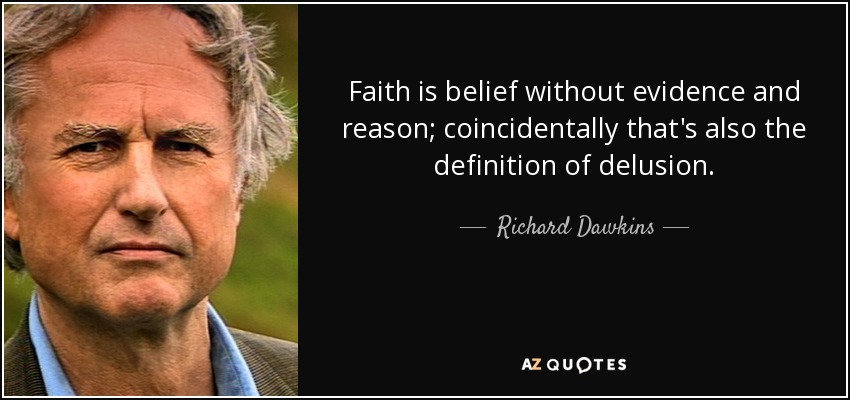
"Faith is belief without evidence and reason; coincidentally that's also the definition of delusion." Richard Dawkins

To have faith is to accept an answer to a question without ever asking the question yourself. Since you didn’t ask the question, you couldn’t have come up with the answer yourself. This implies that someone else gave you the answer. So faith is believing someone else’s answer to a question without asking the question yourself or checking the other person’s answer.

Many people say this is a virtue… in certain circumstances. Nobody says faith is always a virtue. Always trusting other people’s answers is literally the definition of gullibility. Anyone, even the religious leaders in your community would tell you to be skeptical if your mechanic charged you $500 to fill up your tire fluid. Anyone would expect you to be skeptical about a TV dinner that claims to be “low fat.” It’s common sense to be skeptical about that late night infomercial of an amazing new product that does everything. Nobody has sympathy for the fools who fell for those Nigerian inheritance scams. Don’t buy a time machine on Ebay. Don’t accept money orders on Craigslist. And don’t take pills to increase your penis size. Everyone knows the value of skepticism because skepticism is the path to truth and your armor against foolishness and manipulation.

But there are some things we believe it’s good to walk into blind. Off the top of my head the three big ones are religion, patriotism, and cultural norms. You’ll go to hell if you question (what’s advertised as) God’s word. To be unpatriotic is to be ungrateful. Cultural practices such as marriage are fundamental cornerstones of society and are bigger than the individual and thus the individual doesn’t have the right to question them…or so we’re led to believe.

Ask yourself honestly, what’s the fundamental difference between a TV dinner and God, an infomercial and patriotism, an E-mail forward and marriage? Why do we value distrusting one and yet value trusting the other?

The answer: Pressure. That’s all

The force that drives people to faith isn’t a desire for truth. It isn’t courage. It’s nothing virtuous. People put faith in select ideologies because other people convinced them they it was in their best interest. You’ll never find someone with faith in something who wasn’t intimidated and/or coaxed with candy land promises by another human being to suspend reason in regards to that select ideology. Nobody would come up with the idea on their own that it’s ever virtuous not to think. In fact, if you ask people of faith why they believe it’s so important to have faith in God, government, or culture I guarantee you’re not going to get an articulate, coherent, perfectly logical explanation. Remember, they started with their conclusion. They skipped the coming up with a reason part. And until they’ve been challenged to explain their reason they never had the motivation to reverse engineer a reason.

There are people out there who base the most important decisions in their lives on the belief that it’s immoral to question your beliefs and they don’t even know why they believe that. That’s not virtue. That’s insanity.

It’s also slavery. As I said earlier, everyone who has faith in a belief does so because another person coerced them to. You’ll notice that the person doing the coercing always has something to gain from the other person’s blind faith. And by something I mean money and power. And the person of faith always loses their independence of thought…the defining quality that separates humans from wild animals, our spark of divinity, the greatest source of meaning in our miraculous, irreplaceable, infinitely valuable, fleeting lives. In my last blog I said that faith is for the weak. Upon further reflection I’d like to change that statement. Faith is what makes you weak. And anyone who cripples you is not doing you a favor.

But the social implications of faith aren’t the only reasons why it’s immoral. Let’s dig deeper into the fundamental logic behind faith.

Faith is dogmatic belief in the answer to a question. The reason you’re told you’re supposed to show unwavering support for that answer is because that answer is supposed to be the truth. Thus faith is supposed to defend truth. However, if the answer you’re defending is in fact the truth then it doesn’t need blind faith to defend it because the truth will pass any test of reason, evidence, study, etc. If you’re so sure your answer is true then the best way to shut up the skeptics is to demand that they put your answer to the test, and your confidence will vindicate itself when the truth stands the test. At any rate, it’s hypocritical to claim that your answer is true but refuse to put it to the test of truth. That doesn’t indicate trust in your answer. That indicates that you lack the faith that your answer will pass the test of truth.

And what do you really have to lose by testing the object of your faith? If it loses the test of truth then you’ve gained a truer perception of reality by debunking your false perception. If it passes the test then your confidence is strengthened. It’s a win/win situation. However, if you refuse to put the object of your faith to the test and continue to believe in it all your life even though it would fail the test of truth then you’ve sold out your life for nothing. You’ve made a fool of yourself and squandered the gift of existence.

The pursuit of faith is at odds with the pursuit of truth and knowledge. Faith is insanity. Faith is slavery. Faith is ignorance, and ignorance is the root of all that kills.

If you liked this post, you may like these:


Reason vs faith: part 1

"The division between faith and reason is a half-measure, till it is frankly admitted that faith has to do with fiction, and reason with fact." Leslie Stephen

You almost never see a religious conversation end with someone saying, “That’s a good point. I never thought about that. You win. I’m going to change my beliefs now. Thank you.”

The reason this almost never happens is because when you base your beliefs on faith you don’t need proof to justify those beliefs to yourself or anyone else. Well, if someone admits that they don’t care whether or not their conclusions can be proven then it’s futile to try and prove to them that their conclusions are wrong. They’re not going to listen. They’re not supposed to. And if you can manage to draw them into a debate they have free reign to reverse engineer whatever justifications they need to win the argument. They don’t have to follow any rules of logic, problem solving, or scientific discovery. Their only allegiance is to their preconceived beliefs. And even if you were able to defeat all their cooked up arguments and “win” the debate they’ll still be morally obligated to find another way out. Maybe they’ll cordially agree to disagree. Maybe they’ll tell you, “I just have faith.” Or maybe they’ll find a flaw in you personally and use that to dismiss your argument. Whatever the case may be, you can’t convince someone who has faith that their beliefs are wrong no matter how wrong they may in fact be. That’s the point of faith.

You can see how futile a religious debate is. I think the fictional TV character, Dr. House, put it best when he said, “If you could reason with religious people there would be no religious people.”

I’m not saying we shouldn’t keep gathering and publicizing as much evidence as exists that all religions are man-made, mythological, culturally relative, ethnocentric, archaic, illogical cults that do nothing but control the weak minded while exploiting them and holding back society from its natural pursuit of scientific, moral and cultural progress. All the evidence supporting that conclusion should be readily available so people can be forewarned and not fall prey to religious parasites. It’s also good for religious people to hear these things so if they happen to start asking the hard questions and thinking about them objectively they’ll be better prepared to see the truth.

However, to actively engage in debates with religious people about why their conclusions are wrong is generally futile because of their faith. Not to mention…that horse has been beat to death already. Chances are if you’re arguing with someone over 25 you’re not telling them anything they haven’t already heard before.

Therefore, skeptics who wish to continue arguing would be wise to shift the focus of their debates away from debunking particular religious beliefs and more towards debunking the thought process that brought the religious believers to their conclusions: faith.

If we’re going to argue about religion then let’s argue about faith. Is it good or bad? Why or why not? If it is bad then what’s a better way to think and why?

To answer these questions we need to address the fundamentals. Why are beliefs important? To a mature human being the goal of asking a question or engaging in debate should be to arrive at the truth (aka a true belief) because nothing is more important than truth. Truth is vital because it cuts to the heart of the human experience and the meaning of life. Let me sum up the entire saga of life real quick:

We all woke up one day in our childhood and found ourselves marooned in this surreal existence. When we woke up we were lost. So lost in fact that we didn’t even know we were lost. Some of us stayed lost forever and dedicated our entire time here to merely surviving as long as possible and fulfilling our base animalistic desires to satisfaction. To the people locked into that shallow frame of mind I can offer no sympathy or help. However, for those of us who hope to validate our existence the struggle of life is not to get as much money or booty before we die. Our struggle is defined by the search for truth. The goal is to start from a position of complete ignorance and work and think and study reality until we perceive the truth of where we are and how everything works here so we can use that information to deduce why we’re here, what we’re supposed to do now that we’re here, and what the best way to do that is.

People who truly value life and are truly serious about making the most out of life and validating their existence won’t settle for half answers, opinions, or self-serving answers. They want to know the real, provable truth because if you don’t have the truth then you don’t have anything real. Thus, you don’t have anything, at all…period. So to settle for anything less than the truth is to sell out your very life. Let the magnitude of that statement sink in. If your understanding of reality isn’t based on truth then your entire life will be misguided and spent in vain. So when you argue about what is true, understand that the stakes are nothing short of life and death. That’s why truth is important.

Unfortunately, most people have a short sighted understanding of what truth is. Most people just see truth as the correct answer to a question. What they fail to appreciate is that an answer is always the product of a question. Thus, to the extent that it’s important to get the right answer to a question it’s just as important to ask the question correctly. In fact, you could even say that the answer is merely incidental to the question and that truth is more a matter of how you ask than how you answer. See, an answer isn’t self-contained or self-evident. Anytime something is true there’s a reason why, and it’s the reason why that makes the answer true.

Understanding all of that, someone who truly values truth will surely live according to the following maxims: The more important it is to know the correct answer to a question, the more important it is to calculate the answer correctly. And the more you value truth the more proactively, thoroughly and objectively you’ll be motivated to calculate the answers to your questions and question your answers.

If truth is so important, then we have to ask ourselves, what is the most accurate way to find the answer to a question? Luckily for modern humans, our ancestors have been studying the process of answering question for centuries.

Actually, luck has nothing to do with it. Every iota of society’s progress has depended on being able to come to an accurate understanding of how things work. In order to make sense of the universe humans have developed the scientific method of study. And it’s served us reliably in every aspect of our lives we’ve applied it to. And the best part about the scientific method is that it’s open ended. So even if one human fails to take all the variables of a question into consideration, fails to make the necessary logical connections, or even intentionally manipulates his answers the scientific method allows room to correct its answers. Thus, it’s designed to yield a 100% success rate (given enough time).

Despite the fact that the scientific method has proven itself the most reliable method of answer questions by providing us with every advancement in our understanding of the universe we live in which has resulted in every advancement in medicine and technology that has created the modern luxuries we couldn’t imagine living without today…and despite the fact that understanding truth lies at the crux of the meaning of life…and despite the fact that the more important a question is the more important it is to answer the question accurately…it’s widely considered acceptable, and even encouraged, to demonize the scientific method when it comes to analyzing religious beliefs…which are arguably the most important beliefs we need to get right in order to make the most out of life and validate our existence! Of all the questions we need to do the most work on, this is it.

If you liked this post, you may like these:


Wisdom I Learned Working In I.T. : Answers Come From Questions

Picture of a woman smiling and talking on a phone in front of a computer. Below the picture are the words, "TECH SUPPORT: We can fix anything... except stupid."


Fixing computers for a living means you spend your whole day problem-solving. It’s insanely frustrating because you’re expected to be able to answer any question about any hardware or software problem there could ever be. Even if you went to school to study computers, all of your knowledge and experience is constantly becoming obsolete. So you have to constantly relearn your trade, but no matter how much you teach your self, you’ll never be able to memorize every error code, every symptom, and every solution to every problem that could possibly happen with every operating system.

However, you don’t have to. You’d be surprised how much you don’t have to know about computers and still be able to make a living fixing them… as long as you know how to think logically… which most people don’t. If they did, then most computer technicians, therapists, and police would be out of work. The following rules apply as much to fixing computers as they do to life:


Rule #1: If you want an exact answer, you need to ask an exact question.

When a user’s monitor goes blank they freak out and ask questions like, “Why is this happening to me?” “Why now?” “What the hell is wrong with this piece of shit?” etc. None of these questions are going to provide useful answers. So they call a computer tech who asks questions that cut to the heart of the issue such as, “What’s broken? What was the last thing you did before it broke? Does it have power? Are the connections loose? If we replace this piece will the problem go away or is the problem originating somewhere else?”

Life is the same way. When I’m sad, I don’t just mope around feeling miserable. I ask myself, “What is the problem? Why am I sad? What triggered it? How often does the occur and why? This keeps me from wallowing in hopelessness and ultimately leads to solutions.


 Rule #2: Use a logical, systematic problem-solving process

When I first started fixing computers I’d freak out every time I got a call about a problem I didn’t know how to fix. I’d ask myself questions like, “What am I gonna do? What am I gonna do?” Eventually, I stopped freaking out and learned to look at a computer with the cool air of a mysterious, wandering gunslinger. I’d take my time and break down the problem systematically starting by gathering all the facts, eliminating variables, and testing solutions one at a time until the problem was solved. And throughout the whole process, I’d keep in mind that if you’re not asking exact questions, you won’t get exact answers.

Eventually, I found my method of problem-solving worked equally well in real life. I could see it in my friends as well. The ones who had the most problems in their lives were the ones who sat around asking themselves, “Why is this happening to me?” “Why is life unfair?” These are the people who when you try to offer them solutions to their problems they argue with you and bark excuses at you for why nothing will work. The people who have the least problems in life are the ones who size up their problems logically.


 Rule #3: The quality and quantity of answers you get are proportional to the quality and quantity of questions you ask.

Lucid people know that the causes and the solutions of any problem can be deduced by analyzing the variables in the problem. The degree of success you have deducing the causes and the solutions depends on how specific and articulate the questions you ask are. Using that mindset, they don’t wast any time freaking out or getting emotional about the problems in their lives. They simply go into analytical mode and start asking questions.

When I would get stumped fixing a difficult computer problem, I would stop, take a deep breath, and ask myself, “What questions have I been asking, and why am I asking myself these questions? Which questions haven’t I asked, and why not?” If I couldn’t solve the problem, I would ask for help from someone with more experience for help, but I wouldn’t just ask them for the answer. I would ask them to explain the series of questions they asked themselves to correctly deduce the variables in the equation so I would understand the system and know the right questions to ask next time and why.

So if you find yourself getting emotional about a problem, or one of your friends comes complaining to you about theirs, the first question you need to ask is, “What questions have you asked?”


 Rule #4: Knowing where to find the right answer is just as good as knowing it from memory.

When I first started working at a computer help desk, most of my coworkers were equally inexperienced. We only had one guy on our team who could answer any question. I only used him as a last resort, because if I bothered him every time I got stumped, his entire job would consist of mentoring me. So one day I asked him, “How do you know so much? Why can you solve more problems than anyone else here?”

He looked at me like I was stupid and said, “I don’t know the answers to all the questions you guys bring to me, but I don’t have to if I know where to find them.” Then he pointed to his computer and said,” We’ve all got Google on your computer. There’s a wealth of information on the internet. If I don’t know something, I ask the internet.”

So now, when I run into a problem I’m having even a little difficulty with, I don’t ask myself, “What am I doing wrong!?” I ask myself, “Where can I find the answer without having to make every mistake myself first?”


If you enjoyed this post, you’ll also like these:


The Meaning of Life
How to Think Like a Genius
Knowledge and Learning
Biker Philosophy
My Tweets About Philosophy 

Wisdom I Learned Working In IT: Nothing is Magical

I worked in the IT field for nine years, most of it as a help desk technician. It would be an understatement to say my job hasn’t been easy. Anyone who works on computers is part detective, part engineer, part psychologist, part interior designer, part whipping boy, and a shit load of other things that require you to push your mind to its limit in multiple directions every day. When you’re surrounded by intimidatingly mysterious problems every day, you think with your nose to the ground.

Computers aren’t mysterious, magical or spiritual. When you have a computer problem, you don’t pray. You call the helpdesk because deep down, you understand how reality works. Nothing happens because of magic, divine intervention or fate. Absolutely nothing ever happens for no reason at all. Every event in this universe is the product of a cause and effect chain of events. I’m not saying God isn’t real, just that if God is real, it doesn’t break the rules the natural laws the universe operates on.


When your car or computer breaks down, you don’t wonder if someone put a curse on it. Common sense tells you it happened for a cut and dry, logical, scientific reason. You can always confirm this by looking at the evidence and follow the chain of events backward logically to find the secular source of the problem. Yet, people pick and choose times to suspend sanity and slip back into magical thinking.

I once got a call from a user who said something was wrong with her computer. At the time I had a program that let me connect to other computers remotely and take control of the mouse and keyboard. I took control of her computer and started controlling her mouse remotely to check various settings on her computer. I made the mistake of not warning her that I was going to take control of her computer. When she saw her mouse start opening folders, she screamed into the phone, “MY COMPUTER IS POSSESSED!” That really happened. When I got off the phone with her I thought, “If this lady thinks ghosts haunt computers, how much else does she not understand about the universe? Her reality must be a scary place to live.”

A lot of people don’t like to accept that we live in a scientific universe because it’s easier to absolve yourself of ignorance by saying the universe is unknowable and to excuse yourself from responsibility because everything is part of God’s plan, and He’s going to clean up all our messes. It has been my experience, both a computer technician and a human being, that this is a destructive way of looking at life. It never solves anything, and it paralyzes us from taking realistic cause and effect measures to fix our problems. If you don’t believe me, then pray to God to fix your computer the next time your hard drive burns out and see what happens.

Or, when anything goes wrong in your life, don’t panic. Remind yourself, there’s a logical reason why it’s not working. If it seems mysterious, it’s just because you haven’t followed the cause and effect trail to the source of the problem using salt-of-the-earth deductive and/or inductive reasoning.


If you enjoyed this post, you’ll also like these:


The Meaning of Life
How to Think Like a Genius
Knowledge and Learning
Biker Philosophy
My Tweets About Philosophy