Why Using Proper Grammar Is Important


Society doesn’t respect proper grammar as much as it used to. Rappers and valley girls think it’s cool to use improper grammar. The fact that we have the term “grammar Nazi” just goes to show how little society respects grammar. But just because something is popular or chic, doesn’t mean it’s useful. There are consequences to using improper grammar. It affects how we understand the world and communicate ideas.

Your language shapes the way you think. Your thoughts shape your understanding of reality. Your reality shapes who you are. The more words you know the more you can articulate explanations of how the world works, why it works the way it does, who you are and what you are. The more complete your vocabulary is the more complete of a mind you can have and thus the more complete of a person you can be. The framework that supports the whole structure is grammar. Grammar is the thread that holds your reality together. The looser that thread is, the less capable you’ll be of forming coherent, linear thoughts. Thus, the less coherent and linear your mind will be. Thus the less of a person you will be. Plus, the less control you have over your thoughts the less control you’ll have over your actions.

That’s not to say you’re going to drive your car over a cliff, but if you look at the most successful people who live with the most purpose you’ll notice they hold themselves with a sense of purpose and dignity. They speak clearly, articulately and use proper grammar. Their internal and external lives came together because their thoughts came together, and their thoughts were able to come together fluidly because their thoughts were organized using time-tested methods of refining the use of symbolic language (aka proper grammar).

The reality you live in, the person you are and the success you have in life are all built on the framework of language. The present state of humanity, as well as its future, rests on our ability to communicate and improve ideas. Allowing our language to atrophy will cause our world and our future to atrophy. By allowing our children to use improper grammar we’re lowering their potential. Even if it only lowers their potential by one to five percent, you have to ask yourself how precious their lives are? How much do your children deserve? How much lost potential is too much? What’s worth sacrificing their potential for? How much is sounding cool to idiots worth? Is it worth your mind?


If you enjoyed this post, you’ll also like these:


Screenwriting for Movies
Screenwriting for TV
Short Stories
Erotica
Choose Your Own Adventure
Movie plot break downs
TV plot break downs
Free story prompts
Writing tips
Blogging
Art

Does Substance Abuse Make You A Better Writer?

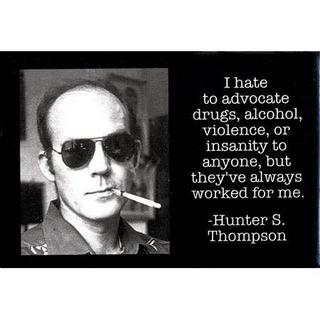
"I hate to advocate drugs, alcohol, violence, or insanity to anyone, but they'e always worked for me." Hunter S. Thompson

Anyone seriously interested in becoming a writer should make a habit out of studying the lives of successful authors. If you do that you’ll inevitably notice that a lot of famous authors have been alcohol and drug abusers.  This raises the question, does substance abuse make you a better writer? For a lot of reasons, the short answer is, it can, but there’s no substitute for solid technique, and the added creative boost that substance abuse can give you comes at a great cost.

Consider that for every successful drug abusing author there are dozens (if not hundreds) of authors who succeeded without the help of mind-altering chemicals. More importantly, for every successful drug abusing author, there are countless drug abusing would-be writers who merely ended up depraved, unsung drug addicts. So statistically speaking, if you shoot for that star you’re most likely to end up free falling into oblivion. Furthermore, for all we know, those successful addict/writers may have become successful writers without drugs. So we can’t empirically prove it was the drugs that made them successful.

Another point to consider is the damage drugs do. Sure, Phillip K. Dick was able to write over 50 novels with the help of amphetamines, and Jack Kerouac achieved legendary success from tales of his bohemian lifestyle, but both of those authors died relatively young. Hunter S. Thompson earned a cult following from his (admittedly exaggerated) tales of debauchery, but his personal life was a train wreck of heartache that estranged his loved ones and led him to commit suicide.  Professional success is a means to an end: a better life. If the cost of professional success is personal failure then the cost/benefit analysis doesn’t add up.

Just to drive the point home, Robert Frost once said, “To be a poet is a condition, not a profession.” Well, anyone who is an addict is an addict first and whatever else second. You can’t be a writer/addict; you can only be an addict/writer. So even if you shoot for that star and make it, your achievement will be bittersweet. Kurt Vonnegut probably said it best when he said, “Alcohol is the biggest problem in the life of any alcoholic.”

Having said all that, the fact that there are enough professionally successful drug abusing authors to establish a pattern means that pattern is worth analyzing, especially if that pattern (mis)leads young authors into believing drugs will help them. So it needs to be asked, why are so many professionally successful authors addicts? I’ll attempt to answer that question, but understand that while I’ll try to base my answers on evidence and/or logic, my answers aren’t based on a comprehensive longitudinal, peer-reviewed stack of psychological case studies, but if you take this for what it is you’ll be able to glean some useful insight from it.

In order to unravel this mystery the first question you have to ask yourself is why anyone becomes an addict in the first place. This is a subject that countless case studies have been done on, and there’s no single answer. However, there are some common factors such as genetics, mental illness, peer pressure, depression, stress, abuse, chronic pain, unfulfillment, and the fact that drugs are inherently addictive and euphoric.

Even being a “highly sensitive person,” which isn’t an inherently negative condition, still slightly increases the odds of becoming an addict. However, the combination of character traits and lifestyle needs of highly sensitive people are arguably the same traits and needs that predispose one to become a good writer. Many (though not all) of the legitimately negative life factors that lead anyone to use drugs could just as easily predispose them to be a good writer. So it could be that many successful addict/writers were already on the path to becoming good writers before they stepped off onto the path to addiction, which is all the more tragic, because all the negative life factors that people try to manage with euphoric substance abuse can be managed with therapy, exercise, yoga, social interaction, work, etc. freeing the individual from the shackles of addiction to focus on writing with a clear mind.

If you can identify the positive patterns in the lives of successful writers you can emulate those patterns without focusing on the single factor of addiction, and the positive factors that lend one to becoming a good writer aren’t particularly profound. On the simplest level, all you need is proper technical training and motivation. Many, many, many wealthy authors of sitcoms and romance novels were motivated simply by the desire for money and fame. So while quotes like, “To be a poet is a condition, not a profession.” have given writers a reputation for being transcendental monks who access a higher plane of consciousness and channel their profound insights onto paper for the edification of the unenlightened masses, the truth is that writing can be a job just like any other job, and you don’t need drugs to show up to work every day. You just need to understand your customers and produce a product that they want to buy. To that end, you’d be better off reading 10 “how to write fiction” books than blowing your family’s savings on drugs.

Having said that, sitcoms, romance novels and pulp fiction have a reputation for being “low art.” They may be a useful tool for future historians to judge the cultures that produced them, but they rarely advance human understanding. In fact, they can arguably hold society back.  On the other hand, many insightful, award-winning books have been written by authors who were high as a kite at the time, and there’s some empirical evidence to suggest that drug use can increase creativity. This raises the question, what gives?

The answer to that question lies in how ideas are created.  That’s a philosophical question that would be difficult to empirically prove, but my own personal writing is based on the theory that ideas are bound by the same laws as the natural universe: You can’t get something from nothing, and the only way to get new “things” is by combining existing ones in different ways.

This theory explains why drug use (and genetics, mental illness, peer pressure, depression, stress, abuse, chronic pain, unfulfilment, and euphoria) have the potential to facilitate creativity. Before I get into that though, I need to establish a control group to compare it to. It’s a fairly well-established fact that humans are cognitive misers who are born on mental autopilot. This is why sheeple exist, and why in fact, we are all sheeple. We just mimic what the people around us are doing and sleepwalk through life without putting too much critical thought into analyzing the universe around us, and we tend to abuse and ostracize anyone who has stepped outside of our comfort zone and explored novel ideas.

Isaac Newton pointed out that an object in motion will remain in motion until it interacts with another object or force. People are the same. Wind us up and let us go, and we’ll keep waving our country’s flag, working at miserable jobs and consuming pop culture until we die without ever stopping to acknowledge the grandeur and mystery of existence… as long as we never have a traumatic experience to wake us up from our walking slumber.

Charles Bukowski, an unapologetic drunkard and brilliant writer, once said that his abusive father beat the pretense out of him. World travelers frequently acknowledge how being immersed in a foreign culture will strip away your assumptions about life. Psychologists have noted that our personalities tend to be set in stone by our early twenties unless we have a near death experience or otherwise confront/reassess our mortality during a mid-life crisis. Many successful writers come from military backgrounds where they were forced to look the devil in the eyes (an experience unlikely to occur in suburbia). Even if you’re trapped in suburbia you’ll still be able to see outside your bubble if you commit yourself (willingly or unwillingly) to a lifetime of academic study. Extensive education combined with abject poverty and/or meditation can be a powerful combination to inspire outside-the-box thinking. Or you could just study how to think.

All of these factors can force you to perceive new insight into the nature of human existence and combine ideas that you would have otherwise had no motivation or opportunity to combine living in suburbia working in a cubicle. Even if you do live in suburbia and work in a cubicle, if you wrote about your boring, uninspired life and then sold your book in a country that’s completely different than yours then your work would appear insightful and inspiring because it’s so far outside the experience of your readers. So your average Italian reader might find Louis L’Amour’s work more awe-inspiring than your average Texan.

In order to take advantage of all of these enlightening opportunities you really have to go out of your way, and since humans are born on autopilot you’re designed to resist going out of your way. Even if you do go out of your way your brain will still resist combining new ideas in novel ways. However, you may have relatively easy access to mind-altering drugs that will override the inertia of your humdrum life and force your brain to combine the ideas that are already in your mind in new ways. If you do enough drugs your life will spiral out of control further pushing you outside your comfort zone leaving you in a new place with a new vantage point on your old life…which you could have just as easily experienced simply by going on an extended vacation, getting a new job or joining a social club.

Different drugs affect the brain in different ways, and if you understand how drugs affect the brain you can predict the effect they’ll have on the thoughts you pour out into your writing. You can even look at someone else’s art and potentially identify the drugs they used to “achieve” their results.

I’ll go through a short list of common drugs and discuss the positive and negative effects they can have on combining ideas in novel ways. The conclusion to be drawn from the information below is that, yes, drugs can cause you to think thoughts that you wouldn’t have thought otherwise. To that end, you can say that drugs have the potential to inspire creativity, but you could achieve those same ends with non-poisonous tactics.


Caffeine

Caffeine is a stimulant. It makes your brain work faster for a short period of time. Caffeine is a popular drug for artists in all mediums because it overrides the need for willpower to keep you working. However, you’ll only be able to work for short stints before your brain burns out. Granted, you can overcome this problem with more caffeine, but you can only push your body so hard before it crashes.


Cigarettes

Nicotine will give your mind a small boost, and when combined with caffeine can keep your working at unnaturally high speeds. Smoking also forces you to take regular breaks from writing where you can collect your thoughts and rest your eyes. On the downside you’re going to die a slow, horrible death from cancer.


Marijuana

Marijuana speeds up your brain, and forces you to combine random ideas. The idea for “The Teenage Mutant Ninja Turtles” was conceived on marijuana, and since marijuana also gives you the munchies, the Teenage Mutant Ninja Turtles favorite food was pizza. Marijuana is very common among artists, and since it’s neither addictive nor deadly there’s not much bad to say about it. However, any mind altering substance is bad for children whose brains are still developing, and even though marijuana has some medicinal benefits, you can only kill so many brain cells before you get dumber.


Alcohol

Alcohol is a depressant. It shuts down your higher level thinking skills so that your brain temporarily operates on its primitive core. In other words, it quite literally causes temporary retardedness. The “upside” of this is that for a short time your brain operates on a raw, emotional level. Sometimes humans are too smart for our own good. Alcohol strips those thoughts away and leaves you in a state where you think about life in raw, passionate, simplified terms. Great writing strips away the pretences of society and reflects the bare truths of life. So it’s unsurprising that so many writers would turn to alcohol as liquid inspiration, but it comes with great cost. In the short term you’re more likely to write garbled, meaningless, angst-ridden bullshit. In the long run you’ll inevitably get addicted, become depressed, go broke and die young.


Cocaine

If caffeine is like putting premium gasoline in your car engine, cocaine is like injecting Nitrous Oxide into your fuel line. You’ll be able to produce more work than is naturally possible in the short term. You’ll also have a lot of fun, but it’ll cause permanent brain damage. You wouldn’t supercharge your computer for a year if it meant having a broken computer for the rest of your life. Talk to some old school coke heads before using cocaine. Most of the coke heads that I’ve met strongly, passionately discourage young people from using cocaine for the first time even though they admit they fully intend to do coke themselves the next chance they get, which should scare you.


L.S.D., psilocybin, dimethyltryptamine

The effects of psychedelics are notoriously hard to describe. One effect that they have is to project your internal psychological state into your external perception of reality. If you’re in a bad psychological state you’ll see and feel bad things, hence “a bad trip.” If you’re in a positive psychological state you’ll see and feel positive things. That, in and of itself, is enough to force you to perceive reality in novel ways. Psychedelics also strip away inhibitors that prevent you from being overwhelmed by the sensory stimulation that bombards your body every moment of your life. The effect is that you’re strapped to a rocket blasting forward through the universe at the speed of thought. This can be an exhilarating and/or terrifying experience that will undoubtedly give you a new frame of reference to measure future experiences by. Psychedelics also activate a part of your brain that causes you to see the universe through a more mathematical lens. I can’t explain the experience much beyond that, but to suffice it to say that it will force you to make mental connections that would have otherwise been unlikely or impossible. If this sounds productive and tempting, be away that it comes at the cost of your sanity. Psychedelics hit your brain with the force of a sledgehammer; it’ll break you out of the mental mold you were born into, but what’s been broken can never be unbroken.


M.D.M.A., ecstasy, heroin, opium

Your brain naturally produces endorphins that make you feel happy. Drugs that supercharge the production of endorphins or eliminate your body’s ability to filter those endorphins make you feel happier than is naturally possible. The result is that you’ll feel happier than you’ve ever felt in your entire life; you’ll become euphoria. Once you reach that state there’s no motivation to go anywhere else. So you’ll just lay on the floor celebrating how wonderful your carpet is, even if it’s covered in piss and ash, and you’ll have little to no motivation left to write in that state. Once you come back from Shangri La you’ll know that no car, no house, no lover, no job, no vacation could ever possibly match the level of happiness you can achieve simply by giving a drug dealer $30. Writing takes concentration and dedication. Using powerful euphoric drugs is extremely unlikely to lead to great works of literature. It is a life path that is extremely likely to lead to destitution and death.


Crack and meth

Don’t do crack or meth. Ever. Not even once.


If you enjoyed this post, you’ll also like these:


Screenwriting for Movies
Screenwriting for TV
Short Stories
Erotica
Choose Your Own Adventure
Movie plot break downs
TV plot break downs
Free story prompts
Writing tips
Blogging
Art

The 36 Adventures Of Captain Buigardo (A Choose Your Own Adventure Story Template)

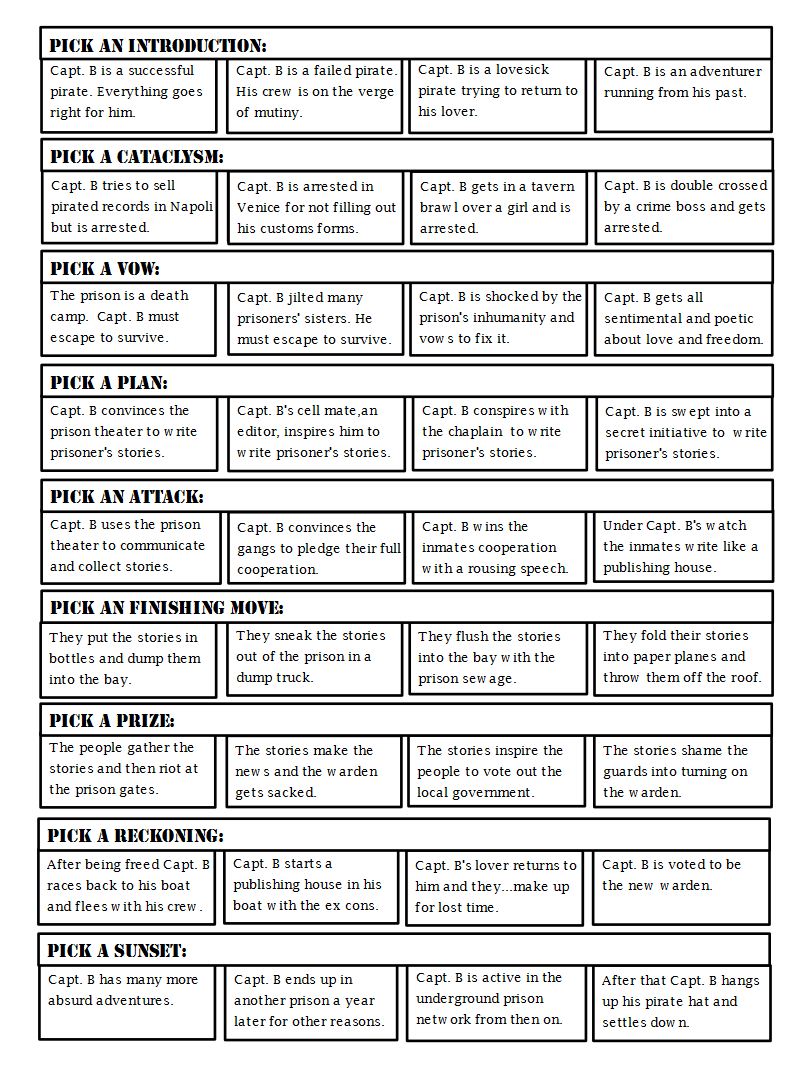
Captain Buigardo's choose your own adventure formula plot story boardPick an Introduction:

  1. Capt. B is a successful pirate. Everything goes right for him.
  2. Capt. B is a failed pirate. His crew is on the verge of mutiny.
  3. Capt. B is a lovesick pirate trying to earn enough money to return to his lover in a faraway land.
  4. Capt. B is running from his past. He throws himself into his work and blocks everything else out.

Pick a Cataclysm:

  1. Capt. B tries to sell pirated records but is arrested and thrown in jail.
  2. Capt. B saves a beautiful woman from going to jail by going to jail in her place.
  3. Capt. B and his crew celebrate in a tavern and get into a brawl. Capt. B is arrested and sent to jail.
  4. Capt. b tries to double cross a crime lord. He’s caught and sent to a corrupt prison.

Pick a Vow:

  1. The prison is an underground pig farm where life is cheap. so Capt. B vows to escape.
  2. Capt. B has slept with many of the inmates’ sisters and many want him dead. So he vows to escape.
  3. Capt. B is appalled by the inhumane conditions of the corrupt prison and vows to escape and set right the wrongs.
  4. Capt. B realizes all the prisoners have lovers waiting for them on the outside. So he vows to set them all free.

Pick a Plan:

  1. Capt. B convinces the prison theater leader to help him use a formula plot template to write prisoner’s stories.
  2. Capt. B’s cellmate, a copy editor, inspires him to use a formula plot template to write prisoner’s stories.
  3. Capt. B conspires with the crooked chaplain to us a formula plot template to write prisoner’s stories.
  4. Capt. B is swept into an ongoing secret initiative to use a formula plot template to write prisoner’s stories.

Pick an Attack:

  1. Capt. B uses the prison theater to spread instructions to inmates and collect stories.
  2. Capt. B pesters the gang leaders and gets beat up until they go along with his plan.
  3. Capt. B gives a rousing speech to the inmates and inspires all of them to join him.
  4. The inmates take to Capt. B’s plan like bees to honey and get carried away with it.

Pick a Finishing Move:

  1. They put the stories in bottles and dump them into the bay just before the guards could catch them.
  2. They put the stories in bottles and hide them in a truck that sneaks them out of prison and dumps them downtown.
  3. They put the stories in bottles and flush them out of the prison into the bay with their sewage.
  4. they fold their stories into paper planes and throw them out the windows on a perfectly breezy day.

Pick a Prize:

  1. The people gather the stories and then riot at the prison gates and set all but the worst prisoners free.
  2. The stories make national news and the politicians sack the warden and institute prison reform.
  3. the mafia inmates hid a secret code in the stories organizing an attack on the prison that sets the inmates free.
  4. The stories reach Capt. B’s lover. Her father is a politician and pulls strings to bring down the corrupt prison.

Pick a Reckoning:

  1. After being freed Capt. B races back to his boat and flees with his crew before anyone finds out what else they did.
  2. After being freed many inmates move onto Capt. B’s ship where they start a mobile publishing house.
  3. Capt. B’s lover returns to him and they… make up for lost time.
  4. Capt. B opens a cabaret on his ship and makes a fancy living off of tourists and dock workers.

Pick a Sunset:

  1. Capt. B has many more absurd adventures before dying a very unlikely death at a very old age.
  2. Capt. B returns to the prison one year later and buys it.
  3. Capt. B is thrown back in prison a year later for doing the same thing that got him there in the first place.
  4. A year later Capt. B hangs up his pirate hat and settles down as Mr. B


If you enjoyed this post, you’ll also like these:


Formula Plot Templates
Screenwriting for Movies
Screenwriting for TV
Short Stories
Erotica
Choose Your Own Adventure
Movie plot break downs
TV plot break downs
Free story prompts
Writing tips
Blogging
Art

5 Reasons Why I Hate Starbucks

Picture of the Starbucks logo

1. Overpriced products

In an impossibly perfect utopia, all prices would be fair and reasonable. In a dystopian world, everything would cost as much as vendors could get away with charging. Starbucks charges five dollars for ten cents of liquid. Even after factoring in the costs of paying employees and maintaining a building, Starbucks is still gouging its customers, and price gouging is immoral.

It may seem like a few dollars for a little cup of coffee isn’t a big deal, but it is. Every dollar a customer spends is a dollar they earned by working.  When you spend a dollar you’re effectively spending minutes of your life, and those minutes are invaluable and irreplaceable.

It took the universe about fourteen billion years of inexplicable expansion and transformation to create the planet that sprouted your family tree. There was practically a one in infinity chance of you ever being born, and now that you’re here you only get a few years to experience the majesty of sentient existence. Every second is a once in a lifetime opportunity to make the most out of life before the future runs out and your past is sealed for all eternity. Starbucks tricks its customers into trading that for a ten cents cup of coffee. Why? So the owners and investors can get filthy rich and live the opulent lives that poor people only dream about.

When you walk into Starbucks and ask the barista how much a cup of coffee costs they should just spit in your face and shout, “Fuck you. That’s how much.” That would be honest.

2. Their marketing angle is to appeal to vain rich people

Starbucks isn’t honest though. It markets itself as a friendly, happy place that values and celebrates its customers (as it fucks them in the ass). Starbucks lies through its teeth to its customers to manipulate them into paying unreasonable prices for coffee. That’s unethical, and anyone who treats you like that is not your friend.

I boycott Starbucks if for no other reason than I refuse to call a small cup of coffee a tall cup of coffee. It’s not tall. It’s small. The only reason Starbucks calls a small cup of coffee “tall”  is to manipulate its customers into feeling like they’re not getting ripped off. Renaming the coffee sizes is blatant, in-your-face manipulation. It’s unethical and disrespectful.

And yet Starbucks’ customers celebrate being manipulated into paying too much for a cup of coffee. Why? The people who run Starbucks know why: because their customers are vain. I don’t say that to be rude or shocking. Everyone knows Starbucks cups are status symbols. That’s practically the whole point of paying six dollars for a cup of coffee. You’re not even really paying to drink the coffee. You’re paying to hold an iconic white and green cup in your hand that tells the world, “I’m so well off that I can afford to pay six dollars for a ten cent cup of coffee.”

It bothers me that Starbucks’ customers celebrate their vanity, but it bothers me more that Starbucks encourages and takes advantage of its customers’ character flaws. In doing so, Starbucks has helped create a culture of pettiness and irresponsible spending. It has literally made society less mature and thus less civil. That’s unethical, and anyone who would do that is not your friend.

3. Anyone who feeds you addictive chemicals is not your friend

I’ve heard that coffee is actually good for your health as long as you don’t drink enough to get kidney stones. Personally, I’m addicted to coffee. I love it and would never want it banned. I don’t harbor any ill will towards businesses that sell coffee, but let’s just be clear about the fact that Starbucks’ business model is based on selling an addictive chemical to addicts. The people running Starbucks are lucidly aware of this fact, and they deserve a pat on the back for being clever businessmen, but their business model is one moral step below a liquor store. So they don’t deserve a pat on the back for caring about their customers.

4. They pay their workers poorly

Imagine working at a Starbucks and watching customers spend more on a single order than you get paid in an hour. Imagine watching that all day, every day until you start to wonder, “I’m doing all the work here. Why don’t I get to keep more of this money?” The reason you can’t keep more of the money is because the owners and investors of Starbucks need to get filthy rich, and they can’t get filthy rich without paying you barely enough to survive and not nearly enough to build a life with.

This is true of every franchise store, not just Starbucks. I’m as disappointed with those businesses as I am with Starbucks.

5. They force their workers to dress and act like happy slaves

It’s bad enough to pay workers as little as possible, but it adds insult to injury when you force those workers to act like they’re as happy as their wedding day every moment they spend at their thankless, soul-crushing job where vain, pretentious, entitled customers have free reign to bully them. It’s even more unethical to actually succeed at convincing your workers that they should want to act like the perfect, obliviously joyful customer service bitch. Working at Starbucks isn’t an opportunity. It’s an insult. Even if I was willing to pay $5 for a cup of coffee, I can’t go into a Starbucks because the forced smiles on the faces of the wage slaves serving me just break my heart.


If you enjoyed this post, you’ll also like these:


General Pop Culture
Trending Topics
Movies, Music, and Television
Sports
Art
Fashion
Food and Drinks
Technology
Social Justice Warriors
Liberals and Conservatives
Baby Boomers and The Younger Generations
Racism and Xenophobia
Conspiracy Theories and Theorists
My Tweets About Pop Culture

7 Economic Injustices We All Accept

1: High prices

Everything costs as much as possible. When you see a sign in a store that says, “50% off,” what it really means is “Fuck you 50% less than normal.” Extortion is the norm. It’s half the reason the rich are getting richer and the poor are getting poor. It maximizes profits for the rich and minimizes what the poor can afford. High prices are cruel. High prices kill people. High prices create misery. Yet, most of the world’s business owners have decided independently to set prices as high as possible so they can live opulently. Business owners wouldn’t do that if people were more important to them than paper.


2: Low wages

Business owners know how big their paycheck is, and they know how small their workers’ paychecks are. Business owners know they couldn’t get their big paycheck without all their employees working their asses off day in and day out for barely enough money to survive. That’s cruel, but it’s the norm.


3: Advertising

Businesses spend a lot of time and money trying to manipulate customers into buying things they don’t need with money they don’t have for reasons that aren’t important. Advertisements warp people’s perception of reality and make them act in their own disinterest. That’s cruel, but that’s the norm.


4: Subjugation of customer service workers

When an advertisement convinces you to go to a business and spend money on a product or service, you’re going to be greeted by a customer service representative who will be wearing a monkey uniform. You can yell at that person. You can treat that person like shit, and they’ll have to stand there and take it and smile and act like this is the best day of their life and you’re the best person in the world. Their boss will fire them if they stand up for themselves, and they have to take abuse from their boss too. And their boss will yell at them if they don’t work as hard as possible for longer than is healthy. So their lives just suck on every level every day they go to work. That’s the norm. That’s insane. Our society really doesn’t value people.


5: Acceptance of sweatshop workers

Most of the stuff you own was made by slaves in sweatshops. Most of the food you eat passed through a slave’s hands at some point between the fields and your kitchen. We know this. We know our iPods were made by people who live in dormitories with suicide nets outside the windows. If you knew that one of our family members had been kidnapped and was being forced to live in those conditions you’d make it your life’s mission to free them, but we don’t feel more than a slight twinge of guilt over it happening to the people it’s actually happening to. If all people are equal then we should be equally concerned for everyone.


6: Unequal rights

We take it for granted that women don’t have the right to take their shirts off where men can. We accept that gays can’t get married where straights can. We get offended at the idea of people from another part of the world moving to the part of the world we live in because we take it for granted that they don’t have the right to move. We accept that soldiers and prisoners have had almost all of their rights stripped away. We make excuses to justify these lapses of equality.


7: War

War is hell on earth. It’s the worst thing that can happen, and it’s never necessary, but there are lots of wars going on right now, and they’re going to keep going on, and after they end new wars will take their place. Hell is here to stay, and we don’t care. We don’t even care enough to pay attention to which wars are going on or why. We go further out of our way to find out about the latest blockbuster movie coming out, and we’re more emotionally involved in Hollywood stories than stories of people living in war zones. Where do we draw the line?

How bad of an atrocity has to happen before the world puts its foot down if we won’t draw the line at unjust wars? Based on the precedents we’ve set, we clearly don’t value our fellow-man enough to ever draw the line. If we don’t value our fellow-man then we must not understand why our fellow-man is important.

People are important. Every one of us is an animate, sentient, autonomous cosmic supercomputer. We’re the rarest, valuable and most powerful thing in the universe. Any one of us is worth all the money in the universe.

Being the rarest thing in the universe, we have the rarest opportunity to explore and experience the majesty of the inanimate, unconscious and yet uncannily elegant universe we’ve found ourselves in. There are wonders to behold, and we could have them all. We’ve got about seven billion animate, sentient, autonomous cosmic supercomputers we could use to design and create an interstellar chain of utopian planets. But we’re not doing that. We’re forcing them to assemble cheap junk in sweatshops that customers are going to be manipulated into paying too much for.

Not only are we throwing away the future’s potential but we’re throwing away the present as well. When you’re on your death bed the thing you’re going to remember fondest in life is your friends. Everyone you meet is a potential friend whose wonder you can bask in right now. Everyone is has a beautiful universe in their mind, and even if you don’t like someone, there’s someone who loves them because beneath their faults they’re worth loving. Everyone brings beauty into this world, but that beauty is minimized when you’re worked to death at a job that treats you like crap. That takes a diamond and turns it into coal.

It might seem like a lot to ask everyone to value everyone regardless of how different we are, but you shouldn’t have to be guilt-tripped into doing it, because we’re all family, and you don’t have to be guilt tripped into helping your family. No matter how different we are, we’re still human; we’re not just on the same team, we’re on the only team. We’re all we’ve got.

Every one of us count. We should value each other and treat each other accordingly. When we treat people badly we should be reminded how important we are so we don’t waste the opportunity to live, grow and experience the majesty of existence to the fullest extent possible, together.


If you enjoyed this post, you’ll also like these:


Predatory Capitalism Creates Poverty
Socialism and Communism
The Life of the Rich
The Life of the Poor
Oppression in the Workplace
Success and Retirement
The Housing Market
Healthcare in America
The Stock Market
Banks
Taxes
Cryptocurrency
Fixing the Economy
My Tweets About Economics

6 Short Story Formula Plot Storyboards


Short story formula plot template outline

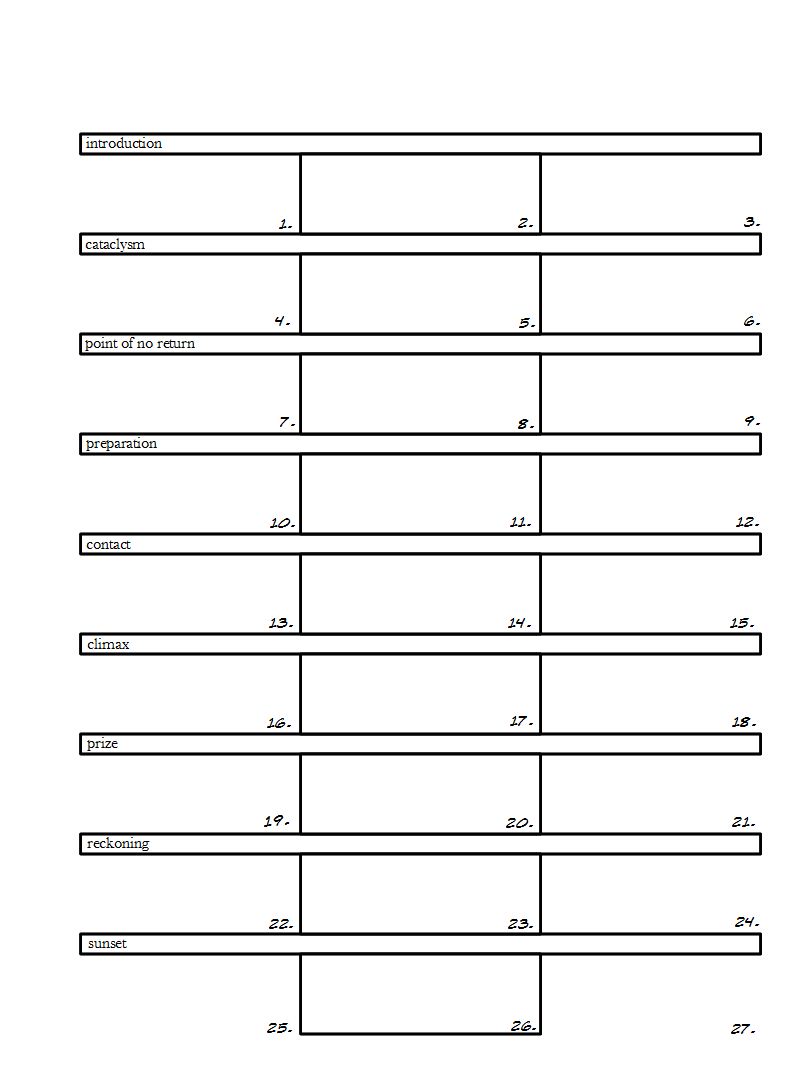
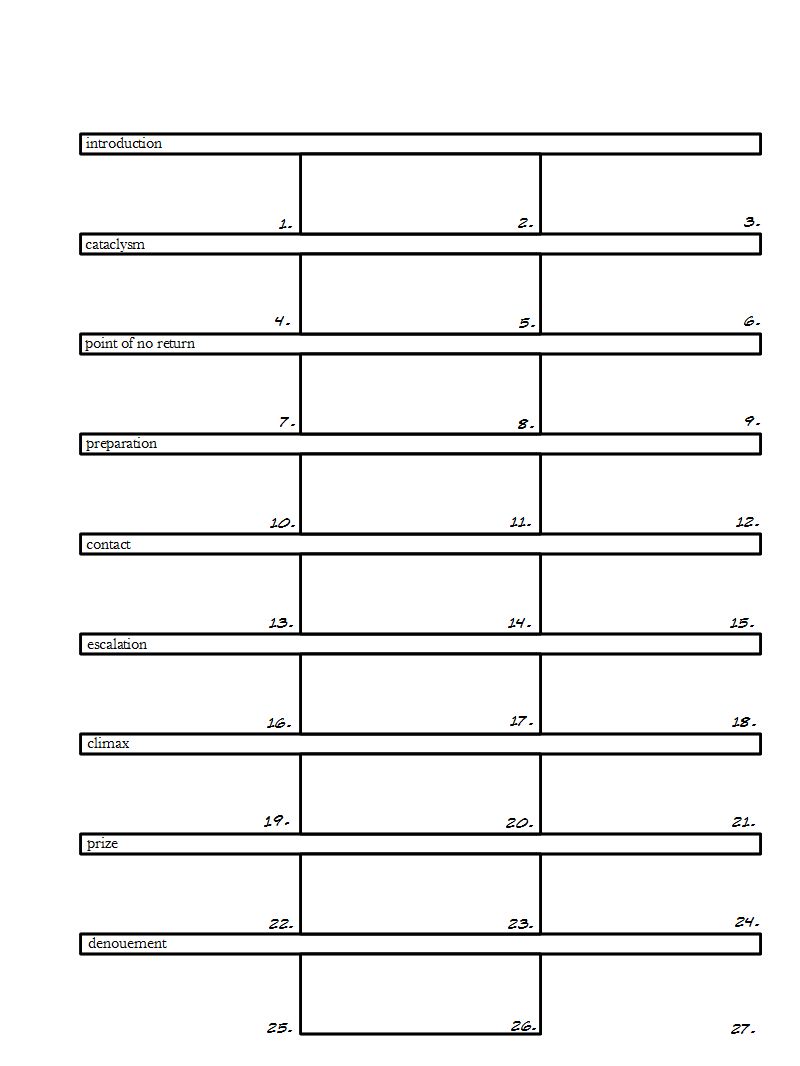
Here are a few outlines you can’t print out and write on to help you structure your story:

Short story formula plot template outline

Short story formula plot template outline

Short story formula plot template outline

Short story formula plot template outline

If you enjoyed this post, you’ll also like these:

Screenwriting for Movies
Screenwriting for TV
Short Stories
Erotica
Choose Your Own Adventure
Movie plot break downs
TV plot break downs
Free story prompts
Writing tips
Blogging
Art

The Customer Is Not Always Right

"Am I the only one around here who believes the Golden Rule applies to customer service workers as well?"


There’s a mantra in America that says, “The customer is always right.” This idea is so ingrained in American culture, it’s taken for granted by customers and service workers alike. You can walk into almost any business where people make minimum wage, yell at whoever serves you, and they’ll apologize to you. Frankly, I’m a little surprised politicians haven’t written it into law that customers have the right to treat employees like 18th-century slaves.

This traditional American value is flawed for several reasons I thought went without saying, but given the way I see retail and fast food workers getting treated, apparently, this needs to be said. All people are created equal and endowed with the rights to life, liberty and the pursuit of happiness. Your local fast food chain’s company policy doesn’t trump this fact because the value of a human life isn’t determined by employers. The value of human life is determined by the rarity and brevity of its existence. If there is a God, then humans are sacred projections of God’s love and power. If there is no God, then humans are the universe incarnate, an inexplicable miracle 14 billion years in the making. That’s what you’re bullying when you treat a customer service worker like shit. No human being deserves to be treated like that, and you don’t deserve to treat any other human being like a second class citizen who is beneath you.

Sure, you deserve to get your money’s worth when you pay a business for a product or service, but that doesn’t trump your customer service representative’s right to be treated with basic human dignity. This is especially true when your customer service representative is getting paid minimum wage, which is so far below the cost of living it’s wage slavery. They’re not making enough money to live healthily, enjoy luxuries, save for retirement or invest in continuing education. They’re ruining their bodies working as hard and fast as they can with as few rest breaks as the law allows. They’re watching their infinitely valuable and fleeting life end as fast as the clock turns.

For all they sacrifice to bring you a burger, they’re not getting financially compensated to get treated like shit by selfish, spoiled bullies. They endure it though because if they don’t they’ll get thrown out in the streets and die of starvation in the cold. But just because you gave their oppressive employer a few dollars, and they, in turn, gave you permission to kick their wage slaves while they’re down in life, doesn’t mean you have the God-given right or philosophical justification to do so. If you think customer service workers are lazy bums who deserve everything they get, then walk a mile in their shoes and find out how hard and thankless their lives truly are.

We shouldn’t have to have an argument about whether or not you get to treat other people like dirt. You should simply care about people. Most human beings believe in religion, and every religion mentions somewhere in their holy texts that you should love other people. I think Sam Harris (an atheist) put it best when he said, “…every person you have ever met, every person will suffer the loss of his friends and family. All are going to lose everything they love in this world. Why would one want to be anything but kind to them in the meantime?”


tim-and-eric-mind-blown


Look at life from the point of view of the people who are serving you. They’re sweating and bleeding for you. They’re busting their asses to fill every order as quickly and accurately as possible. Inevitably they’re going to make mistakes, and while it may be in your right to ask politely to have your order modified or remade, you’re inconveniencing your already overworked servants. You’re making their lives harder by sending them back to the kitchen than they’re making your life harder by getting your order slightly wrong. If you’re kind enough to give money to charity at Christmas then why not extend that kindness to let a few mistakes slide? You can take more genuine joy in helping your servers by not making their job harder than you can by getting your order right. The least you can do is not go out of your way to belittle them.

Despite what I’ve said so far about the righteousness of treating other people well, we’re all human. And when you treat people like shit they tend to respond in kind. Customer service workers have to put up with abuse every day at their dead-end jobs that they dread going to and know they won’t have forever. If you consistently inconvenience and bully them, it’s only a matter of time before one of them spits in your food or worse. I won’t say their retribution is right or wrong, but I will say that you brought it on yourself.

Also, be vividly aware that the consequences of your negative behavior don’t stop in the kitchen. Every time you treat someone poorly, you weigh down their mind with another negative experience that they’ll carry with them for the rest of their lives. These experiences add up and color the way they see the world. They can only endure enough abuse before their soul turns dark and they begin lashing out at other people. The people they take out their anger at you on will, in turn, be haunted by their own karma ghosts that will affect how they treat others. That’s how the world turns into a bad place to live. Your childish behavior isn’t just part of the problem. It is the problem.

If you’re truly selfish enough to justify treating other people worse than you expect to be treated, then you need to recognize that this manifestation of your selfishness is merely a symptom of a greater flaw in your character that is affecting other aspects of your life negatively. For your sake as well as everyone else, see a therapist and get help. You and everyone else will be happier for it.


If you enjoyed this post, you’ll also like these:

Predatory Capitalism Creates Poverty
Socialism and Communism
The Life of the Rich
The Life of the Poor
Oppression in the Workplace
Success and Retirement
The Housing Market
Healthcare in America
The Stock Market
Banks
Taxes
Cryptocurrency
Fixing the Economy
My Tweets About Economics

We Need To Do More To Help People Get The Job They’re Suited For

In order for our economy to function at its highest potential, everybody needs to do the job they’re most suited to. In order for our world to move closer towards Utopia, we need our economy to operate at its highest potential, but our education system and standard business model does more to stop people from getting the right job than it does to help them.

It’s not standard practice for schools to administer professional personality and aptitude tests to children once let alone doing longitudinal studies on the student body. Children are just judged by whether or not they’re good at math, science, history, and arts. Then they’re given a piece of paper that says they’re either dumb, average, or smart… then they get thrown to the wolves.

Kids who are either rich or happen to be smart in the right ways get to go to a university where they’re pushed to the breaking point intellectually and financially. Half the classes they’ll take will be completely random, and their professors will take great liberties with what/how they teach. Students will learn how to cite essays and regurgitate technical terms. The students who do the best will be the ones who stop asking questions and give their superiors what they want.

Once they graduate they’ll get a piece of paper that says they’re a higher form of life than people who only have a high school diploma. With that ticket through the glass ceiling, they’ll enter management jobs where they’ll be tasked with whipping poor, uneducated people to work harder and make their employer richer.

The poor, uncredentialed workers who are turning the cogs of the economy will have to take whatever job they can, and it won’t be doing something they enjoy. They’ll have to give maximum effort for minimum wage, and every time they quit their job to go find a better one they start back at the bottom of the pecking order, and their resume will look more and more unprofessional.

Our economy isn’t designed to put people in the right jobs. It’s designed to make the rich richer and to keep the poor, poor. We have the tools and reasons to make sure people get into the right jobs. We just need to prioritize people over profits.


Here are a few steps we could take to help people get into the right jobs:


1: Free education

The glass ceiling of higher education is probably the greatest obstacle to a smooth-functioning economy. We have the technology to provide free online education to the entire world for a fraction of the cost of our current, predatory higher education system. We just don’t have the funding to fulfill the potential of online education. You can help fund it though, and every little bit helps.


2: Longitudinal personality/aptitude testing

We can’t help people get where they are if we don’t know what they’re capable of. We’d know if we asked everyone, and if we kept testing them we could track where they’re going and then point them in that direction. If they take a job that doesn’t fit their personality profile we could warn them that they might be happier somewhere else.


3: Civilian AFPC

The United States Air Force has an office called the AFPC (Air Force Personnel Center). Every airman that joins the Air Force gets a file there. It includes all their military training records, job performance reviews and records of awards and reprimands. It’s a cradle to grave tracking system that helps the military keep track of its members and get them to where they need to be. The civilian sector doesn’t have an equivalent office, but if it did it could help people get to where they need to be.


4: Central job board

There are millions of job boards in America alone. This literally makes it impossible to search all the job openings in the country. If there were one central job board the entire economy would be open to everyone.


5: Apprenticeships/mentorships

The glass ceiling of higher education splits the workforce into castes separated by levels of management. The standard way to make more money is to move up in management. This forces the best and brightest workers to stop working and start micromanaging slaves. This is inefficient and unfair on a thousand levels. People wouldn’t need expensive credentials to get good jobs if employers hired workers under an apprenticeship program similar to how the military takes people off the street and grooms them through short educational courses and on the job training. If the best and brightest workers could keep getting pay raises without having to change jobs they could keep doing what they want and what they’re best at.


6: On-site housing

People leave jobs they love and take ones they hate because they need as much money as possible to survive since they have to pay as much as possible for everything they buy. The biggest expense in life is rent/mortgages. If workers didn’t have to worry about paying to keep a roof over their head they would be free to work for lower paying (but more fulfilling) jobs. If every business were required to offer free on-site housing for its workers then everyone would be free from the yoke of the landlord. This would free employees to choose the career that suits them.


If you enjoyed this post, you’ll also like these:


Predatory Capitalism Creates Poverty
Socialism and Communism
The Life of the Rich
The Life of the Poor
Oppression in the Workplace
Success and Retirement
The Housing Market
Healthcare in America
The Stock Market
Banks
Taxes
Cryptocurrency
Fixing the Economy
My Tweets About Economics

The Injustice Of Employee Contracts

Cartoon of a man stringing up a slave saying, "If you don't like it you can just get a job somewhere else." Another slave owner is standing by saying, "Yeah. I'm hiring slaves too."


I got a new job recently doing back-breaking farm labor, which is great because it means I’m not going to starve (yet), but my excitement was dampened a little bit when I read my contract, which makes the following statements:

1: “You will not be entitled to sick leave, bereavement leave or annual leave, paid public holidays, parental leave, overtime or any other paid leave. As you are a casual employee, you will have no right to any compensation for redundancy.”

2: “Breaks: An unpaid break of 30 minutes (longer by agreement) and a paid break of 10 minutes taken at or about the midpoint of the morning and afternoon.”

3: “As a casual employee your wages are based solely on the hours worked or the amount of work completed on each assignment and you are not entitled to remuneration when you are not working on an assignment.”

4: “Notification of termination to the employer of 5 days is required. If insufficient notice is given by the employee they shall forfeit payment of five days as compensation to the company.”

5: “The use of mobile phones and personal music devices during working hours is prohibited.”

6: I “agreed” to these conditions and signed my work contract because I need to work in order to survive. Unfortunately, this job only pays enough to survive. It doesn’t pay enough for me to eat well and have any fun in my free time or cover health care or retirement. It certainly doesn’t pay enough to take care of a family, but I don’t have a family to take care of. So that last bit doesn’t apply to me.

I’m not complaining about my contract because I can’t just suck it up and deal with it. I’m complaining because the conditions stated above would never appear in a C.E.O.’s contract. In fact, they would never appear in most college graduates’ contracts. So why were they in mine? More importantly, why are these conditions allowed to be in anybody’s contract? These conditions appeared in my contract because I’m doing a job that’s almost exclusively done by migrant aliens. The people who do migrant farm labor can’t afford to stand up for themselves. So governments allow them to be taken advantage of, and nobody else complains.

You could argue that anyone who agrees to a work contract has no room to complain about the conditions they agreed to, but that attitude values semantics over human life. You could also say that if you don’t like the terms of the contract you can just get another job, but if it were so easy to get another job nobody would do migrant farm labor or entry-level service work. The reality of the world that we live in is that millions (if not billions) of people must agree to substandard contracts or die. The economy we’ve created for our children is a cruel place, and if you want to survive you’re going to have to agree to working conditions you don’t agree with. The only question is how inhumane those conditions are.

While you’re voting for your next politician, take a moment to acknowledge that they’re not going to do anything about unfair contracts. They’re going to keep allowing the rich to exploit the poorest and neediest members of society, and they’re going to stand by silently while the media calls the poorest and neediest members of society “entitled.” The next time you eat any food from the grocery store, stop and acknowledge that it was almost certainly harvested and processed by people who are perpetually working themselves to death with no hope of saving for a better future so you can have cheaper vegetables and farmers can buy a bigger house… and you don’t care.

But the next time you sign a work contract that says you waive your rights to vacation time, realistic wages, benefits or legal protection, stop and acknowledge that you’ve already silently consented to the exploitation of everyone poorer than you. So you don’t have any room to complain. By the categorical imperative you’ve already set, the value of human life is determined by how high much financial leverage one person has over another.


If you enjoyed this post, you’ll also like these:

Predatory Capitalism Creates Poverty
Socialism and Communism
The Life of the Rich
The Life of the Poor
Oppression in the Workplace
Success and Retirement
The Housing Market
Healthcare in America
The Stock Market
Banks
Taxes
Cryptocurrency
Fixing the Economy
My Tweets About Economics

7 Reasons Why Minimum Wage Should Be Higher

Cartoon of a man standing on a huge pile of cash shouting, "Your greed is hurting the economy!" next to a poor person holding up a sign that says, "Raise the minimum wage."

1. It requires specialized skills/attributes

One way high wage earners justify their pay is by saying that not everybody could do their job. So since their skill is so rare then they deserve to be paid more. This point of view overlooks the fact that not everybody can do hard labor  If you took the CEO of a big restaurant chain and made them work in one of their restaurants’ kitchens for three months they’d all fail. Even out of the general public, there’s a significant percentage of people who don’t have the strength or patience to do the jobs minimum wage earners do.

Go ask any kitchen staff, road crew, farm crew, or retail worker about people they’ve seen work at their job for a week and then burn out from exhaustion or didn’t have the mental fortitude to do their jobs. Those who pass the test will always be able to look each other in the eye and know they had the metal to make it while so many others didn’t. But even though minimum wage earners have attributes and skills just as rare any upper-middle-class job. Their paychecks don’t reflect this.


2. Compensation for pace

Think of an office romance drama series like Mad Men, Suits or The Office. Imagine if the characters ran as fast as they could everywhere they went, and where ever they went they were always very busy with their hands, and they were always racing the clock while pacing themselves so they could last the day.  And somebody was always yelling at them and threatening them. It would be funny if it wasn’t true.

The longer and faster you have to work the more you have to commit your total life’s attention on what you’re doing. Some people have slow-paced jobs where they can daydream all day, call their friends and family and take long lunches while getting paid very, very well. A lawyer would charge you more for his services if he had to devote his total attention to your case and work as hard as he could none stop for three months straight. But field hands, cooks at chain restaurants, and warehouse staff don’t get paid any extra for how totally they have to devote themselves to their jobs.


3. Compensation for inevitable injuries

If you do anything as fast as you can for nine hours a day for a lifetime you’re going to hurt yourself. Just lifting files or typing will give you crippling hand aches in old age. Lifting heavy bags and boxes will take its toll immediately. When you do minimum wage it’s not a matter of if you’ll develop some kind of health problem, it’s a matter of which one you’ll get. And since millions of minimum wage jobs involve handling poisonous material, a lot of people are guaranteed to die from work-related illnesses.

It’s bad enough that people are dying from work-related injuries, but they’re suffering here and now in very real, very graphic ways. Any fry cook can tell you a few stories about burns and cuts they’ve seen kitchen staff get. There are millions of people in the world who have stitch marks on their bodies from on the job injuries they got while working for minimum wage, but they don’t get any compensation. Their employers don’t even offer them health care. If you asked the employer why, they would probably tell you that the accident was the employee’s fault. Even if that were true, these injuries are statistical inevitabilities. If you put 90 million human beings in kitchens around the world working as fast as they can all day for three months cooking over hot stoves, slinging boiling liquids and chopping things with sharp knives, you’re going to end up with millions of injuries. You can repeat the experiment as many times as you want, there will always be injuries. So going to work is like playing the lottery. You might be one of the unlucky ones who fate has doomed. And when that inevitable day comes for some man, woman or child, their employer will probably find some valid excuse for why they don’t have help the person who won the doom lottery inherent in minimum wage work.


4. Compensation for degradation of off-duty time

A lawyer would charge you a premium if he had to work all day every day as fast as he can for three months. A lawyer would probably raise that fee after a week after he realizes that working that hard and that long doesn’t leave you any energy to enjoy your free time after work, and in fact, he was probably spending all his evenings just trying to recuperate from the day’s work while prepping himself for another day of marathon work tomorrow. I’m sure a lawyer could write a fantastic explanation of why they should be compensated extra if their professional work degrades the quality of their personal time. So far no lawyer has done minimum wage workers the favor of writing an explanation of why they deserve extra compensation for not being able to fully enjoy their free time.

If a lawyer worked as fast as possible for three months he could pamper himself all along the way with good meals, healthy snacks, massages and a big vacation at the end. Minimum wage earners can’t afford any of that. They don’t get to stop at cafes on the way to work. They have a hard time getting sick days, let alone vacation days. And for them, it’s not just three months. It’s their fate in life. That’s why poor people drink and smoke so much. Their life is fucked. There’s no hope for them. In hopeless times humans tend to turn to religion or hedonism for relief. If minimum wage earners got paid more I predict you would see a decrease in religion and hedonism. Think about that. Minimum wage jobs are so miserable they force people to turn to God or slow, euphoric suicide to cope. That’s morally fucked up. That’s an atrocity. That’s the kind of thing that generations from now, our descendants will look back on us and say, “Damn, that generation was stupid and backward. I’m sure glad we’re not that shamefully stupid and cruel now.” So how about we not be that stupid and cruel now? How about we compensate minimum wage earners for losing their personal lives. Better yet, let’s not take away their personal lives to begin with.


5. Compensation for humiliation

Some lawyers get to pick and choose their clients and their price. If a prospective client insults the lawyer or is obviously going to be a pain in the ass to deal with, the lawyer could charge the client extra to make it worth his time. Minimum wage earners get yelled at constantly by bosses and customers. Everyone is allowed to tear them down and use them as punching bags, and the minimum wage earner has to just stand there, wearing a demeaning company uniform and endure emotional and sometimes physical abuse from the people they have to spend almost every day of their life with.

There’s been a lot of research done on the topic of classical conditioning and bullying. If you insult someone and humiliate them every day, they’re going suffer. It’s immoral to do that to somebody. It’s downright sadistic to do that to somebody and then tell them that they have to come back every day for the foreseeable future and endure the same emotional abuse while smiling and pretending like it’s the happiest day of their life, and if they can’t maintain constant perfect bearing they’ll be thrown out into the streets to starve and die in the rain. That’s as messed up as the plot to The Human Centipede 2. If you’re going to have to spend your life eating other people’s shit you should get some kind of compensation for that. Better yet, maybe we should stop sewing retail employee’s mouths to the customer’s asses or giving bosses god-like authority to bully employees.


 6. Compensation for investment of labor

You can’t build a company with capital. Investors who provide employers with start-up capital expect a return on their investment, and everyone agrees that this is entirely reasonable. However, you can’t build a company without labor either, and the workers who invest the irreplaceable seconds of their lives at work don’t get dividends. They just get the lowest paycheck legally allowable and a kick in the ass the day they quit, get fired, their contract ends, the company goes bankrupt or gets bought out.

If you invest a few thousand dollars in a company at the right time you can get millions of dollars in return. You can invest a few thousand hours of your life in a company, and you won’t even get a thank you card. You have to be a complete sociopath to think that’s okay.


7. It’s the decent thing to do

Why should we pay minimum wage workers more? Because it’s the decent thing to do. That’s why. That’s all that should have to be said. Everybody knows it would make minimum wage workers’ lives better if they worked shorter hours and were paid a higher percentage of company profits. It would make people happier, and we would live in a happier society. That’s what the world is supposed to be like. Are we not good people? At least, don’t we want to be good people? Well… let’s be good to the people holding up the pillars of our economy.

Even if you’re a complete sociopath who doesn’t care about anybody else but yourself and you look at the world through a cold, calculating perspective, you should still want to raise the minimum wage, because the empirical cost/benefit analysis of economic oppression didn’t add up.


If you enjoyed this post, you’ll also like these:


Predatory Capitalism Creates Poverty
Socialism and Communism
The Life of the Rich
The Life of the Poor
Oppression in the Workplace
Success and Retirement
The Housing Market
Healthcare in America
The Stock Market
Banks
Taxes
Cryptocurrency
Fixing the Economy
My Tweets About Economics